Canirac promotes preparation and fair prices for the 2026 World Cup

The restaurant chamber seeks to balance the tourist experience and profitability, promoting preparation and fair practices for the mega-event.

Setting the Stage for an Unforgettable World Cup Experience

Hello, entrepreneurial community and hospitality lovers! Do you feel that energy? Eight months before Mexico hosts the FIFA World Cup 2026, the air is thick with a monumental opportunity. It is a time to shine, to show the planet the warmth and greatness of our culture. Jack Sourasky, leader of the National Chamber of the Restaurant and Seasoned Food Industry in Mexico City (Canirac CDMX), has launched a powerful and clear message: let’s prepare the ground for collective success. The vision is not just about short-term gains; it’s about building a reputation that resonates long after the last game is over. This is our golden opportunity to transform global perception and turn Mexico City into a world-class culinary destination. Imagine the doors that can be opened with a positive experience that tourists take back to their countries. The focus should be on excellence and authenticity, creating moments that become indelible memories for each visitor.

At the heart of this preparation lies a fundamental principle: price transparency. Sourasky has been emphatic in urging restaurateurs to avoid any abuse of their rates during this period of high demand. Because? Because a strategy based on greed can have a devastating rebound effect. “This is going to affect tourism,” he warns. But let’s look at this from the perspective of growth: when we operate with integrity, we not only avoid the intervention of the Federal Consumer Protection Agency (Profeco), but we build trust. And trust is the most valuable asset in any business. A tourist who feels treated fairly is an ambassador for life. It’s a priceless public relations investment. This is our chance to demonstrate that the real value is not in the price, but in the comprehensive experience we offer, from the treatment to the last bite.

RelatedWorld Cup 2026 will boost the recovery of restaurants in Jalisco

Excellence as Our Universal Language

But the mission goes far beyond the price tag. It’s about going the extra mile and exceeding expectations. Sourasky highlights the crucial need to make service adjustments to keep up with this global event. This involves proactive transformation. Hiring multilingual staff, especially fluent in the English language, is not a luxury, it is a necessity in the global sports village. Creating new menus that present our incredible gastronomy in an accessible and intriguing way for international visitors is part of this exciting challenge. Think of your menus not only as a list of dishes, but as a cultural map that guides diners through the flavors of our land. It is the art of telling a story through the ingredients and culinary techniques that define us.

Training is the key that unlocks this new level of service. The call is to empower each member of the team, from the kitchen to the dining room. Training restaurant owners and their collaborators in exceptional treatment and language skills is investing in the most important asset: people. “Basically that, that they speak English, make menus in English“, concludes Sourasky. Imagine the smile of a tourist when he can place his order in his language or when he understands the story behind a traditional dish. That human connection is what turns a simple meal into a memorable and shareable experience. We are cultivating not only satisfied customers, but friends of Mexico in every corner of the world. This preparation is a journey of professional and personal growth for the entire industry.

This spirit of good practices is an ecosystem. When a restaurant chooses excellence and equity, it elevates the entire community. Canirac will be in constant contact with its members to promote this win-win mentality. Collective consciousness is the basis. Moderating our business practices is not a limitation, it is an intelligence strategy! A City perceived as excessively expensive will scare away future tourism. Instead, a reputation for being a welcoming destination, with fair prices and a rich cultural experience, will ensure that we win much more than a few games; We will win the heart of the world and a flow of recurring tourism. We are building the foundation for a lasting legacy that will transform the city’s hospitality industry forever.

So, dear restaurateurs, chefs, waiters and hosts, let us embrace this challenge with the optimism and passion that characterizes us. This is not a marathon we run alone; It is a team effort where the success of one fuels the success of all. Let’s adjust our menus, polish our services, open our hearts and show the best version of ourselves. The world comes to our door, and we have the opportunity to offer them not just a dish, but a little piece of our essence. Transformation begins today, with every conscious decision and every act of service. The 2026 World Cup is our stage, and together we can deliver a performance the world will never forget.

Ready to be part of this historic transformation? Share this message of preparation and excellence with all entrepreneurs and food lovers on your social networks. Together, we can ensure that this World Cup is a resounding success for Mexico. Explore more content on how to boost your business on our platform and let’s become the best version of ourselves!
Pride 2026: health, housing and education for trans people

Thousands march in CDMX to demand an end to discrimination and lethal violence.

Demands and resistance in the Zócalo

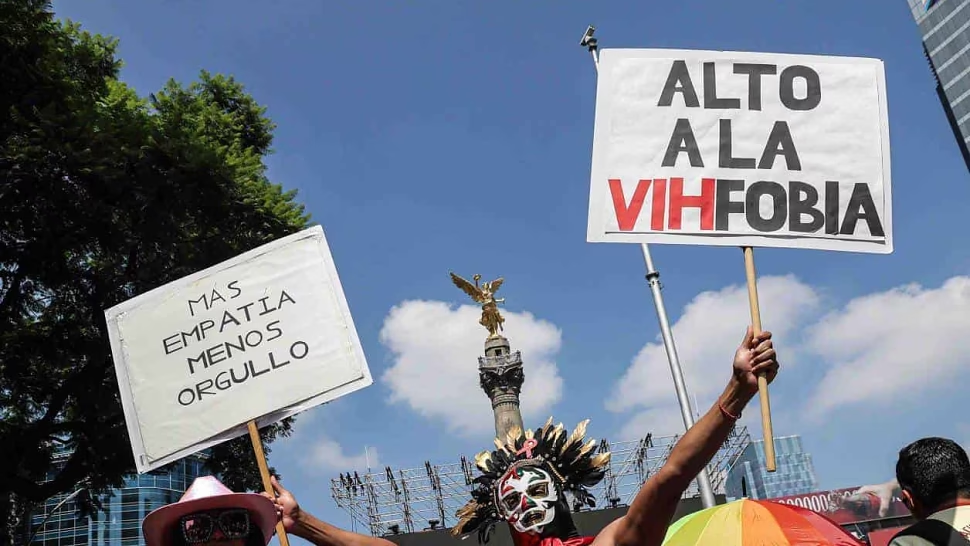
Neither the rain, the wind nor the World Cup Fan fest stopped the crowd. The Pride March, in its 48th edition, arrived at the capital’s Zócalo with a clear demand: guarantee health, housing and education for trans people.

Hundreds of thousands of people celebrated their identity, but also raised their voices for those who are no longer here. The protest reiterated the urgency of eradicating discrimination, stigma and hate crimes against the LGBTTTIQ+ community.

From 9 a.m. on Saturday, June 28, groups of relatives of missing people, organizations supporting trans women, LGBT people with disabilities, sex workers and HIV patients took to the streets. They demanded security and attention to these populations, and shouted between multicolored flags:

“It’s a march, it’s not a business. Companies with a homophobic history are marketing a historic movement.”

The speeches denounced the exclusion of sexual diversity from social programs. They demanded that the government and companies not take ownership of the fight. “This march does not belong to those who profit from our identities,” they stated.

People from various generations and states walked hand in hand. Mothers proudly accompanied their gay and lesbian children. In 2026, many LGBT youth still face family rejection.

Search groups demanded recognition of the social family—friends who search for their missing people. The Contingent Against LGBTTTIQ+ Disappearances pointed out in front of the Glorieta de Las y Los Desaparecidos:

“We demand that the State harmonize the General Law of Victims to fully recognize the social family.”

Trans and non-binary activists called for an end to the criminalization of the sit-in that they have held at the Ministry of the Interior for 10 days. They were the only group monitored by hundreds of police, despite their peaceful protest. They declared:

“They judge us for our sexual orientation, not for the human being we are. That has made our lives impossible.”

People with disabilities, patients with HIV, victims of hate and workplace discrimination joined in. The march traveled along emblematic avenues to the Zócalo, where there were open microphones and hours of joy. In the end, a slogan united everyone: stop hate crimes and transfemicides.

Continue reading

Mexico and the US inaugurate a binational sterile fly plant in Chiapas

The cooperation between Mexico and the United States produces results: 100 million sterile flies weekly to protect livestock.

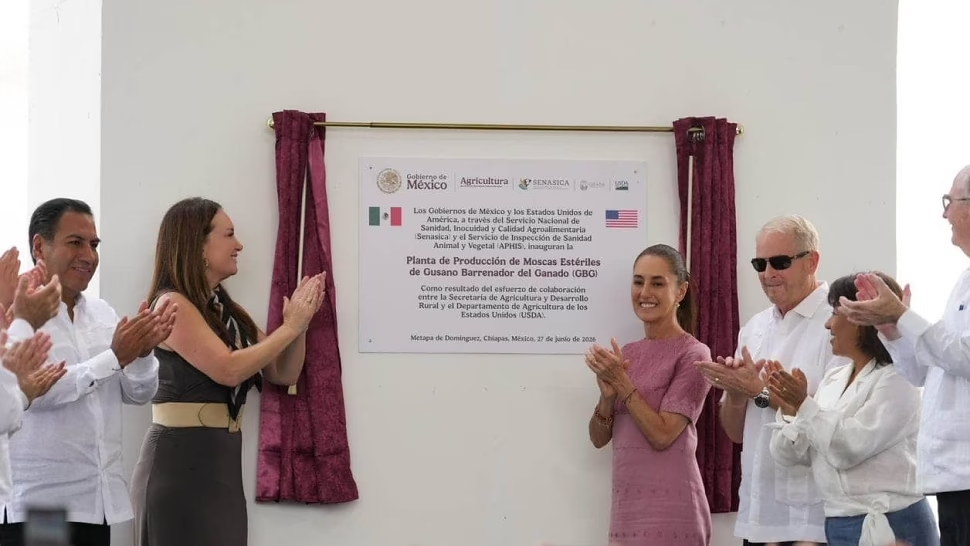
President Claudia Sheinbaum inaugurated the Production Plant for Sterile Livestock Screwworm Flies (GBG) in Metapa de Domínguez, Chiapas. It is a binational facility that will produce 100 million insects each week to control the pest that affects livestock.

Cooperation that pays off

The president highlighted that this project is the result of joint work between Mexico and the United States. The US government provided most of the resources, as well as technical expertise. Sheinbaum thanked President Trump and US Secretary of Agriculture Brooke Rollins.

“This Plant represents the conviction that development cooperation produces results. Animal diseases, pests and food security challenges know no borders,” said Sheinbaum.

Rollins called the inauguration a great achievement and recognized Sheinbaum as an extraordinary ally.

The United States ambassador to Mexico, Ronald Johnson, announced an additional investment of $83.8 million to strengthen pest control and increase the production of sterile flies in Mexico.

Operation details

Construction of the plant lasted 12 months. As part of the containment strategy, 5.3 million heads of cattle have been inspected, more than 84 thousand shipments have been verified and 7 billion sterile flies have been released. 2 thousand specialists, more than 400 thousand planters and 4 thousand technicians from the Sembrando Vida program participated. 578 thousand artisanal traps were installed, with which more than 13 million flies were captured.

Sheinbaum closed with a message: “Cooperation between sovereign countries will always be more powerful than confrontation when it comes to protecting the well-being of our people.”

Continue reading

One year after the discovery in a crematorium, families march for justice

One year after the discovery of 386 bodies, families demand justice and an end to corruption.

March for justice one year later

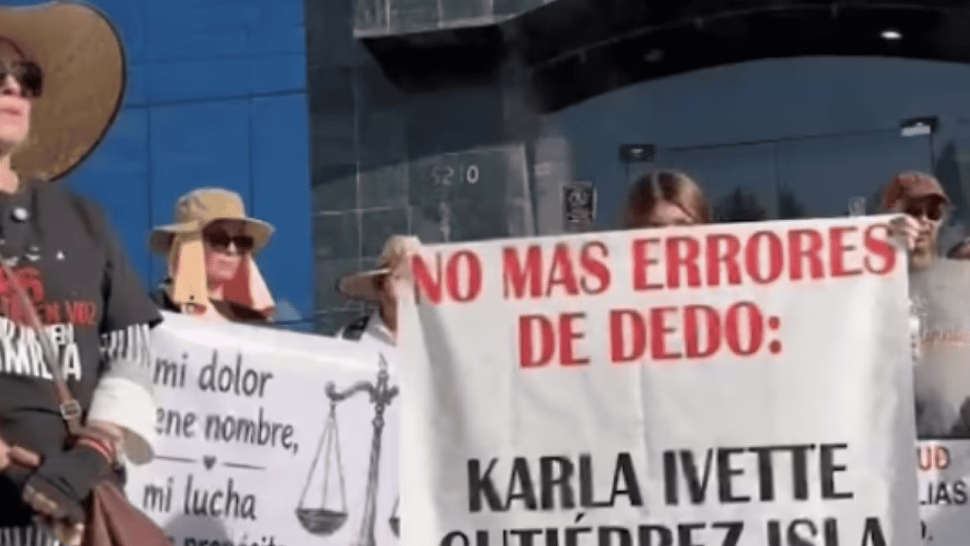
On Saturday afternoon, groups of families affected by the Plenitude crematorium case demonstrated. The discovery of 386 bodies turns one year old, and the bereaved demand answers.

The protest began at the Latinoamericana funeral home, one of those identified by family members. From there, the protesters walked towards the State Attorney General’s Office (FGE).

Dora Elena Delgado, spokesperson for the Justicia para Nuestros Deudos collective, reported that at least 1,500 families were affected. The central demand: no more impunity, no more corruption and full justice.

Actions pending by the authority

The protesters carried blankets with messages of justice. They demand action against Coespris officials involved in the case, as well as the recapture of José Luis A. C., owner of the crematorium. He was released by a federal judge, and a red card from Interpol is expected to arrest him again.

So far, of the 386 bodies found, the FGE reports that 135 remain to be identified. The identification process continues.

The collective Memory, Dignity and Justice joined the mobilization. They placed a permanent memorial in the shape of a cross outside the Prosecutor’s Office, as a reminder of the victims.

Continue reading