Context and measures of the “Sovereign Brazil” plan
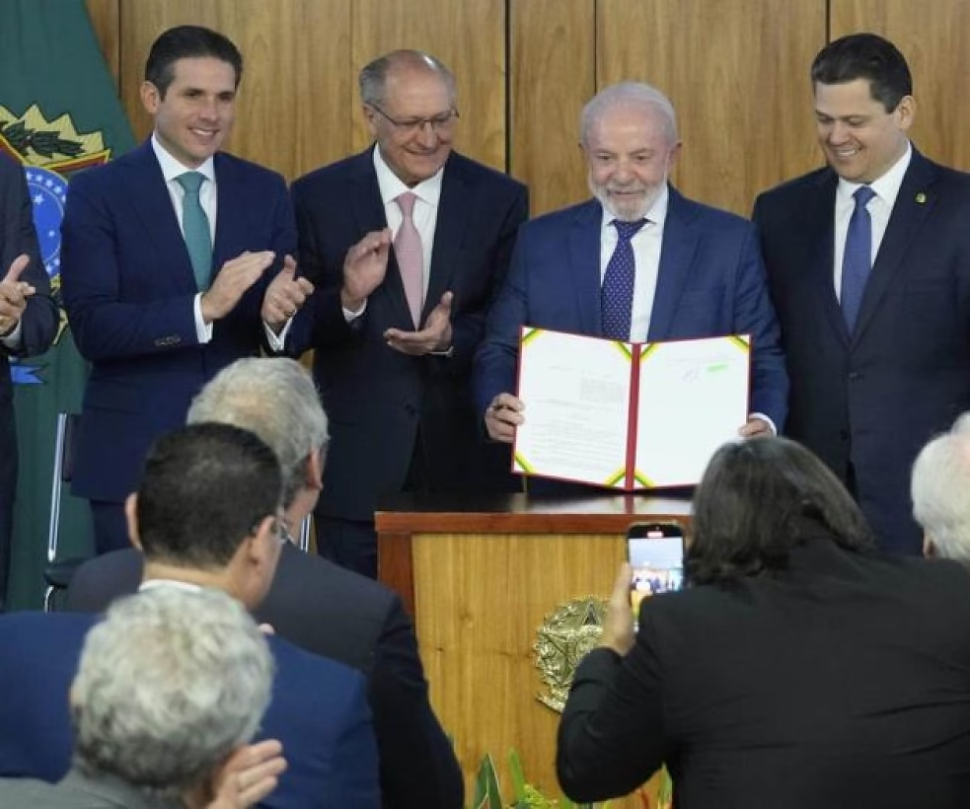
The Brazilian government, led by President Luiz Inácio Lula da Silva, presented this Wednesday a package of measures called “Sovereign Brazil” to mitigate the impact of the 50% tariffs imposed by the United States on key export products. The initiative includes a line of credit of 30 billion reais (approximately $5.5 billion), intended to support companies affected by trade restrictions. This movement is part of an escalation of bilateral tensions, following the sanctions announced by the US Secretary of State, Marco Rubio, against Brazilian officials.
Details of the economic measures
Among the concrete actions the following stand out:
- Postponement of tax obligations for affected companies.
- Tax credits for 5,000 million reais (930 million dollars) for SMEs until 2026.
- Extension of insurance for cancellation of orders and encouragement of public purchases of non-exportable goods.
In addition, the import duty refund mechanism was extended for one year, which benefits industries that depend on foreign inputs to manufacture export products.
Background and diplomatic tensions
US President Donald Trump explicitly linked the tariffs to the judicial situation of former President Jair Bolsonaro, currently under house arrest for trying to overturn the 2022 election results. Trump called the process a “collapse of the rule of law“, alleging political persecution. For his part, Lula rejected these accusations, defending the independence of the Brazilian Judiciary and emphasizing that the sanctions are unfounded.
The replica of Marco Rubio
Hours after the Brazilian announcement, Rubio expanded the sanctions to officials linked to the “Mais Médicos” program, which employed Cuban professionals in Brazil, calling it a “diplomatic scam.” This measure is in addition to the restrictions imposed in April on Judge Alexandre de Moraes, responsible for the Bolsonaro case, under the Magnitsky Law. Moraes has insisted that the judicial process follows legal standards and has ignored international pressure.
Analysis and perspectives
The conflict highlights a broader geopolitical struggle, where Brazil seeks to diversify markets for its exports—especially in sectors such as agribusiness and manufacturing—while defending its sovereignty. Although Lula ruled out applying immediate tariff retaliation, he stated: “Our sovereignty is untouchable.” The Minister of Finance, Fernando Haddad, reinforced this message, pointing out that Brazil “is being sanctioned for being more democratic than its aggressor.”
Experts warn that the dispute could affect global supply chains and recalibrate trade alliances in Latin America, with possible approaches by Brazil to blocs such as Mercosur or China.
Are you interested in the geopolitical impact of these measures? Share this analysis and explore more content on the global economy on our social networks.