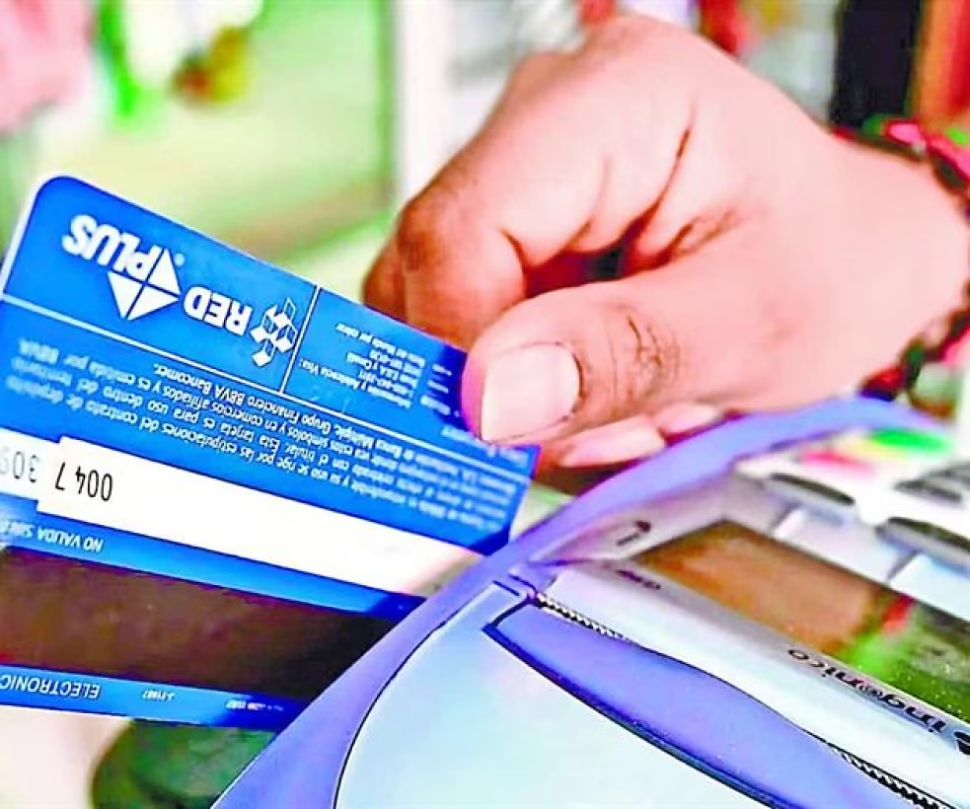
Analysis of the regulatory proposal in electronic payments
The BBVA México Financial Group has issued a technical warning regarding the joint initiative of the Banco de México (Banxico) and the National Banking and Securities Commission (CNBV) to establish maximum limits on exchange commissions. These fees represent the payments that point of sale (POS) terminal providers make to the institutions issuing payment cards for each transaction processed. According to the analysis of the credit institution, this measure could function as a price control mechanism with counterproductive effects for the national financial ecosystem.
BBVA Mexico’s position is based on an exhaustive examination of market dynamics and comparative experiences in other jurisdictions. The entity maintains that setting interchange fees at 0.3% for operations with debit cards and 0.6% for transactions with credit will not generate the expected benefits for commercial establishments nor for end users. On the contrary, it could discourage technological innovation and reduce the quality of payment processing services available on the market.
Structural consequences in the payments ecosystem
The implementation of this regulation could generate a significant impact on the architecture of the Mexican electronic payment system. BBVA México specialists project that, far from promoting a more competitive environment, the measure could lead to an increase in operating costs for merchants. This situation would create pressure for businesses to pass these costs on to consumers through adjustments in the prices of goods and services, directly affecting the purchasing power of the population.
The technical analysis indicates that interchange commissions constitute an essential component in the economy of payment methods, since they finance critical aspects such as transactional security, fraud prevention systems and rewards programs for cardholders. The proposed regulation could compromise the sustainability of these elements, potentially reducing the benefits perceived by consumers and affecting the overall payment experience.
In the current context of growing adoption of electronic payment methods and financial digitalization, the discussion on the structure of interchange fees takes on special relevance. Regulatory authorities, specifically the CNBV and Banxico, face the challenge of balancing market efficiency objectives with consumer protection. The warning from institutions such as BBVA México underscores the need to thoroughly evaluate potential negative externalities before implementing substantial regulatory changes.
International experience shows that similar interventions in other markets have generated unanticipated consequences, including the reduction of investment in payment infrastructure and the increase in the cost of other financial services. A balanced regulatory approach that considers the complex interrelationships between issuers, acquirers, businesses and consumers is essential to preserve the health and competitiveness of the Mexican financial sector.
Was this analysis on the regulation of electronic payments useful to you? Share this information on your social networks to contribute to informed debate and explore more specialized content in our economics and finance section.