Two appointments in three days that change the map
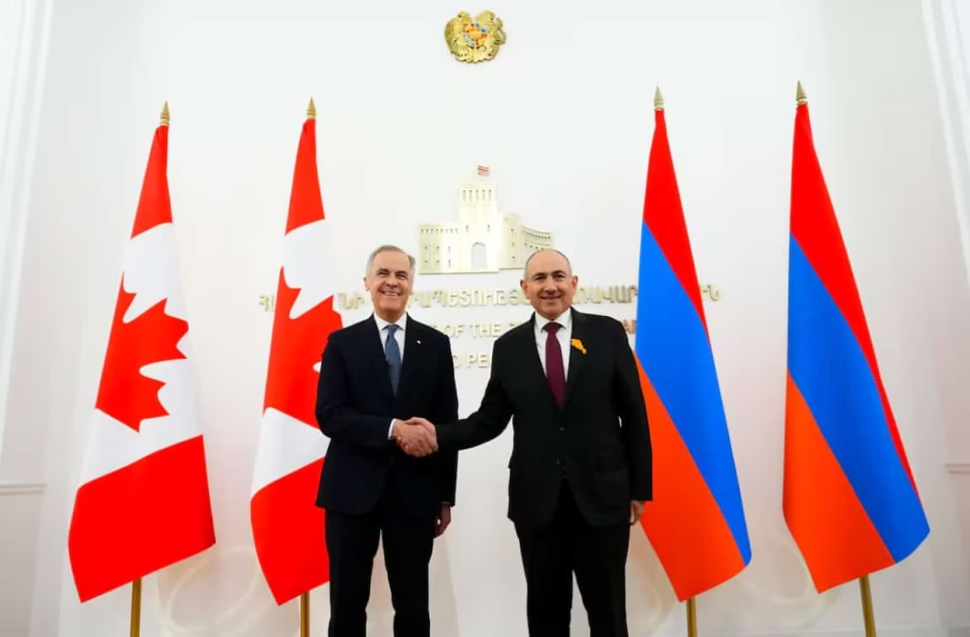
Armenia has become the epicenter of European diplomacy. In just 72 hours, Yerevan has hosted the summit of the European Political Community and the first official meeting between the European Union and the Caucasian country. It is no coincidence: Brussels is sending a clear signal of support for the strategic turn of the Armenian government.
What is behind this movement? The South Caucasus is no longer a forgotten corner of the map. With the war in Ukraine, Europe is looking for alternative energy routes and reliable allies. And Armenia, which has historically looked toward Moscow, is turning the compass toward the West.
“This is a historic moment for our region,” declared a spokesperson for the Armenian government, without hiding the expectation.
The heavyweights who arrived in Yerevan
The guest list speaks for itself: Ursula von der Leyen, António Costa, Keir Starmer, Emmanuel Macron… and Volodímir Zelenski. Seeing the Ukrainian president in the Caucasus is not a minor detail: it is a reminder that borders are being redefined, and not just on maps.
And Russia? In silence. The tension between Yerevan and Moscow is not new, but this summit accelerates the distancing. Armenia is betting on a complex peace process, with the shadow of Nagorno Karabakh still present and the pressure of an uncomfortable neighbor like Azerbaijan.
What this means for ordinary people
Beyond the speeches and official photos, what is at stake is everyday life. Families that have lived through decades of conflict, young people looking for a future without economic blockades, and a country that is trying to escape isolation. Europe promises investments and support, but we already know that diplomatic promises sometimes remain empty.
Will it work this time? It will depend on whether Brussels maintains interest when media attention is diverted. For now, Yerevan has achieved what few expected: putting the Caucasus at the center of the European board.