Alckmin begins a state visit to Mexico to strengthen bilateral ties

A crucial mission that redefines the alliance between two Latin American giants. The economic fate of the region hangs in the balance.

The Meeting that Shaken the Foundations of Diplomacy

Under a blanket of stars that seemed to hold their breath, the Felipe Ángeles International Airport (AIFA) became the scene of an episode that would be burned into the annals of history. The night of Tuesday, August 26, 2025 was not just any night; It was the prelude to a destiny that was woven between handshakes and glances loaded with deep meaning. The air vibrated with palpable electricity, the tension so thick you could cut it with a knife.

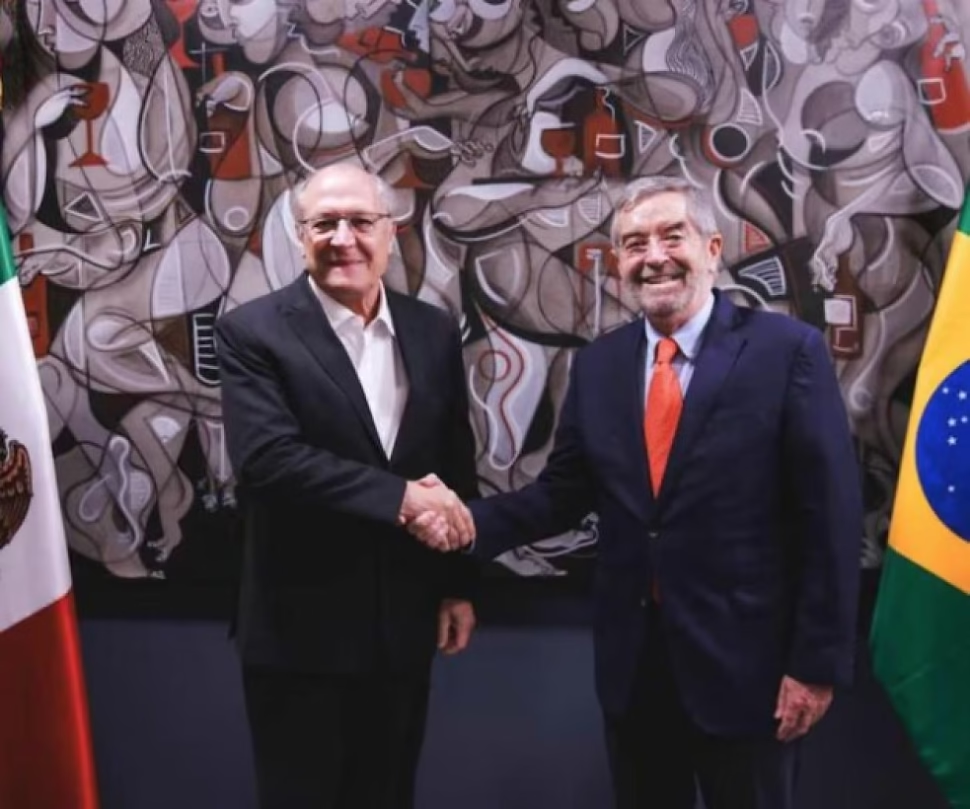
In a moment that seemed taken from a high-level espionage thriller, the figure of Geraldo Alckmin appeared, none other than the vice president of Brazil and powerful Minister of Development, Industry, Commerce and Services. His arrival was not a simple protocol formality; It was the strategic movement of a key piece on the geopolitical board of Latin America. The one who awaited his arrival, with the serenity of a chess master anticipating checkmate, was the chancellor Juan Ramón de la Fuente. Their meeting on the plane steps was more than a greeting; It was the clash of two titans, the moment in which the future of two nations began to become irrevocably intertwined.

RelatedXiomara Castro begins official visit to strengthen ties with Mexico

An Agenda That Promises to Redefine Tomorrow

This working visit, which extends over two days full of unbearable suspense, is a mission with unpredictable consequences. Every minute is planned to the millimeter, each meeting is a crucial chapter in this novel of power and diplomacy. Alckmin does not come as a tourist; comes to fight battles at negotiation tables, to weave alliances in the shadows and to seal pacts that will resonate in global markets.

His agenda is a tangle of clandestine meetings with the most influential members of President Claudia Sheinbaum Pardo‘s cabinet. But the climax of this odyssey will be experienced today, August 27, in the sacred precinct of the Senate of the Republic. An official session where words will weigh more than gold and eyes will seek to decipher hidden intentions. At the same time, in rooms illuminated by luxurious chandeliers, a parallel drama will unfold: the Mexico-Brazil business meeting, where the captains of industry from both nations will measure their strength, seek partners and compete in a dance of billions of dollars. The closing of this event at the Secretary of Foreign Relations promises to be the scene of announcements that will shake the stock markets.

And as if fate demanded an appropriate ending for such an epic, Thursday keeps the most important card up its sleeve. The doors of the majestic National Palace will open to receive the Brazilian emissary. Inside, president Claudia Sheinbaum herself awaits you. The face to face between these two political giants is not a mere photo for the press; It is the moment of truth, the conversation that could seal the course of the bilateral relationship for the next decade, forging a strategic alliance that challenges the established order and creates a new axis of power in the region. Every word, every gesture in that room, will be loaded with a historical weight that echoes through generations.

What secrets will be exchanged in whispers? What agreements emerge from this visit that seems more like a high-risk mission? The world watches with its heart in its mouth, waiting to know the outcome of this diplomatic plot that keeps everyone on the brink of the abyss.

The future of Latin America is being written at this very moment! Don’t let others be the first to know about it. Share this crucial story on your social networks and be part of the global conversation. Explore more exclusive content about the threads that move the world in our international politics section.
Mexico and PAHO/WHO sign health strategy 2026-2030

Mexico and PAHO/WHO sign agreement to strengthen the health system and reduce the burden of diseases.

Bilateral agreement to strengthen the health system

The Government of Mexico, through the Ministry of Health, and the Pan American Health Organization/World Health Organization (PAHO/WHO) signed the Country Cooperation Strategy 2026-2030. The goal: strengthen the national health system and reduce the burden of disease.

The agreement includes priority actions to address non-communicable diseases, cancer and mental health disorders. It also promotes prevention strategies and timely care throughout the population’s life course.

In addition, it seeks to strengthen the stewardship of the Ministry of Health and the coordination between the institutions of the National Health System. The goal is to move towards a model of universal access to quality medical services.

Among the central axes are the strengthening of the capacity to respond to health emergencies, the promotion of health self-sufficiency and the strengthening of the national regulatory authority.

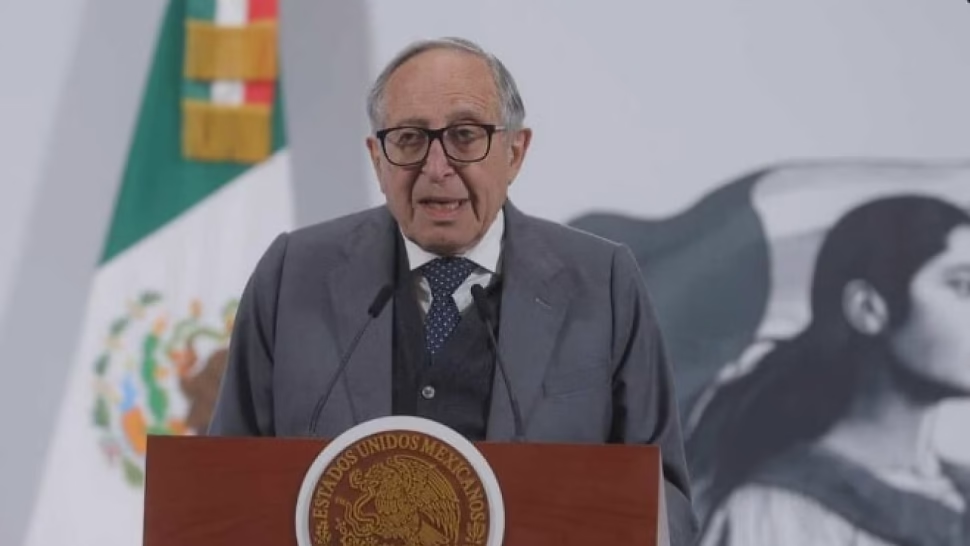
Health Secretary David Kershenobich said:

The strategy will allow national priorities to be aligned with the technical experience of PAHO/WHO, which will contribute to expanding access to health services, with emphasis on prevention, primary care and universal coverage.

The agreement lays the foundations for technical cooperation that addresses the country’s main health challenges in the next five years.

Continue reading

Mexican peso recovers after confirming the validity of the T-MEC

The peso recovers after confirming the validity of the T-MEC until 2036 with annual reviews.

The peso recovers ground against the dollar

The national currency registered an appreciation of 0.4% this Thursday, closing at 17.48 units per dollar in wholesale operations. At bank windows, the greenback stood at 17.91 pesos for sale, breaking a streak of two consecutive days with losses.

The recovery occurs after the continuity of the Treaty between Mexico, the United States and Canada (T-MEC) was confirmed until 2036, under the annual review scheme agreed upon by the three countries.

The details of the official announcement

The Secretary of Economy, Marcelo Ebrard, reported that the first formal review will begin on July 20 with the visit of a US delegation to Mexico. During the virtual meeting with their counterparts from the United States and Canada, Washington’s concern about the trade deficit was addressed.

Ebrard highlighted that more than 80% of Mexican exports to the United States continue to be tariff-free, with no changes to that scheme expected. The next working groups will focus on strengthening regional integration in strategic sectors such as the pharmaceutical industry and semiconductors, with the aim of reducing dependence on imports from other regions.

He specified that negotiations on the future of the treaty are limited exclusively to trade issues and do not include security issues.

Continue reading

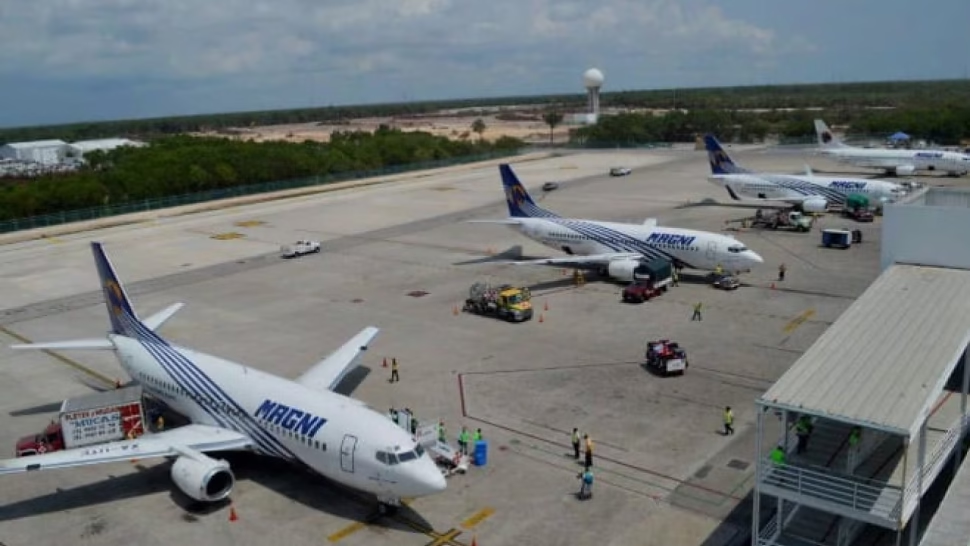
AFAC revokes Magnicharters certificate after non-compliance

The airline could not prove regulatory compliance after an extraordinary verification.

Regulatory decision

The Federal Civil Aviation Agency (AFAC) revoked Magnicharters’ air services operator certificate. The measure was notified on June 29, after a regulatory review process.

The Secretariat of Infrastructure, Communications and Transportation (SICT) reported that the company’s right to a hearing was respected throughout the procedure. It was granted legal deadlines to present information and evidence that demonstrated compliance with current aeronautical regulations.

However, the documentation provided was insufficient. The airline was unable to prove that it met the necessary requirements to continue operating as a provider of passenger air transportation.

Origin of revocation

The decision derives from an extraordinary major verification carried out in January 2026. In it, non-compliance with the regulation of the sector was detected. This led to formal requirements and, subsequently, the temporary suspension of operations in April, as a preventive measure.

The SICT stressed that the revocation is based on the lack of sufficient evidence on the part of Magnicharters to prove its regulatory status. The company now faces the loss of its certificate, which prevents it from offering commercial air services.

Continue reading