A resilient community in the face of climate adversity
One week after the weather impacts that submerged the region, residents of the municipality of Álamo Temapache are fighting an exhaustive battle to recover from what is already considered the worst natural disaster in more than a quarter of a century. For residents like Professor Armando Cruz, the prospect of facing a third contingency of this magnitude is terrifying, to the point of contemplating the sale of their home because they consider that a new event could be fatal for their family group.
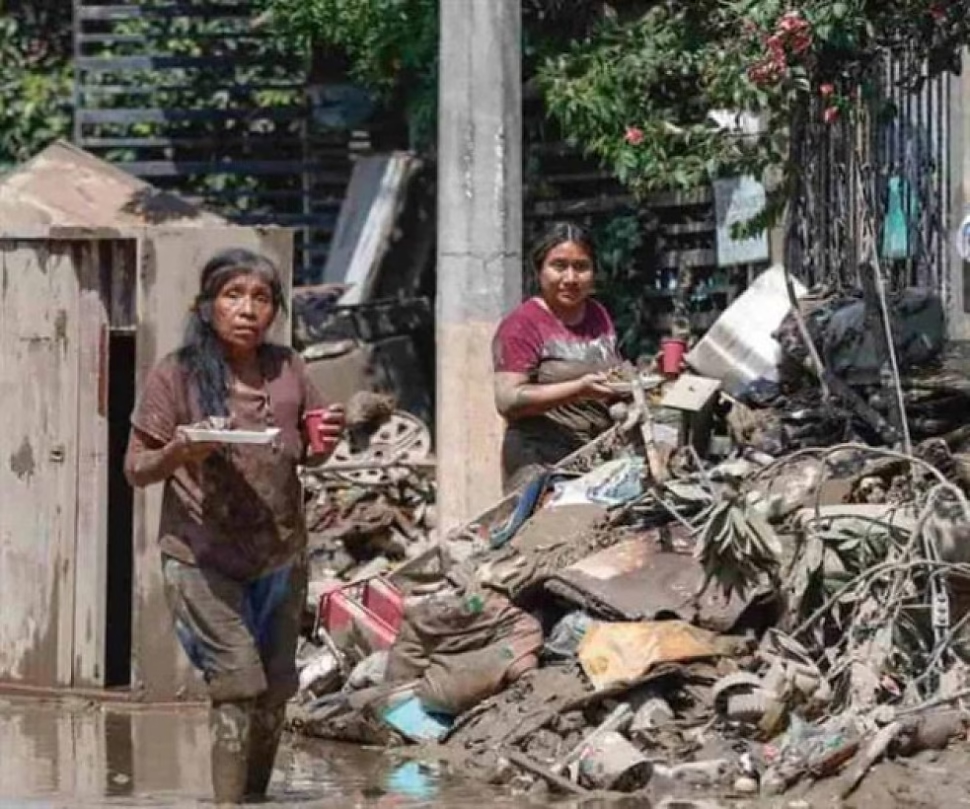
The work seems endless. The residents of Alameda continue to extract water and sediment from their properties, many of which remain flooded. This titanic task of cleaning and rehabilitation is carried out, in numerous cases, with the logistical support of elements of the Mexican Army, the Navy and the National Guard. Despite the physical and emotional exhaustion, the community spirit remains unbreakable. Some attribute this catastrophe to a divine test, while others, with a more earthly view, link it directly to the consequences of climate change and the vulnerability of the area to extreme hydrometeorological phenomena.
The official dimension of the emergency is overwhelming. Of the 51 neighborhoods that make up the municipal seat, 48 remain in a state of total disaster, according to the statement of the Morenista municipal president, Blanca Lilia Arrieta Pardo. During a brief visit to the area, then-president Claudia Sheinbaum Pardo met with affected families and merchants, in what constituted her first direct contact with the critical situation that this Veracruz municipality is going through.
The aftermath of the flood: public health and collapse of services
Dania Mitzel Sánchez López, a resident of the Gabino González neighborhood, expresses the collective fatigue that overwhelms the population. “We are tired of pulling so much mud, I have already despaired, I see no end to it. Now imagine those who still have water in their house,” he says from the main entrance of the “Enrique C. Rebsamen” shelter, located in the Pueblo Nuevo community. As an elementary school teacher, she went to the shelter in search of sterile gauze to care for her mother, who suffered a cut on her foot while trying to rescue a refrigerator from inside her already flooded restaurant.
Beyond the immediate material destruction, an equally dangerous secondary threat now emerges: infections. Stagnant water, combined with the putrefaction of dead animals, the proliferation of mosquitoes and the massive accumulation of solid waste on public roads, creates an ideal breeding ground for diseases. The municipal cleaning services are absolutely collapsed, unable to cope with the monumental task of collecting the debris and garbage generated by the flood, which deepens the health crisis.
Stories of loss and the shadow of an uncertain future
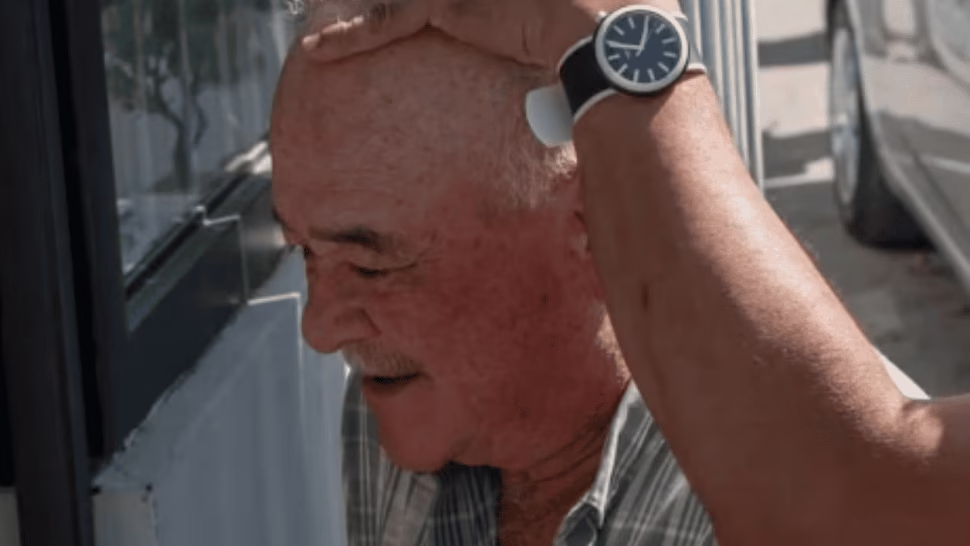
In the Francisco I. Madero neighborhood, the story of Professor Armando Cruz Francisco illustrates the harsh reality that thousands live. The fatigue accumulated by days of uninterrupted work is evident. Their routine consists of cleaning household items and removing appliances irreparably damaged by the flooding of the Pantepec and Vinazco rivers, whose overflows were the main triggers of this tragedy. Together with his wife, he begins his work at eight in the morning, achieving to date an approximate progress of 60% in the rehabilitation of his home.
“Mainly due to the cleaning work, we are tired and we are already struggling enough; however, we do not give up, we continue the fight to try to get up from this tragedy,” he states with determination. This is not the first time that Cruz Francisco faces a catastrophe of this nature; The previous one occurred in 1999, when the water level reached 30 centimeters below the threshold of his door. Given the recurrence of these extreme events, his mother, owner of the home where she lives with her family, seriously considers the option of selling the property. The fear of a third, potentially more devastating contingency has taken hold in their thinking.
“Maybe on the third time, climate change will arrive higher than today and we are already a little afraid of the situation. Thank God we did not have deaths of neighbors here, we all meet, but there are neighborhoods where we know that there are people who disappeared and they still cannot be found,”, he comments while using a hoe to remove the mud that covers the floor of his house. Clinging to hope, he concludes: “Thank God we are alive, that’s what counts, the years of effort we will have to get up, work and give more effort to get the house back to how it is now.” Their main desire, shared by the entire community, is for government support to arrive quickly so they can recover, at least, the most essential of what the intense rains took from them.
The situation in Álamo Temapache is a stark reminder of the vulnerability of many Mexican communities in the face of the new climate normal. The resilience of its inhabitants collides with the magnitude of a disaster that has surpassed all local response capacity, putting on the table the urgent need for robust public policies for adaptation to climate change, risk management and reconstruction with a focus on long-term prevention.
Share this information to keep the situation in Álamo Temapache visible and explore more content related to natural disaster management and climate action on our site.