Analysis of an Incident of Attack with a Knife in the Context of Domestic Violence
A woman was apprehended by elements of the Mexico City Police after allegedly attacking her romantic partner with a knife. This event was triggered by an argument that both had, a recurring factor in cases of domestic violence. The episode highlights how interpersonal conflicts can quickly escalate into physical aggression, with potentially lethal consequences when sharp objects are involved.
The chronology of the events developed while the officers carried out their surveillance patrols and security tasks in the Las Cruces neighborhood. The intervention was activated after an alert issued by the monitors of the Command and Control Center (C2) Poniente, who reported the presence of an injured male. The specific location was the intersection of Circuo Cantera and Primera Cerrada de Circuito Cantera streets, in the Magdalena Contreras mayor’s office. This procedure exemplifies the integration between traditional patrolling and technological monitoring systems for a more agile response to emergencies.
Police Intervention and Immediate Medical Attention
Upon arriving at the scene of the event, the police officers noticed that the individual had visible blood stains in the abdominal region. Immediately, emergency medical services were requested. Witnesses present at the scene pointed to a woman, who was at the scene, as the alleged person responsible for the attack. Identification by witnesses is a fundamental evidentiary element in the early stages of a police investigation, providing a baseline for subsequent legal action.
The paramedics staff who came to provide support carried out an initial assessment of the 41-year-old man. The preliminary diagnosis was a stab wound injury to the epigastrium, the upper and central region of the abdomen. Given the potential severity of a wound in this anatomical area, which can affect vital organs, the victim was immediately transferred to a hospital center to receive specialized medical care. Prompt prehospital care and transfer are critical for the patient’s prognosis in cases of abdominal trauma.
Detention Procedure and Securing of Evidence
In parallel with the care of the victim, the alleged aggressor was treated. Following strict police action protocols, a security review was carried out. During this search, a knife with a length of approximately 15 centimeters was seized from him. The securing of this instrument is crucial, since it constitutes the main material evidence that could link the detainee to the reported injury. The chain of custody of this element will be vital to the legal process.
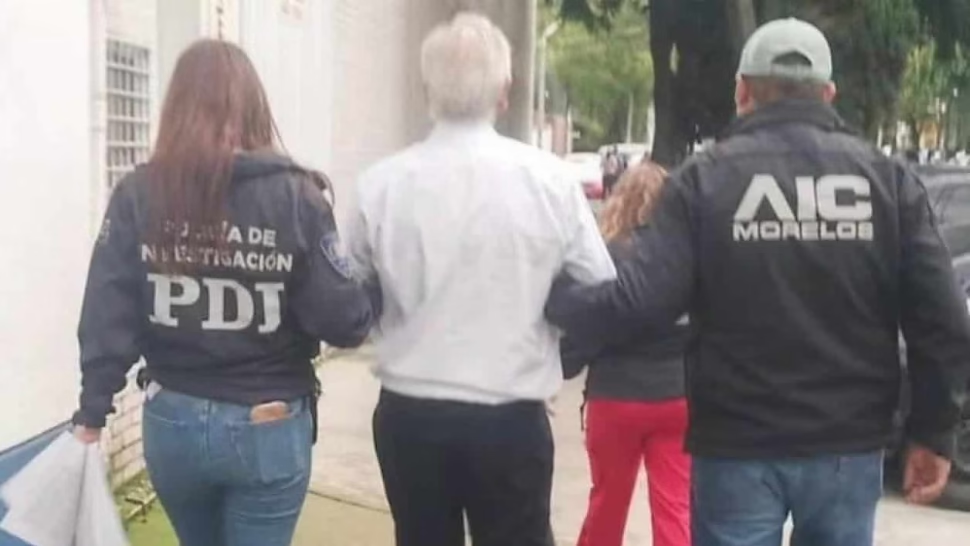
As a result of these actions, the 31-year-old woman was formally detained. He was informed of his legal rights, as stipulated by the Mexican legal framework, which includes the right to remain silent and to have an attorney. Subsequently, it was presented, along with the seized weapon, before the corresponding Public Ministry Agent. This authority will be in charge of directing the complementary investigation and, based on the elements collected, will determine the legal situation of the person involved, which could lead to the formulation of charges for attempted homicide or injuries.
This incident serves as an analytical reminder of the institutional response mechanisms to violence in the private sphere. Coordination between patrols, command centers, emergency medical services and the public ministry stands out. Furthermore, it highlights the danger that violence can entail in couple relationships, where a conflict can escalate to the use of weapons and put the lives of the people involved at risk. The subsequent investigation must elucidate the precise background and motives that led to this violent outcome.
Share this analysis on your social networks to contribute to the conversation about domestic violence prevention and explore more content related to public safety procedures on our website.