Hollywood vs. Trump: The battle over filming abroad
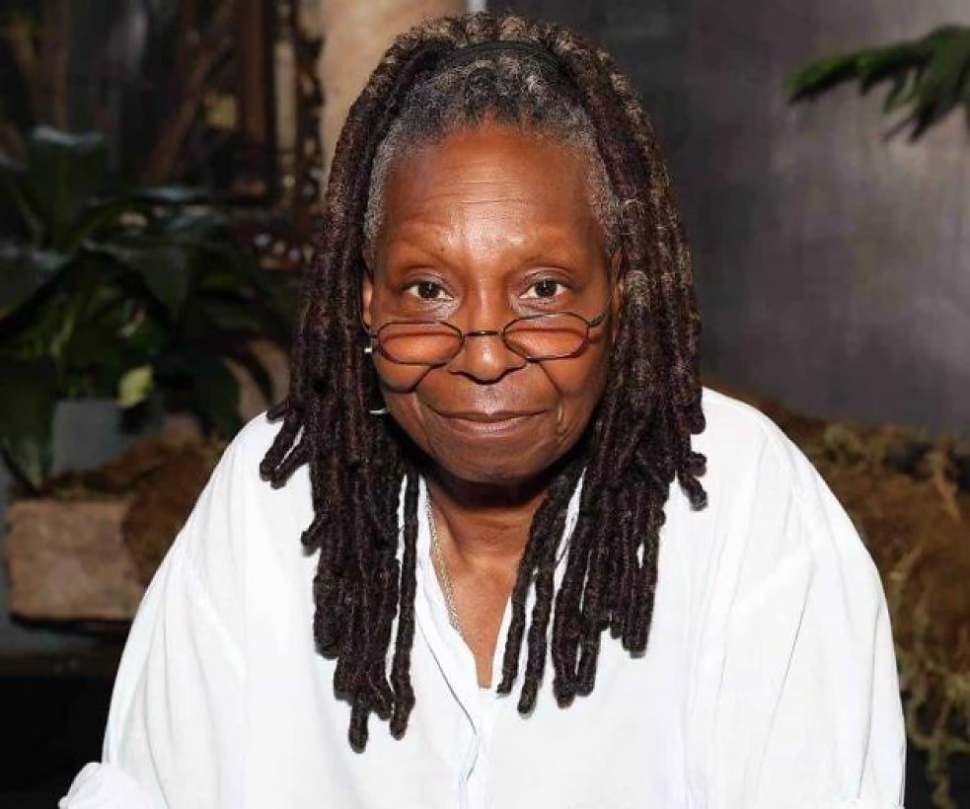
Imagine Whoopi Goldberg, with that look of “what parallel universe do you live in, Mr. Trump?”, breaking down the former president’s latest idea: a 100% tariff on American films filmed outside the country. Yes, the same as reading a tweet at 3 AM, but with real consequences. The winner of the EGOT (yes, those four awards that everyone wants but few achieve) dropped gems like: “Could you lower the price of eggs before starting this?” Because, of course, priorities.
The “creative tax” that nobody asked for
In his appearance on The View (the program where opinions fly more than memes on Twitter), Goldberg not only criticized the measure for being “harmful” for the industry, but also called it limiting artistic freedom. “Are you going to tell me where to film my story if it takes place in Europe?” he questioned, with the same face we make when watching a disappointing ending on Netflix. Trump, for his part, justified the plan by claiming that “runaway productions” (a term that sounds like a cheap spy movie) threaten local employment. Spoiler: Hollywood filmed in Canada and Europe decades before he thought about politics.
Goldberg, with the eloquence of someone who has won an Oscar, recalled that filming abroad does not mean “exporting jobs”, but rather collaborating with international talent. “Who do they charge the fee to? The studio? The local team?” he asked, revealing the absurdity of the proposal. And he concluded with the example of The Passion of the Christ: “You couldn’t film in Texas, unless Mel Gibson wanted to replace the Vatican with a Walmart.”
More than money: cinema as diplomacy
The actress took the debate beyond the economic: “Films teach English and show who we are.” Basically, Hollywood is the world’s professor of pop culture, and taxing that would be like saying, “We’re closing the museum, but keep paying admission.” Meanwhile, the White House tried to soften the scandal with “we are exploring options” (translation: “we don’t know how to get out of this mess”).
At the other extreme, Jon Voight (yes, Angelina’s father and declared Trump fan) presented a “moderate” plan with subsidies and tax incentives. Although it includes tariffs, it reserves them for “exceptional cases.” That is, the light version of the original chaos.
Moral: If Trump wants to “make Hollywood great again,” perhaps he should start by not treating film as a public enemy. Or at least, check your balls before talking about taxes.
Are you as angry as we are? Share this article and join the debate about the future of global cinema. And if you want more analysis with satire, explore our notes on politics and culture.