Venezuelan oil production takes an unexpected turn
The figures are clear and surprise even the most skeptical. In January, Venezuela’s crude oil exports almost doubled, reaching about 800,000 barrels per day. A huge jump from just 498,000 bpd registered in December.
The reason? A radical change in Washington’s energy policy.
“In January 2026, after Maduro’s capture, the United States Department of the Treasury issued the first licenses to traders such as Trafigura and Vitol to export their stocks,”
This explains the rebound. But to understand it you have to look back. In December, the previous administration imposed a full embargo and seized seven oil tankers to pressure the government of Nicolás Maduro.
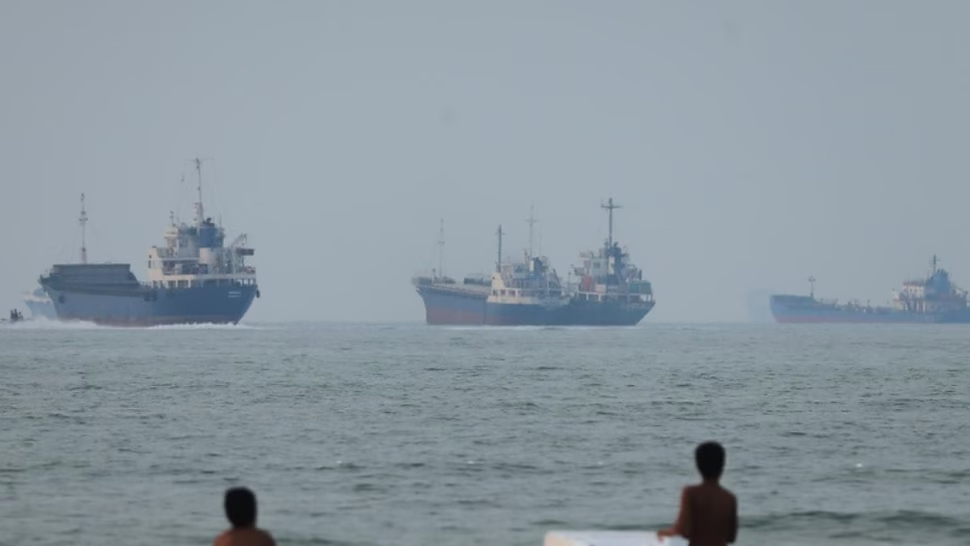
The result was an immediate collapse. More than 40 million barrels were trapped in tanks and ships. PDVSA, the state company, was forced to drastically cut production.
A relief with conditions
Now, under new licenses, some 12 million barrels of crude oil and refined products have received the green light. That is equivalent to an additional 392,000 bpd.
The main destination is terminals in the Caribbean, from where it is redistributed to the United States, Europe and India. It is a respite for the country’s coffers, without a doubt.
But here’s my professional skepticism: We’ve seen this cycle before. A controlled opening that depends entirely on the political mood in Washington. Venezuela’s oil infrastructure is mortally wounded after years of neglect and sanctions.
Doubling exports in one month sounds good in a headline. Maintaining that stable production while rebuilding an entire sector is a very different story. Oil geopolitics rarely has simple happy endings.