
Infrastructure and mobility
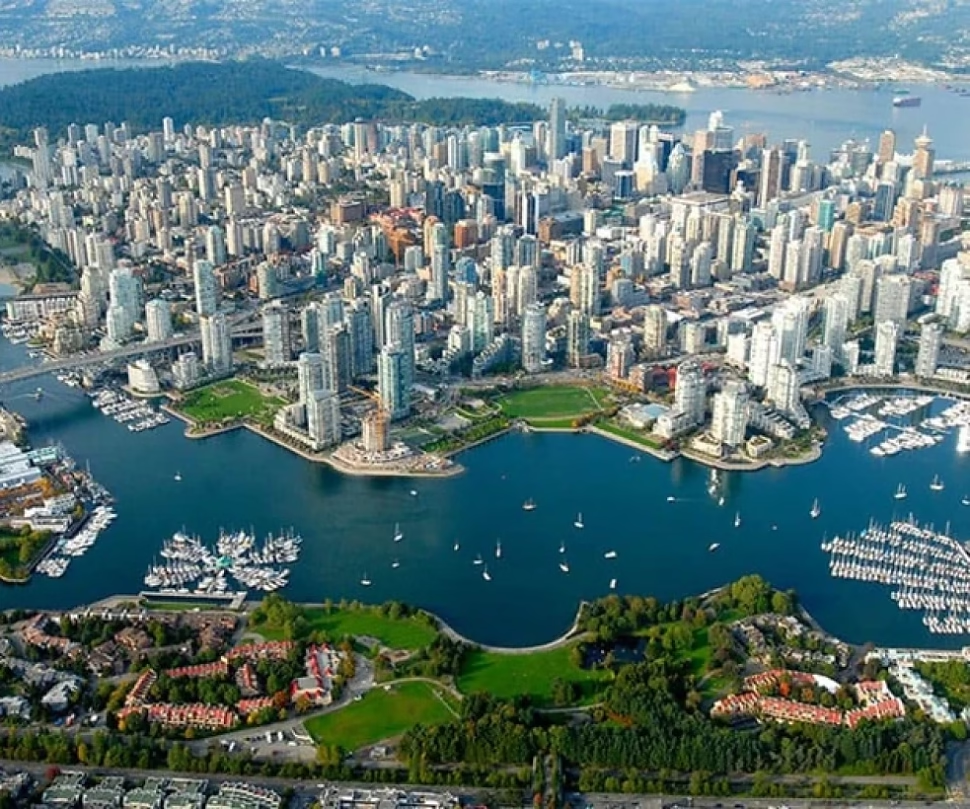
Vancouver, in western Canada, concentrates 662,248 inhabitants in its urban area and 2.6 million in its metropolis, with a density of more than 5,700 people per square kilometer. This hub has hosted world-class events: the 1954 Commonwealth Games, Expo 86, the 1997 APEC Summit, the 2010 Winter Olympics (next to Whistler) and the 2015 FIFA Women’s World Cup Final at BC Place.
The city stands out for its transportation system. It has the second largest trolleybus fleet in North America, only behind San Francisco. Since the 1970s and 1980s, Vancouver limited urban highway construction; The only major highway within the city is Highway 1, which crosses the northeastern edge. Despite this, in 2013 it was reported as the worst road congestion in North America. However, the rate of car ownership and the average distance traveled by travelers have fallen since the 1990s. Transportation operations fall to TransLink, an organization that manages roads and public transportation throughout the metropolitan area.
Diversity and urban life
Vancouver is one of the most diverse cities in Canada. In 2021, 49.3% of its residents did not have English as their native language and 54.5% belonged to visible minorities. The population of Chinese origin exceeds a quarter of the total, with a strong presence of Cantonese and Mandarin. There are also South Asian (7%), Filipino (5.9%), Japanese (1.7%), Korean (1.7%), and West Asian (1.9%) communities. Neighborhoods like Chinatown and Punjabi Market reflect this wealth.
The city has more than 1,298 hectares of parks, led by Stanley Park (404 hectares). Its continuous beaches and the North Shore Mountains, just 20 to 30 minutes from downtown, offer recreation. Massive sporting events such as the Vancouver Sun Run, the Vancouver Marathon and the Scotiabank Half Marathon are integrated into the urban routine of this dense metropolis, accustomed to operating services and media in multiple languages.
With this background, Vancouver is emerging as a venue with operational capacity and cultural diversity to face the logistical challenges of a global tournament.


