Cross-border union infiltration: a detailed analysis
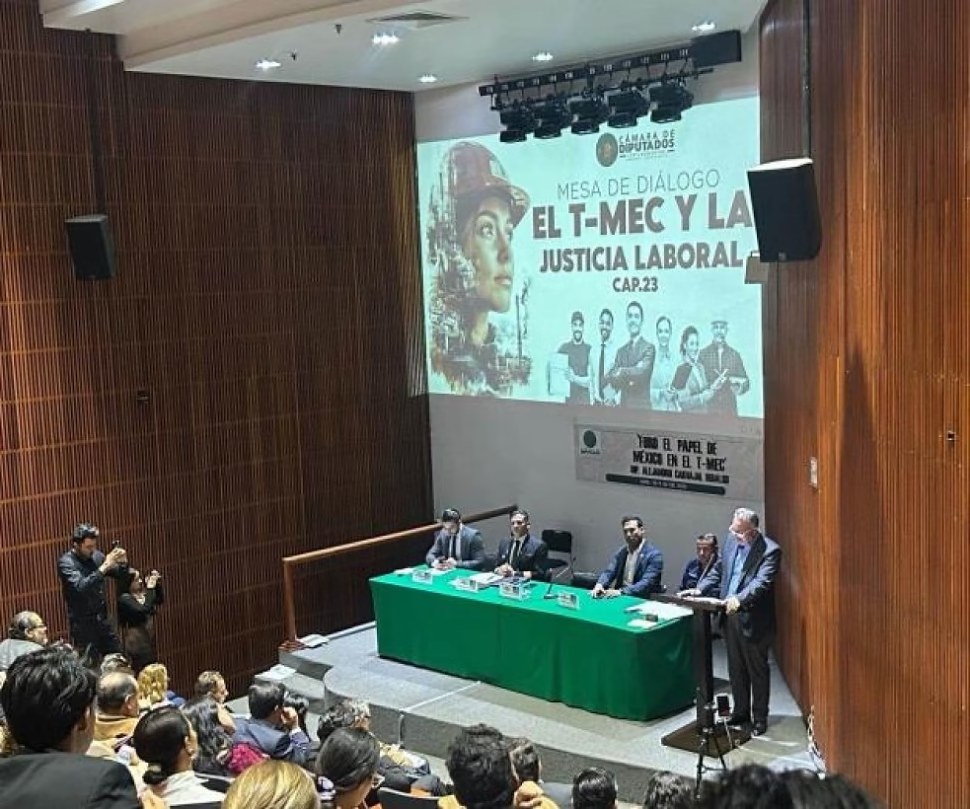
Miguel Rodríguez Navarro, deputy national secretary of the National Transport Union, has raised a worrying hypothesis during his participation in the forum “Comparative Analysis and Union Positioning before the Treaty”, held in the Chamber of Deputies of Mexico. According to their statements, there are indications that American labor organizations are infiltrating Mexican unions with the strategic objective of generating instability in the country’s business sector.
Strategies and motivations behind the phenomenon
The union leader explained that this alleged infiltration would operate through the financing of local groups, taking advantage of the Rapid Response Labor Mechanism established within the framework of the T-MEC. The tactic would consist of fomenting labor conflicts and strikes that, when escalated, would pressure companies to relocate their operations to US territory. “With substantial economic resources, they would be supporting these Mexican organizations to create controlled crisis scenarios,” Rodríguez Navarro explained.
This modus operandi would have reached its peak between 2022 and 2023, according to the records presented. A specific example mentioned was the use of institutional threats: “Companies receive notifications where their access to facilities is conditioned under the threat of activating legal procedures,” the secretary revealed, highlighting patterns of systematic intimidation.
Geopolitical and economic context
Genaro Leal Cavazos, national coordinator of Autonomous Unions, complemented this perspective by suggesting that Mexico should capitalize on the next rounds of USMCA negotiations to establish protective strategic alliances. This approach responds to the complex dynamics of industrial competition between both nations, where Mexican labor represents a key factor in attracting investments.
Experts in international labor relations point out that this scenario would reflect a covert economic war, where union actors become geopolitical chess pieces. Data from the World Bank show that, between 2020 and 2023, Mexico received a record flow of foreign direct investment in manufacturing (USD 32.4 billion), a sector particularly sensitive to labor conflicts.
Legal implications and institutional responses
The Mexican legal framework faces challenges to counteract these practices. Chapter 23 of the T-MEC, dedicated to labor rights, could be being exploited through strategic interpretations. Rodríguez Navarro warned about the need to reform union verification protocols to prevent procedural abuses.
On the other hand, analysts suggest implementing financial transparency mechanisms that track the origin of union funds, combined with international audits coordinated by the International Labor Organization (ILO).
Future perspectives and call to action
This phenomenon transcends work to become an issue of national economic security. Requires:
- Strengthening commercial intelligence
- Legislative harmonization with international standards
- Proactive union diplomacy
The situation requires a delicate balance: protecting labor sovereignty without affecting the competitiveness that has positioned Mexico as a global manufacturing hub.
Are you interested in understanding how this affects the regional economy? Share this analysis on your social networks and follow our special on labor geopolitics to stay informed.