A diplomatic bridge opens for Colombians in Monterrey

Colombia inaugurates a new consulate in Monterrey to serve its growing migrant community in Mexico.

An act with political and human weight

Foreign policy is not just speeches. Sometimes it materializes in 276 square meters of hope. Colombia has just opened the doors of its new Consulate General in Monterrey, a movement that speaks more about human connections than protocols.

The figure says it all: Mexico is the country with the most Colombians outside its borders. This space, within the Plaza Internacional Condominium in San Pedro Garza García, does not arrive by chance. It comes out of necessity.

“Today we open a bridge between Mexico and Colombia,” declared the new Consul General, Xíomara Alejandra López Castell, with emotion. She herself lived the migrant experience. “Assuming this honor represents a profound responsibility for me.”

More than procedures, a space for listening

In the theater of diplomacy, this is not just any set. The Consul was clear: it will not be a common office.

“It will be a space for listening, accompaniment and respect,” he stated, outlining the vision of President Gustavo Petro’s government. They call it human diplomacy. One that, in his words, protects, accompanies and generates opportunities.

Ambassador Carlos Fernando García Manosalva dotted the i’s. The task is enormous. Monterrey was a missing piece on the board, joining the already existing consulates in Mexico City, Cancún and Guadalajara.

“The task is not small,” admitted the Ambassador, recognizing the challenges shared between both nations. “The Mexican Government has an ally in this Consulate for the fight for rights.”

Behind the curtain, history has its folds. The Colombian state had already invested more than 409 million pesos in this headquarters at the beginning of 2025. But the stage was empty, waiting for the main actor: the official appointment of the Ministry of Foreign Affairs.

RelatedSamuel García announces 4,000 new transport units for November

Now, with López Castell at the helm, the machinery begins to operate to serve a community whose real size, they warn, exceeds any formal figure.

The inauguration did not go unnoticed among local figures. State and municipal authorities such as Emmanuel Loo, Secretary of Economy of Nuevo León, were present. That presence speaks of the value they give to the movement.

At the end of the day, more than a protocol act, this is a nod to thousands of personal stories. It is the tacit recognition that where there is a vibrant community fighting for its future, the State must build a bridge. And this consulate is that bridge made concrete and commitment.
Morena registers 124 candidates for Transformation coordination

The party reported 124 registrations in the first two days of the internal process.

Start with high participation

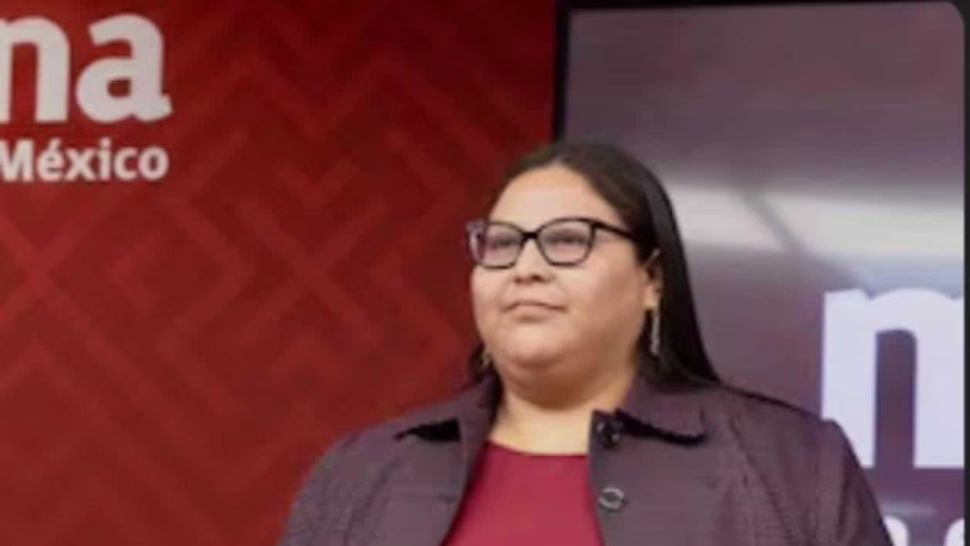
In the first two days of the registration process for the Transformation Defense coordinations, Morena reported the registration of 124 applicants nationwide. This was reported by Citlalli Hernández, Secretary of Elections of the party.

Of that total, 33 registrations were in person at the party headquarters, while 91 were carried out online through the system enabled for the internal process.

Added to these figures are the registrations of candidates from the Labor Party and the Green Ecologist Party of Mexico, within the framework of the ruling coalition.

Hernández highlighted that the process has been developed with transparency and in an environment of trust among the participants. Even, he said, some candidates have shown surprise at the wide participation.

The registration period will remain open until next Saturday, so it is expected that the number of applicants will continue to increase towards the definition of the territorial coordination of the movement.

Continue reading

Deadline extended for mandatory registration of mobile lines in Mexico

The CRT postponed the deadline to December 2026 for millions of prepaid users.

The Telecommunications Regulatory Commission (CRT) confirmed an extension for the mandatory registration of mobile telephone lines. The deadline scheduled for June 30 was postponed. The measure seeks to facilitate compliance for millions of users who have not yet linked their number.

New staggered calendar

The new term applies only to pending prepaid lines. It will be done in a staggered manner taking the last digit of the number as a reference. The deadlines are from August 15 to December 31, 2026.

According to the latest CRT report, so far more than 63 million mobile lines have been registered: 40.2 million prepaid and 22.8 million postpaid. However, there are still millions of users to complete the process.

The authority warned that lines not registered within the deadline will be suspended by telephone companies for a period of up to 72 hours. During that time they will only be able to make calls to emergencies, citizen services and their provider. Full service will be restored once registration is complete.

At the end of 2025, Mexico had around 161.6 million active mobile lines, a penetration of more than 124% of the population. The CRT added that, when a line is used in a crime, the authorities may request information directly from the telephone companies.

Continue reading

Mullin defends border wall before US committee

Secretary Markwayne Mullin assured that physical barriers stop organized crime.

Defense of the border wall

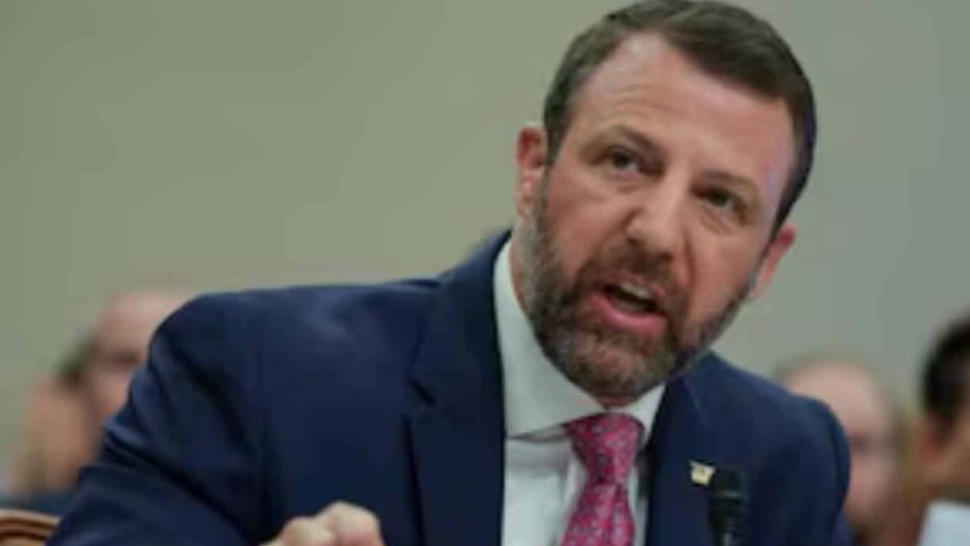
The Secretary of Homeland Security of the United States, Markwayne Mullin, defended this Thursday the construction of the wall on the border with Mexico. During a hearing before the House Appropriations Subcommittee, he stated that physical barriers have a positive impact on containing illicit activities linked to organized crime.

Mullin noted that nine criminal groups maintain a presence on the border. They operate through “plaza bosses” who identify vulnerabilities at crossing points to facilitate drug and human trafficking. This represents a constant threat to the security of the United States, he indicated.

The official maintained that physical barriers have forced these groups to modify their routes and methods. Now they use drones and tunnels to evade surveillance. For this reason, it was considered necessary to strengthen the border control strategy.

Finally, he pointed out that the security policy of the Department of Homeland Security contemplates the use of infrastructure, advanced technology and specialized monitoring. The aim is to concentrate efforts in high-risk areas and improve the detection of illicit activities on the border.

Continue reading