Analysis of the meteorological event and its impact on the football calendar
A meteorological event of considerable intensity occurred in the southern area of Mexico City, significantly altering the official programming of day 6 of the 2025 Apertura Tournament of the Liga MX. The match between the Cruz Azul and Toluca teams, scheduled to be played at the Estadio Olimpico Universitario, experienced a delay in its start as a direct consequence of the adverse weather conditions. This incident serves as an analytical reminder of how external factors, completely unrelated to the sporting field, can exert a decisive influence on the development of high-competition events.
The initial whistle of the match was officially scheduled for 9:05 p.m.. However, the combination of intense rainfall and strong gusts of wind that hit the area forced the organizers and authorities to implement a protocol to postpone the start of the sporting activity. The decision, far from being arbitrary, was based on security and visibility evaluations, prioritizing the well-being of players, coaching staff and fans present in the building.
Institutional action and communication protocol
The Liga MX, in its role as governing body, issued an official statement to inform citizens and the media about the situation. The message specified: “The match Cruz Azul vs Toluca at the Olympic University will delay its start originally scheduled for 9 p.m. This is due to the electric storm in the surroundings of the stadium. In coordination with Civil Protection the new start time will be determined and reported.” This statement underlines the importance of inter-institutional coordination between sports entities and emergency management authorities for informed and safe decision-making.
The meteorological phenomenon was not a sudden event. Reports indicate that from approximately 6:00 p.m. a light drizzle began to be recorded on the periphery of the university campus. However, as the hours passed, the intensity of the rain increased progressively, reaching a level that reduced visibility on the playing field to minimum levels, a situation that represented a potential risk for the physical integrity of the footballers and the quality of the sporting spectacle.
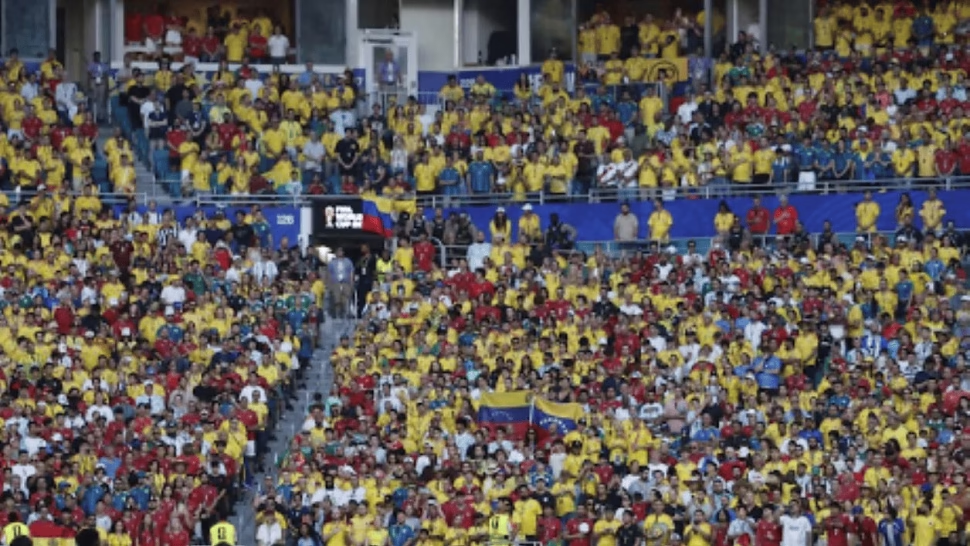
Before the teams went out to perform their protocol warm-up, the institutional voice of the stadium informed the attendees about the inevitable delay attributable to bad weather. Immediately after this announcement, calm and understanding was requested from the fans, who, demonstrating remarkable patience, devoted themselves to an expectant wait for the start of the match.
Management of waiting time and environment in the stands
To make the wait more bearable and manage the logistics of downtime, an entertainment strategy was implemented. The stadium DJ was in charge of cheering up the audience with a selection of music and atmosphere designed to keep spirits high. Despite the adverse atmospheric conditions, the followers of both squads maintained exemplary behavior and a positive spirit, waiting for the precise moment when the rain would subside enough to allow the actions to begin on the field.
This episode highlights the vulnerability of outdoor events to the unpredictability of natural phenomena. The total delay of 30 minutes not only generated uncertainty among the fans, but also activated a series of operational and security protocols that must be analyzed to optimize the response to similar eventualities in the future. Post-event analysis usually focuses on the evaluation of response times, the effectiveness of communication and the final spectator experience, crucial factors for the sports industry.
Did you find this analysis of how external factors impact professional sports interesting?Share this article on your social networks to generate conversation and explore more content related to the logistics and management of sporting events in our specialized section.