A Nation in Forced Pause
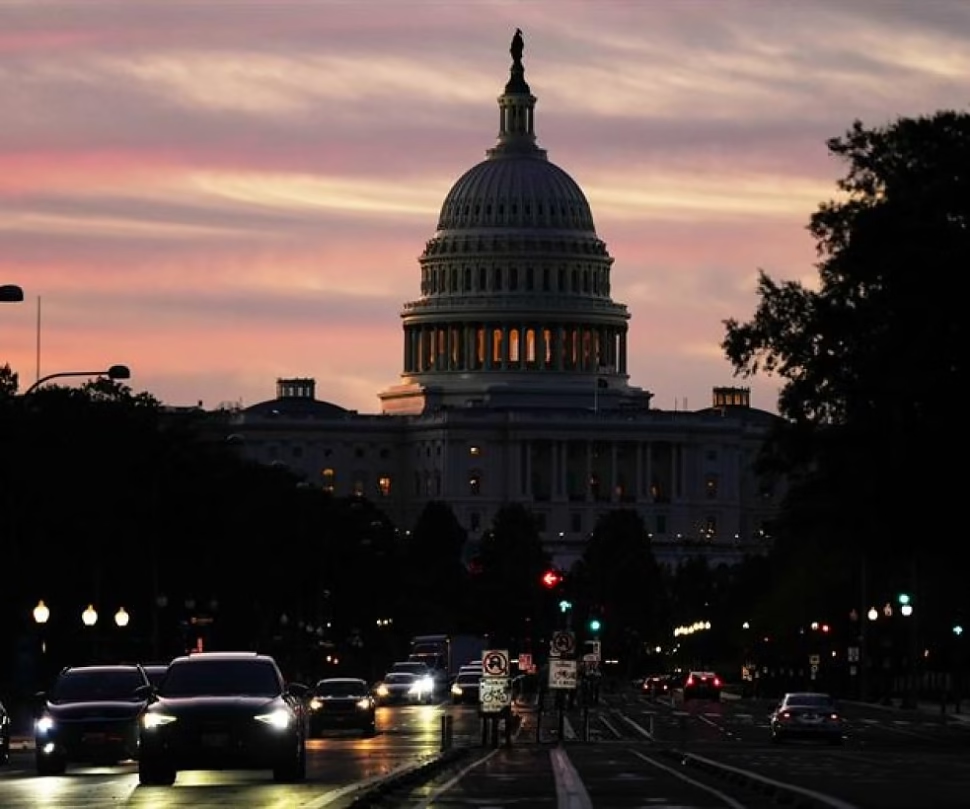
At this precise moment, The United States is immersed in a new government shutdown, a scenario of uncertainty that is activated when legislators cannot achieve a consensus to approve the financing that keeps federal programs and services operational. This shutdown, which began Wednesday, is more than a news headline; It is a critical situation that affects the lives of millions and reveals the deep cracks in the political system of the world’s leading power. The inability to reach a budget agreement before the deadline has plunged the country into a cycle of instability whose shock waves will be felt in every corner of the nation.
An attempt at a vote to end this government shutdown failed miserably, evidencing a staunch refusal to give in on the part of both Democrats and Republicans. This lack of will for dialogue and bipartisan commitment only aggravates the crisis, leaving essential services and the national economy in limbo. The stalemate in the Capitol is a clear reflection of a political polarization that seems insurmountable, where intransigent positions gain more ground than the search for practical solutions for the common well-being.
The Human and Economic Cost of the Paralysis
The consequences of this stoppage are immediate and devastating. It is estimated that approximately 750,000 federal workers will be affected, being suspended from work without receiving pay during this period. Many face the anguish of possible permanent layoffs, while a large number of government offices and agencies have closed their doors, some at risk of never reopening. This forced interruption not only hurts the families who depend on those wages, but also hits the communities and businesses that revolve around federal activity.
In the midst of this chaos, former President Donald Trump, since his return to the political scene, has promised to carry out “irreversible” actions as a form of retaliation, accelerating, for example, his deportation agenda. While these controversial plans advance, other fundamental pillars for society, such as education and environmental services, begin to falter, compromising the future of the country. Analysts predict that the economic repercussions of this closure will spread throughout the territory, affecting everyone from large corporations to small entrepreneurs.
House Speaker Mike Johnson, surrounded by Republican leaders, expressed a hope that many share: “I certainly pray they come to their senses.” However, prayers seem not to be enough to break the deadlock. This is the third government shutdown linked to Trump, a notable record that underscores the deep division over budget priorities and a political climate that, worryingly, appears to reward intransigent positions over traditional compromises and agreements.
A Blame Exchange and a Blocked Agenda
In this complex political situation, blame flies in all directions. The Democrats have started this unusual budget fight, an uncharacteristic move for a party that has historically prioritized the operation of the government. This decision responds to pressure from his voters, who are eager to challenge the second term agenda promoted by Trump. The blue party’s main demand is funding for health subsidies established under the Affordable Care Act (ACA), whose expiration would affect millions of people and cause a widespread increase in health insurance costs nationwide.
For their part, Republicans have flatly refused to negotiate under these conditions, and have encouraged Trump to stay out of any conversation. The situation has been marred by unconventional communication tactics; After a meeting at the White House, the former president published a fake and cartoonish video that mocked the Democratic leadership, a piece widely perceived as not serious and with racist overtones, which, far from helping, further poisoned the atmosphere of dialogue.
The response from the opposition leadership was immediate. Democratic leaders Sen. Chuck Schumer and Rep. Hakeem Jeffries issued a joint statement saying: “President Trump’s behavior has become more erratic and unhinged.” In their statement, they called for an “intervention” to bring the country out of lockdown, accusing the former president of being “obsessively posting crazed deepfake videos” instead of dedicating himself to negotiating a bipartisan deal in good faith.
Meanwhile, Vice President JD Vance tried to make a point, stating that Republicans have the will to resolve the health problems that concern Democrats, but with one unbreakable condition: there will be no negotiation until the government reopens its doors. This hardline stance keeps the country in a dead end, where the solution seems to depend on who is willing to take the first step, while citizens and the economy pay the price of the disconnection between their representatives.
Are you interested in understanding how global political events impact your daily life?Share this analysis on your social networks and help us foster informed conversation. Explore more content related to international politics on our site.