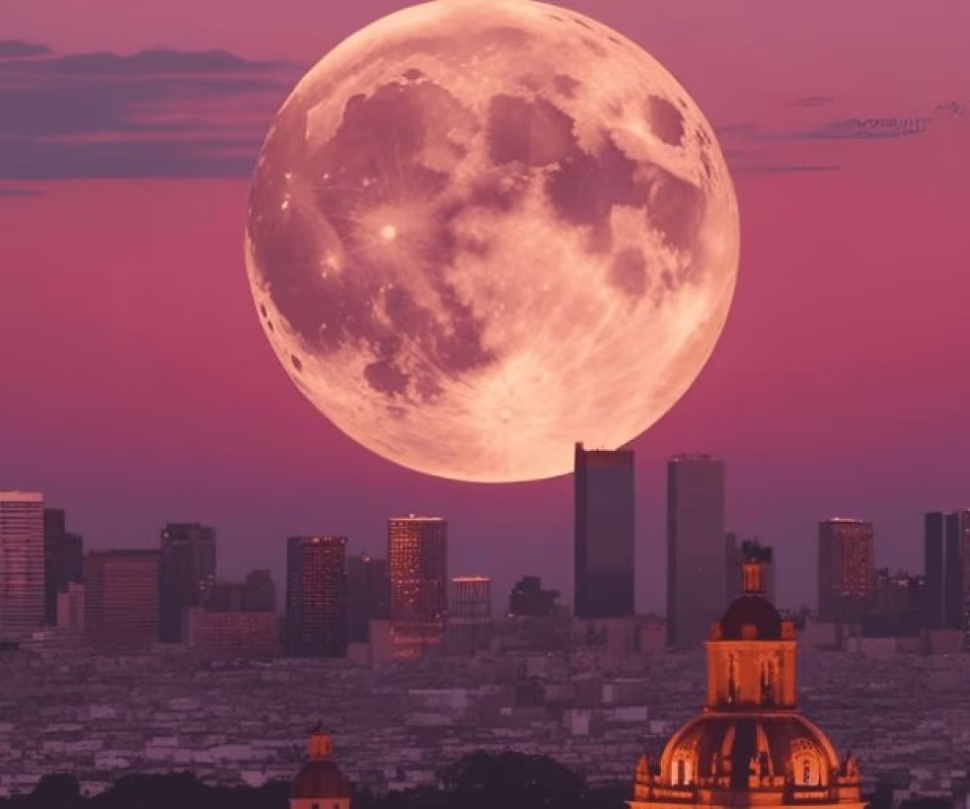
The Strawberry Moon: when the sky decides to turn romantic (and reddish)
Ah, the Strawberry Moon, that moment when our favorite satellite puts on a pink costume and makes us believe that the universe has a sweet side. This June 11, Mexico will have the privilege of witnessing this astronomical phenomenon that, spoiler alert, does not taste like strawberries nor is it accompanied by chocolate. But hey, at least it’s pretty to look at.
According to the experts at Meteored (who, I assume, are not astronomers disguised as influencers), there is a list of revolutionary tips to enjoy the event. Because, of course, looking at the moon is as complicated as programming a microwave. Here are your pearls of wisdom:
Guide to not fail on your date with the moon
- Look for a place without light pollution: That is, stay away from cities, where the light poles shine brighter than the stars. The field? Perfect. Your balcony in CDMX? Well… at least try to turn off the kitchen light.
- Prepare your eyes 15-20 minutes beforehand: Because your eyes are like those old phones that take time to charge. They need time to adjust to the darkness, unless you prefer to see just a pink blur.
- Check the weather: Because nothing ruins an astronomical event more than a cloud with a protagonist complex. Rain? Better make yourself a coffee and look at photos of the moon on Google.
- Investigate the exact time: Don’t get confused and end up seeing the sunrise. Although, if you do, at least you will have gotten up early for something.
- Use binoculars or a telescope: To appreciate those craters that, according to NASA, are “fascinating details” and not just holes that look like they were made by a teenager with cosmic acne.
And speaking of NASA, their star advice is: “Look up.” Wow, what a revelation. Thanks, science. What if we added “breathe air” to complete the lunar survival manual?
Why “Strawberry Moon”? Spoiler: it’s not a Starbucks invention
Julieta Fierro Gossman, researcher at the UNAM Institute of Astronomy (and probably the most interesting person at any party), explains to us that the name comes from the Algonquians, a Native American people who, apparently, had a better imagination than us. For them, this moon marked the strawberry harvest season in Virginia. What did the Mexicans at that time call it? “Moon of what do you eat this with?”, perhaps.
So now you know: this June 11, go out, look at the sky and enjoy a show that not even Netflix can match. Of course, if you only see a white dot… don’t blame the moon, blame your myopia.
Did you like this article? Share it on your social networks and surprise your friends with data that no one asked for but everyone needs! Or continue exploring more astronomical content (we promise less sarcasm… or not).