The official figures and what doesn’t add up
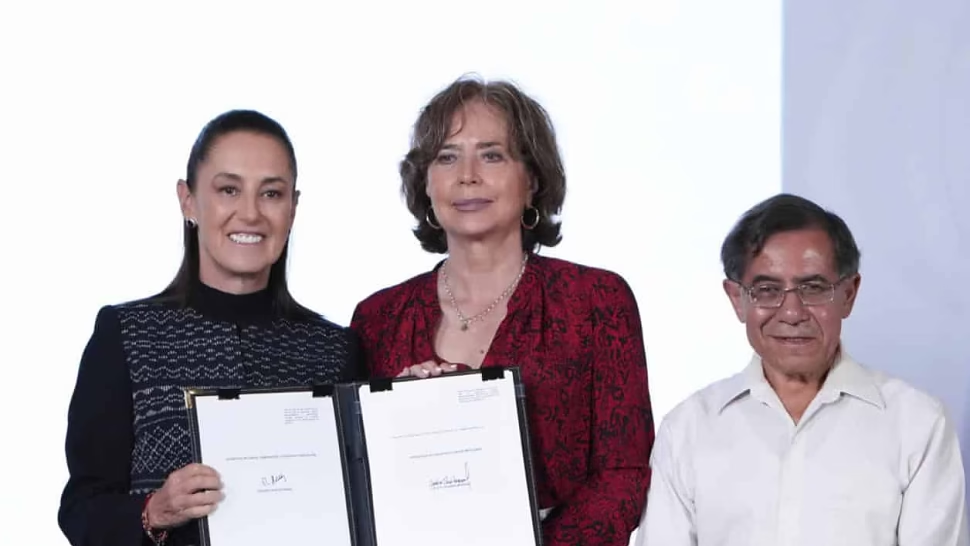
President Claudia Sheinbaum announced with great fanfare that between 2025 and 2026, more than 16 million measles vaccines have been administered. Only in the week of February 7 to 13, almost 1.7 million. Sounds impressive, right?
But here comes the first detail that makes noise. The official goal is to reach 2.5 million doses per week. That is, they are still far away. Very far.
“From what we announced last week to this week, the number of vaccines being administered in the country has almost doubled. Our goal is to reach 2.5 million vaccines per week”
That is the official quote. The recognition that they are on the right path, but without achieving the promised objective. The obvious question is: why is it not there if, according to them, there are enough vaccines?
Strategy and persistent doubts
Sheinbaum insists that there are 27 million vaccines available and that they are even purchasing 15 million more from the Pan American Health Organization for this year and next.
“There is no problem of vaccine shortages”
That’s what the official speech says. But if there is no shortage, is the failure in logistics? In the call? Or is the population not coming?
The government asks to prioritize girls, boys and people between 13 and 49 years old in 11 entities with the highest incidence: Jalisco, CDMX, Puebla… The list is long.
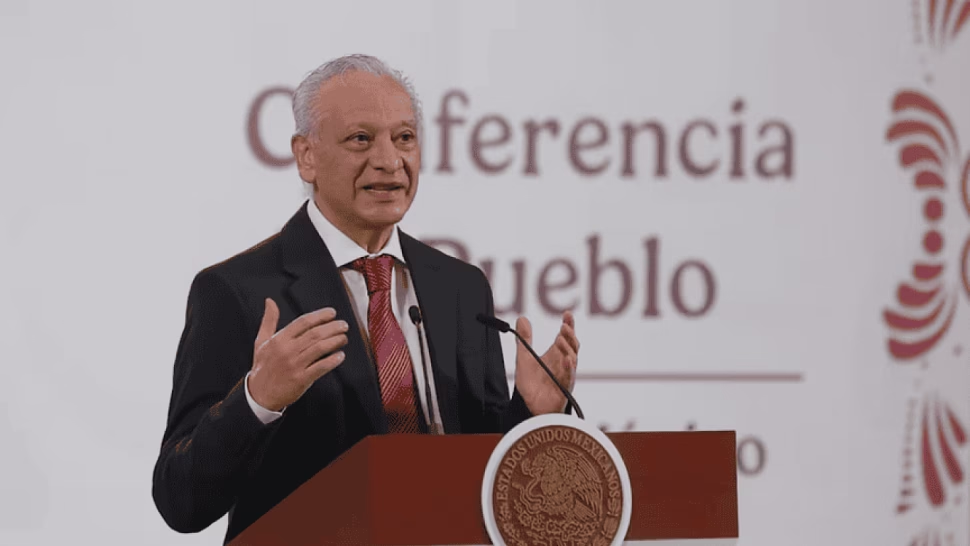
Undersecretary Eduardo Clark García Dobarganes lowers the alarmist tone: he says that the incidence is relatively low and the majority is already vaccinated.
There is another subtle contradiction: if the majority is protected, why the massive deployment? If the risk is low, why the urgency?
The truth is usually in the nuances. Between the grandiose figures and the unmet goals. Between “there is no shortage” and the urgent purchase of more doses. Today there will be another meeting with the states to strengthen attention. We’ll see if this time the numbers finally add up.