A celestial spectacle that not even the Moon can ruin (completely)
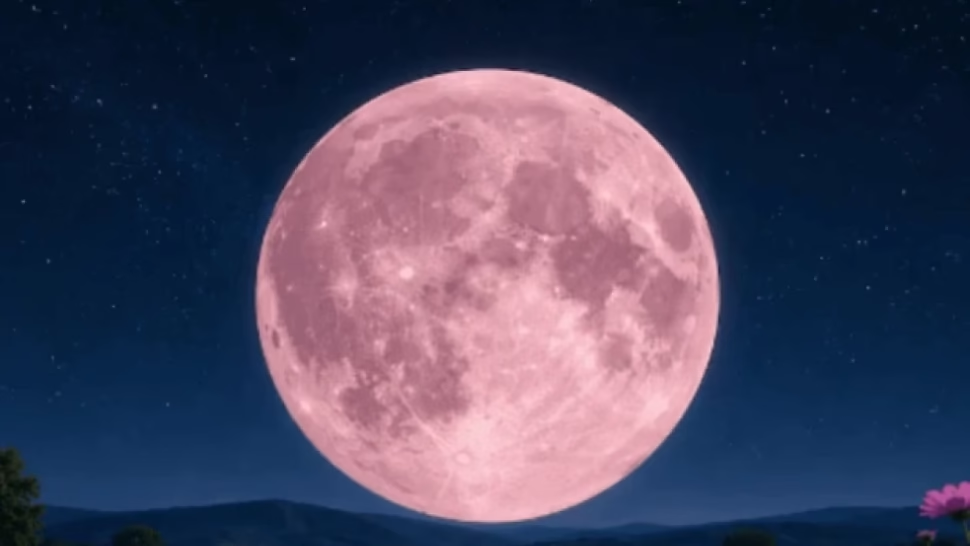
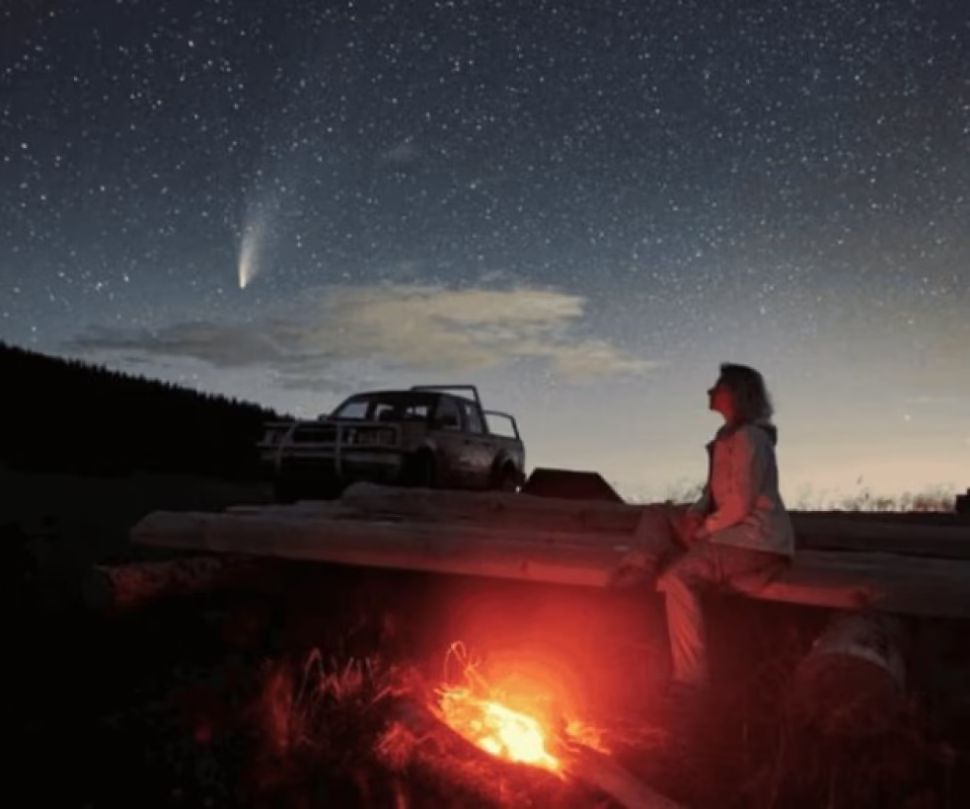
Ah, August 12, that magical date when the universe gives us its version of a cosmic firework: the Perseids. Yes, that astronomical phenomenon that we all wait for with the excitement of a child at Christmas, although most of us ended up seeing only three meteors and swearing that there were “at least twenty.” But this year, the Moon, that celestial diva, decided to steal the show with her Full Sturgeon Moon (yes, that name exists, we didn’t make it up). Illuminated at 90%, it will shine as if it were the main spotlight at a rock concert, eclipsing the most timid meteors. Irony? Absolutely.
The best places to spy on the cosmic drama
Luckily, in Mexico there are corners where light pollution is as scarce as patience in morning traffic. According to Explore México (which, apparently, knows more about the sky than we do about our own lives), these are the ideal places to witness the duel between the Perseids and the Moon:
1. El Chico National Park, Hidalgo: Perfect for those who prefer to camp with basic amenities, such as cabins and trails. Ideal if your idea of ”adventure” is carrying an ergonomic pillow. Of course, the stars here look so good that you might even mistake one for your ex appearing out of nowhere.
2. Nevado de Toluca: For adventurers who are not afraid of the cold or walking for more than ten minutes. The lack of artificial light makes it a paradise for observing the sky, although the real challenge will be to explain later why you uploaded a selfie with a frozen nose.
3. Wirikuta, San Luis Potosí:A desert where the sky is so dark that even the stars feel intimidated. If you’ve ever dreamed of sleeping under a blanket of stars (and possibly waking up with a scorpion in your backpack), this is the place for you.
4. San Pedro Mártir National Park, Baja California: Here you will not only see the Perseids, but you can also visit the National Astronomical Observatory. Just in case you need a scientist to confirm that, yes, what you saw was a meteor and not a UFO (or a hallucination due to fatigue).
Will we really see 100 meteors per hour?
Theoretically, yes. In practice, you’ll probably count about 15 before your neck protests for looking up too long. But hey, who needs 100 when one that leaves a brilliant trail is enough to make everyone shout “Wow!” as if we had won the cosmic lottery?
Share this article with your friends! This way you will have a perfect excuse to organize a trip… or to laugh together about how the Moon always wants to be the center of attention. And if you were left wanting more spectacular skies, explore our other astronomical content. The universe is too big to miss!