A train, many dilemmas (and a few less trees)
Ah, the progress. That concept that they sell us with neon lights and promises of a “sustainable future”, but that always comes with an ecological bill hidden in small letters. The Mexico-Querétaro Train, that steel mastodon that promises to take you from CDMX to Querétaro in less time than it takes to decide what to watch on Netflix, has just dropped its bomb: 90 hectares of vegetation will have to say goodbye for this project to move forward. Yes, you read that right: 90. Like 126 football fields or, in millennial terms, approximately 1,200 #PlantTok posts deleted in one fell swoop.
What is lost (and what they say we gain)
According to the Environmental Impact Statement (or MIA, for the folks), of those 90 hectares, 84 are scrublands, 4.8 are secondary vegetation and the rest… well, let’s say that some oaks and shrubs from the low deciduous forest will have to move to plant heaven. Of course, they console us with the fact that there will be underpasses for wildlife (basically a subway for raccoons) and a relocation program that sounds as utopian as that WhatsApp group in your neighborhood where no one can agree.
The budget? 144 billion pesos, with 10% allocated to environmental measures. That is, the equivalent of buying 720 million basket tacos, but instead, they will invest it in ecological compensation. Will it work? Who knows. The truth is that the train will not be 100% electric (surprise: it will use diesel), although it promises to reduce emissions compared to chaotic autotransport. In other words, it’s like changing your double cheese burger for a simple one: less harmful, but still not kale.
The route of “progress” (and its controversies)
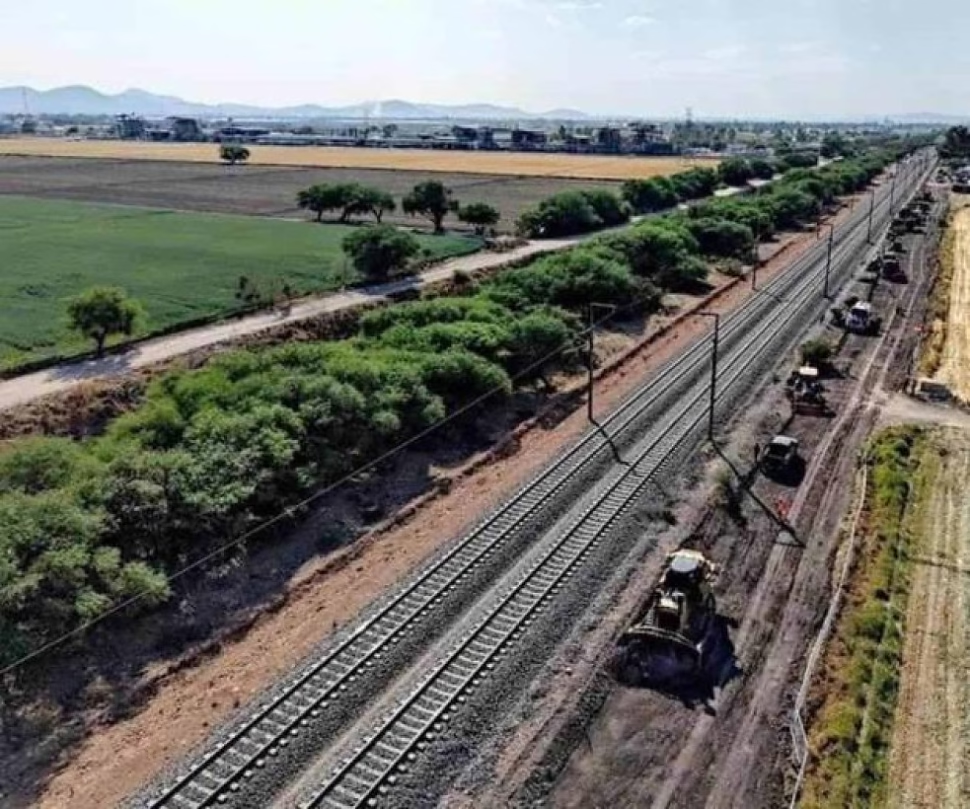
The route, which will pass through municipalities such as Cuauhtémoc and municipalities such as Tlalnepantla, already has 40% of the right of way. The other 60% will require adaptations, including 49 bridges (some new, others remodeled, like those influencers who reinvent their content every six months). Of course, in areas where it already coexists with the Suburban Train, changes in land use are ruled out. Translation? Less paperwork, but just as much controversy.
And although the project promises to alleviate vehicular traffic on the overcrowded highway, one can’t help but wonder: will the trade-off be worth it? On the one hand, fewer cars; on the other hand, altered biological corridors. A classic “I give you, but I take from you” government style.
Now what? If it outrages you or excites you (or both), share this note and continue exploring more about sustainable infrastructure in our urban issues section. Because in the end, the debate is not just about a train, but about what kind of future we are building… and at what cost.
Have you already imagined traveling on this train? Or did you only think about the displaced animals? Share and join the conversation! #TrainWithConscience (or without it)