
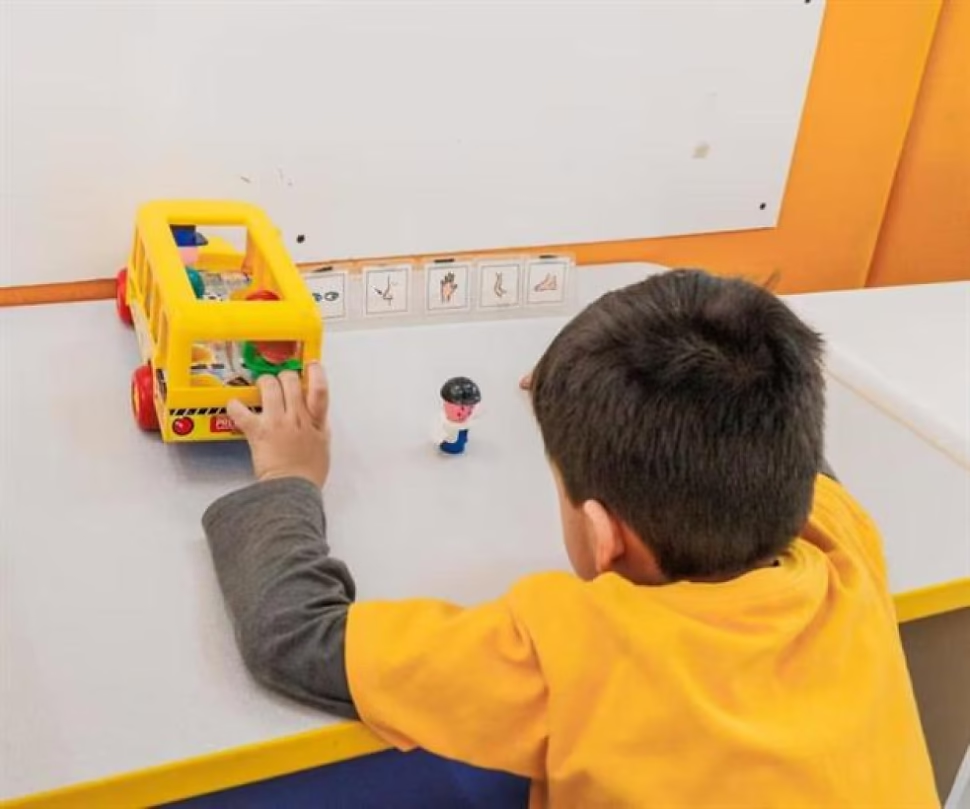
The harsh reality behind World Autism Day
Another April 2nd, another official speech on awareness. While politicians take the photo, in Mexico some 400,000 people under 18 years of age with Autism Spectrum Disorder (ASD) wait for the promises to materialize.
Senator Emmanuel Reyes admitted it with that bureaucratic elegance that fascinates me so much: the problem is no longer the norm, it is the implementation. Translation: we have had a nice law since 2015 that no one applies well.
“The main challenge today is not only regulatory, but effective implementation and institutional coordination,” said the senator.
There it is. The official confession. The General Law for the Care and Protection of People with Autism Spectrum Conditions exists on paper. It guarantees timely diagnosis, inclusive education, labor integration. It sounds wonderful until you try to access those rights.
The WHO defines autism as a diverse set of conditions. This diversity requires complex and personalized public responses. What we have are institutions that pass the buck while families navigate a labyrinth with no exit on their own.
One in every 115 Mexican children has ASD. That statistic should be a permanent health and social emergency call, not a fact to be mentioned once a year.
Historical memory is cruel with these cases. Do you remember how many progressive laws have died on the altar of poor execution? This could be next if we continue to applaud the intentions and ignore the results.
True inclusion is not decreed, it is built day by day with resources, training and real political will. So far, we’ve only seen the first.


