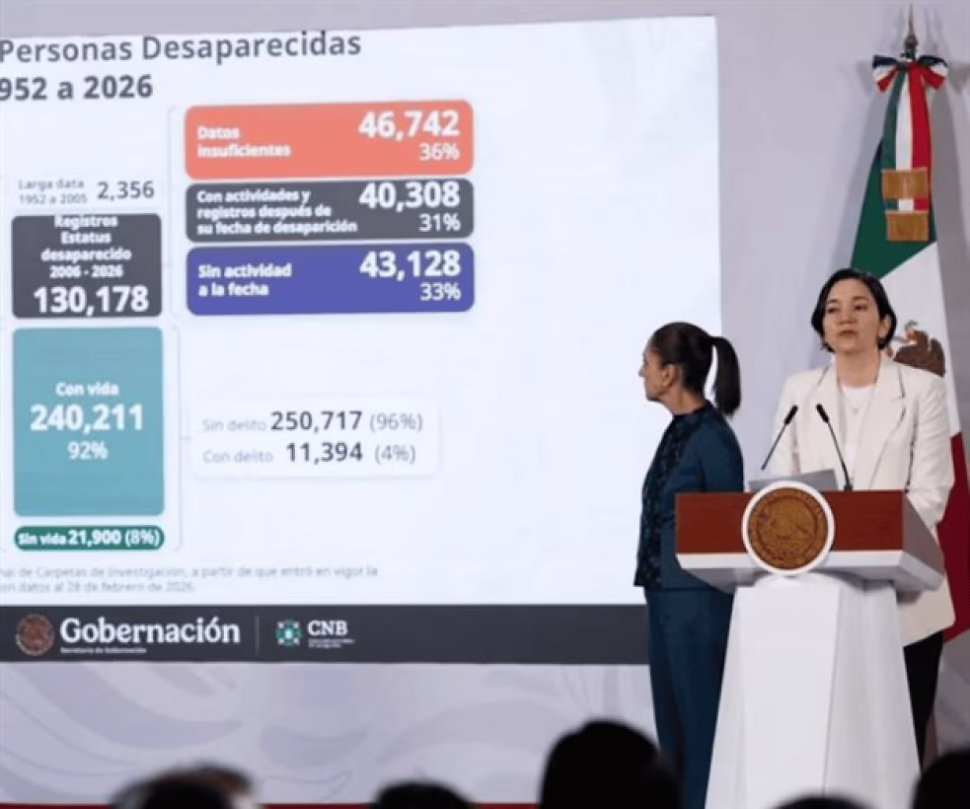
The figure that hurts: 132 thousand cases and a system that fails
Marcela Figueroa Franco, the head of the National Public Security System, released the number this morning: 132,534 people reported as missing in Mexico. The coldness of the data is just the beginning.
The really scary thing comes later. Of all that mountain of pain, only 33% – about 43 thousand records – have enough information for the authorities to even try to search for them. The rest is lost in the fog of bureaucracy and apathy.
“36% of the total do not have complete data, for example, they do not have name, sex, date of birth… which makes the search impossible,” explained Figueroa Franco.
The official was clear: before a reform in 2025, minimum data was not even requested to prepare a report. Result? Thousands of empty files, without address, without telephone, without place of events. Roles that simulate action where there is only abandonment.
The living among the missing
Here comes the cynical twist of the matter. Of the cases that did have data to search, they reviewed other administrative records. And they found this:
- People reported missing who later appeared… getting married.
- Others who registered for the SAT years after their ‘disappearance’.
- One registered in 2010 that appears on the vaccination registry in 2021.
- Another from 2012 that was registered with the INE in 2023, with matching fingerprints.
“A person who was registered as missing in 2010 appears in the vaccination registry with all his data in 2021,” said the owner.
That is, 40,308 people – 31% of the total – had an active administrative life after their reported date of disappearance. The system is so chaotic that it does not distinguish between those who really need to be found and those who simply fell into a bureaucratic hole.
The search (or simulation)
For cases with indications, they say they have a strategy: they call if there is contact or request information from the INE and telephone companies. They claim to have thus ‘located’ 5,269 people and changed their status.
But then there is the other side: of those 43 thousand cases with ‘complete’ data, only 3,869 have an open investigation folder. More than 26 thousand are just ‘reports’ – wet paper that does not require us to investigate anything.
“The difference between a report and a folder is that reports do not formally initiate an investigation within the prosecutor’s office,” admitted Figueroa Franco.
In the end, the official figures try to paint a controlled picture: they say that of the historical total they have located 66%, and that since last October they have ‘found’ almost 32 thousand people. But these figures collide with the stark reality of incomplete files and investigations that never begin.
The true statistics are not in the optimistic percentages, but in that forgotten third whose names are not even spelled correctly.