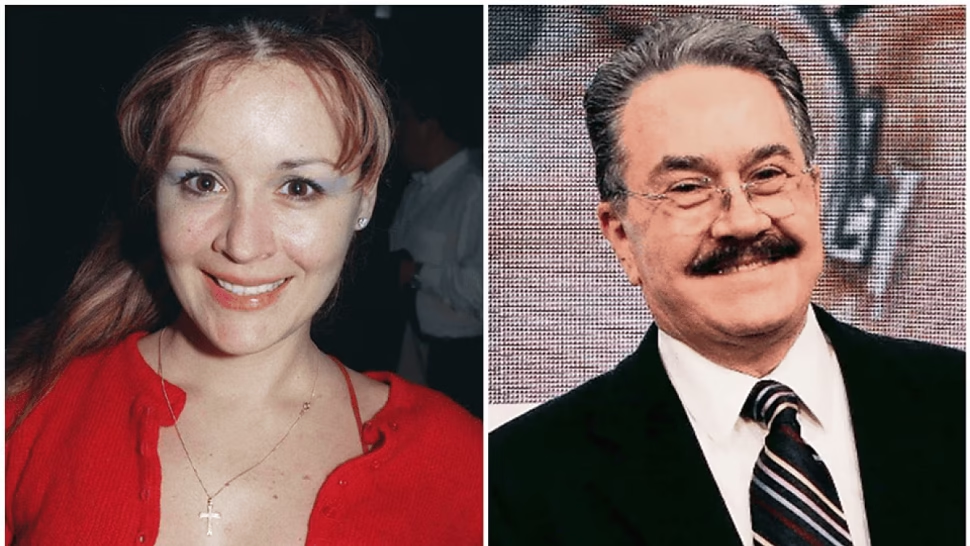
The creator of “La Rosa de Guadalupe” clarifies the legal status of the controversy
In the field of entertainment and television production, the dissemination of unverified information can generate communication crises of considerable magnitude. Recently, an intense rumor mill on digital platforms and traditional media claimed that the singer Christian Nodal had filed legal action against the drama series “La Rosa de Guadalupe”, owned by Televisa, due to an episode broadcast that, according to the public’s perception, was inspired by his love life.
In response to these rumors, Carlos Mercado, creator and executive producer of the successful program, offered definitive clarification during a participation in the GPI podcast. Mercado categorically denied the existence of said demand, pointing out that production is pending official notification that, to date, has not arrived. This statement dismantles the narrative that had gained ground on social networks such as Twitter and TikTok, where many took the litigation for granted.
Analysis of the reaction and the impact on the rating
Mercado’s analytical approach went beyond simple denial. The producer provided a revealing context about the management of the situation by the artist’s entourage, commenting that Nodal’s team had approached the matter with “a lot of philosophy”. Furthermore, Mercado introduced a marketing and audience perspective, suggesting that, far from being harmful, the controversy generated by the episode titled “Fan of their relationship” had worked as a ratings booster for the program. According to his vision, the media attention derived from the alleged references to the singer’s relationship with Ángela Aguilar translated into an increase in viewership.
This episode highlights the complex dynamic between the creative freedom of fictional productions, the right to privacy of public figures, and the amplifying power of social networks. From a technical point of view, the situation illustrates how audiovisual content can be interpreted and redefined by the audience, generating a chain of misinformation that requires official clarifications from primary sources. Mercado’s communication strategy, combining denial, irony and an impact analysis, constitutes a case study in the management of non-legal crises in the entertainment industry.
The controversy, therefore, is resolved momentarily in the field of public perception and not in the courts. Without a formal lawsuit filed, the case remains an example of how digital rumors can create parallel media realities that force media executives to come out and refute claims. The lesson for the industry is clear: the speed of online information demands equally agile and authoritative verification and response mechanisms to preserve the reputations of programs and manage potentially harmful narratives.
Were you surprised by this outcome of the controversy?Share this analysis on your social networks and explore more content related to the behind-the-scenes of show business and television production in our entertainment section.