Tamaulipas cries for the end of the time change

An overwhelming majority in Tamaulipas wants to eliminate the time change, according to a local survey.

The voice of the north: a cry against the clock

The discussion is not new, but on the border it takes on a different weight. While in the United States there is serious debate about eliminating the time change permanently, on the other side of the Río Bravo, in Tamaulipas, people already have a clear verdict. And it is forceful.

It is not just a nuisance, but wear and tear that affects daily life. That’s why, when we asked our readers at [elmanana.com](http://elmanana.com), the answer was a unison echo from Nuevo Laredo to Matamoros.

RelatedThe time change applies only to the northern border of Mexico

A result that speaks for itself

The numbers don’t lie and paint a definitive picture. 85.71% of participants voted in favor of eliminating seasonal time. For them, ending this biannual clock dance would be a beneficial measure for both sides of the border.

Only a small group, 14.29%, defends maintaining the practice. Its main argument is that it facilitates trade and synchronization between Mexico and the United States. But they are a clear minority compared to a fatigued majority.

There is no gray here. It is citizen fatigue in the face of bureaucratic inertia. The people of the north live in a constant pulse between two nations, and adjusting the clock twice a year feels like an unnecessary wink, one more problem on a long list.

My father, who commuted daily for work, always said: ‘Politics is measured by how it changes your day.’ And this change literally steals people’s hours, alters routines and complicates the already complex border life.

The question now is if anyone is listening to this clamor from Tamaulipas, or if their voice will be lost again in the void between two governments.

IMSS and Fonacot update agreement to improve services for workers

IMSS and Fonacot renew their alliance until 2030 to streamline procedures and protect labor rights.

Strategic alliance for labor rights

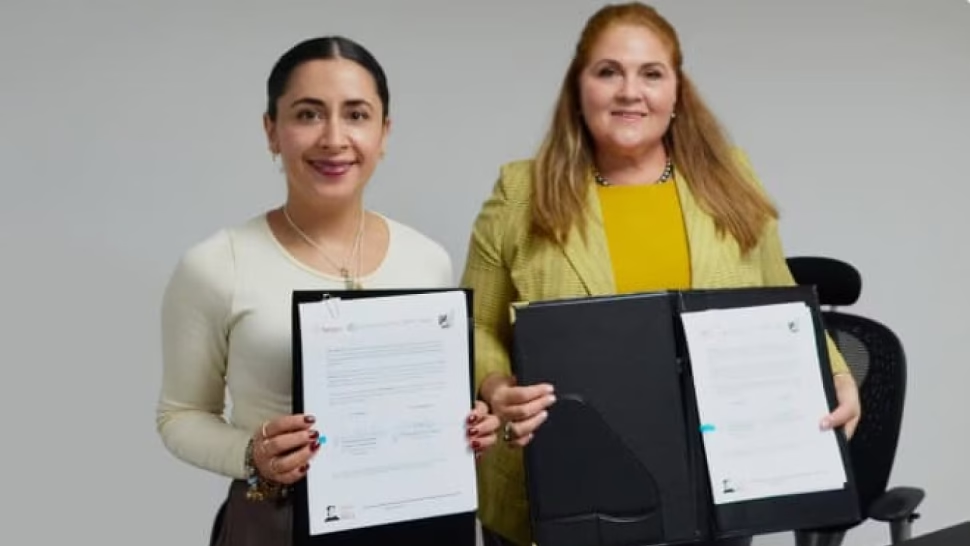
The Mexican Social Security Institute (IMSS) and the National Fund for Workers’ Consumption (Fonacot) signed a collaboration agreement that updates their exchange of information and services. The objective: respond to the current operational, technological and regulatory needs of both agencies.

The agreement was signed by Wendolyne Retana Alarcón, general director of Fonacot, and Luisa Obrador Garrido Cuesta, director of Incorporation and Collection of the IMSS. It will be valid until September 30, 2030, with the possibility of extending it for two more years.

The relationship between both institutions dates back to 2007. Since then they have maintained a constant flow of data to facilitate procedures and guarantee better credit and social security conditions for working people.

With this update, the aim is to streamline processes, reduce response times and strengthen the protection of the rights of the country’s formal workers.

Continue reading

Energía Costa Azul makes first shipment of LNG in the Pacific

First shipment of liquefied natural gas from the Mexican Pacific marks an energy milestone.

The Energía Costa Azul project, in Ensenada, Baja California, completed the first shipment of liquefied natural gas (LNG) from the Mexican Pacific coast. The Sempra Infrastructure company confirmed that the shipment is part of the tests prior to the start of commercial operations.

International context

This movement occurs in a context of high demand for energy security. Tensions in the Strait of Hormuz, through which nearly 20% of global LNG trade passes, have accelerated the search for new supply routes.

Strategic advantage

Sempra Infrastructure noted that phase 1 of the project will connect North American gas with Asian markets, taking advantage of the strategic location of the Mexican Pacific coast. Researcher Adrián Duhalt highlighted that the proximity to the gas-producing basins of the United States represents a competitive advantage for Mexico.

Continue reading

Mexico pressures the US over the death of a migrant at the hands of ICE

Mexico demands investigation after death of compatriot at the hands of ICE.

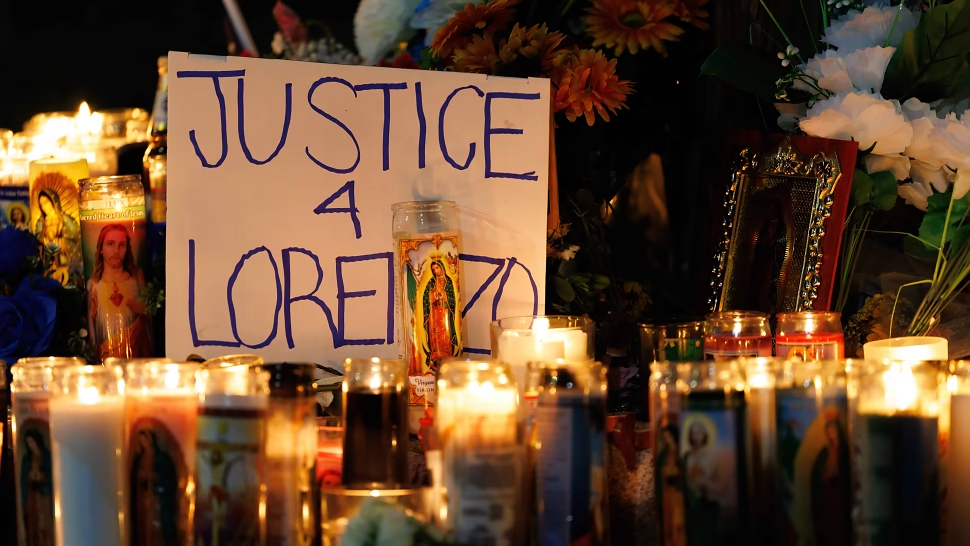
The Mexican ambassador to the United States, Roberto Lazzeri, confirmed that the diplomatic representation will accompany the family of Lorenzo Salgado Araujo, a Mexican citizen who died after being shot by agents of the Immigration and Customs Enforcement Service (ICE).

What actions will Mexico take?

Lazzeri announced that all available resources will be used to demand a serious and transparent investigation. The case joins a list of 17 Mexicans deceased in events linked to ICE operations or in immigration detention centers.

On instructions from President Claudia Sheinbaum and Foreign Minister Roberto Velasco, the Embassy in Washington and the Consulate in Houston will meet with US authorities: Department of State, Department of Homeland Security and ICE itself.

Meeting details

Mexico will request a detailed review of what happened and the implementation of clear protocols to prevent similar events from being repeated. “We do not seek to question the right of the United States to apply its laws, but rather to guarantee respect for life and human dignity,” Lazzeri said.

The diplomat reiterated that Mexico will maintain a firm stance in the defense of its compatriots in US territory.

Continue reading