From Pretoria to Caracas: A protest with a taste of geopolitical déjà vu
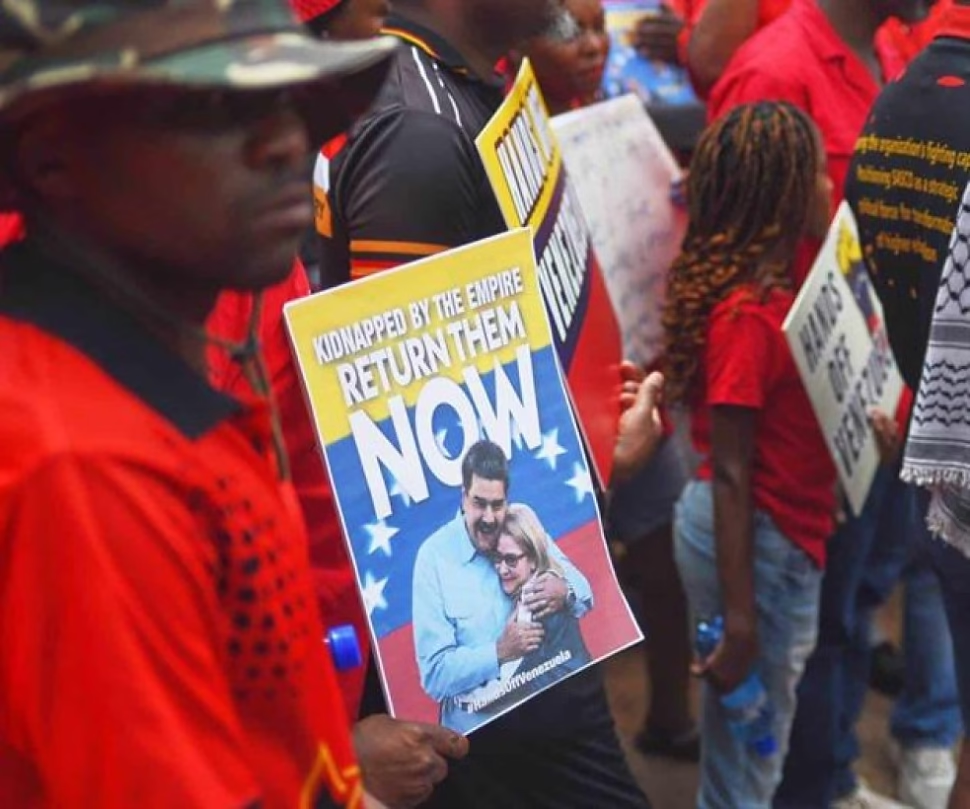
Imagine this: an ordinary Thursday in Pretoria, but instead of the usual traffic, what gathers in front of the American embassy is a combo of indignation, banners and a deep sense of historical irony. Yes, in South Africa, a country that knows a thing or two about fighting oppressive systems, people took to the streets to shout at the Donald Trump administration that its latest move – the capture of Venezuelan President Nicolás Maduro – smells more like vintage imperialism than 21st century foreign policy.
The organizers, none other than the South African Communist Party (ally of the ruling African National Congress), did not mince words. Their slogans were as subtle as a virulent meme: “Hands off Venezuela,” “Free President Maduro Now” and that classic that never goes out of style, “End American Imperialism.” Basically, the complete anti-hegemonic protest kit.
Oil, banners and apocalyptic forecasts
The general secretary of the party, Solly Mapaila, said it without anesthesia for the crowd: the story is not about freedoms, it is about barrels. He accused Trump of seeking to put Venezuela’s oil reserves “directly under his control,” an objective that, according to him, the magnate “has not hidden from the world.” In other words, what for some is a “democratic restoration” operation, for these protesters is a looting with white gloves and little flags.
Things got more interesting when pro-Palestinian voices joined the protest, weaving transcontinental solidarity against what they see as a pattern of behavior by the United States. Sarah Mukwevho, one of the protesters, released the phrase that is pure tweet material: “Today it is Venezuela and Maduro, tomorrow it could be any other smaller country that the United States is not happy with.” His logic is impeccable in its pessimism: if it happened there, it can happen anywhere, turning geopolitics into a game of global Russian roulette.
The South African government, between international law and diplomatic grudges
These street protests are not an isolated phenomenon; They echo in the corridors of power. President Cyril Ramaphosa came out this week with a statement that, translated from diplomatic language, came to say: “This is not done, friends.” Ramaphosa expressed South Africa’s “deep concern” that the United States’ actions in Venezuela have “undermined the territorial integrity and sovereignty” of a UN member. And then, so that there was no doubt, he added: “We totally reject the actions of the United States and we stand in solidarity with the people of Venezuela, and we also demand the release of President Maduro and his wife.”
This positioning does not come out of nowhere. Relations between South Africa and USA have been in “it’s complicated” mode for some time. Remember those uncomfortable moments when Trump accused South Africa of allowing a “white genocide” against the Afrikaner community. So, between accumulated grudges and a formal commitment to international law, Ramaphosa’s government found the perfect excuse to raise its voice and, in the process, send a message of autonomy on the world stage.
In the end, the panorama that remains is that of a multipolar world where the old intervention recipes no longer go unnoticed. A protest in the global south can become a megaphone that amplifies unrest against traditional powers, mixing the defense of Venezuela’s sovereignty with denunciations of neocolonialism and warnings about a future where no country feels safe. It is the geopolitics of the network age: local, global, visceral and full of potential hashtags.
Do you think this type of international solidarity marks a new era in global diplomacy or is it a symbolic gesture? Share this note on your social networks and join the debate. Explore more content on how geopolitical conflicts are reinterpreted from different corners of the planet in our international analysis section.