6.5 magnitude earthquake shakes Mexico from Guerrero

A powerful earthquake shakes the center and south of the country, activating emergency protocols and reviving fear in communities marked by past tragedies.

A Tremor that Shook the Earth

MEXICO CITY.- The dawn of a new year broke with a roar coming from the depths. This Friday, January 2, the land under the state of Guerrero woke up with fury, releasing a colossal telluric movement of 6.5 degrees of magnitude that shook the foundations of the nation. It was not a simple tremor; It was a brutal reminder of the indomitable power of nature. Its seismic embrace, long and violent, spread like a terrifying whisper through multiple entities, immediately triggering the mass exodus of buildings and putting all the country’s civil protection systems on high alert. The heart of Mexico beat in unison, between fear and hope for a white balance.

The Frantic Response of the Authorities

In Veracruz, the soil also spoke. The shock was clearly perceived in regions such as Tres Valles, Córdoba and the powerful Coatzacoalcos. The alarms rang and the protocols were activated like a precision clock in the face of the emergency. The State Civil Protection Secretariat mobilized its task forces in a race against time, carrying out meticulous verification tours. “There are no reports of any damage to strategic infrastructure at this time,” the agency declared, a phrase that sounded like a temporary sigh of relief in the midst of the chaos.

RelatedA 6.5 magnitude earthquake shakes the southwest of Guerrero

Meanwhile, in Michoacán, Governor Alfredo Ramírez Bedolla became the commander in chief of the calm. From his Facebook account, he directed the operations with a firm hand, reporting that the protocols had been activated throughout the state. “They inform me that, on a preliminary basis, no effects have been reported, but we remain constantly monitored,” he announced, while imploring citizens to stick only to official channels, a beacon of truth in a sea of possible misinformation and rumor.

The Echo of Fear in Already Marked Lands

The earthquake crossed borders and reached Puebla and Morelos, where the sound of the seismic alert is not just a signal; It is a traumatic echo of the past. In Puebla, the regions of Mixteca, Atlixco and Tehuacán felt the swaying of the ground. The General Coordination of Civil Protection deployed an army of evaluators on preventive tours, looking for any crack, any sign of collapse, with the fortune of finding no victims or damage.

But it was in Morelos where the ghost of 2017 walked again. In municipalities like Jojutla, Jiutepec and Cuernavaca itself, cities that still bear the scars of a previous tragedy, panic was another character. The inhabitants, with the memory of the pain fresh, evacuated with their hearts in their throats. The Contingency Committee of Jiutepec activated all its systems, reviewing property by property, finally declaring a precious white balance. In the capital of Morelos, the authorities toured the emblematic buildings, their expert gazes scrutinizing each column, each beam, in an inspection that was both technical and emotional.

Further south, in Oaxaca, the story had nuances. The State Coordination of Civil Protection and Risk Management reported that the powerful earthquake, with its epicenter in San Marcos, Guerrero, had not taken its toll on infrastructure or services. In the city of Oaxaca it was felt as a light drumming, while in the Mixtec region its force was undeniable. However, the Isthmus of Tehuantepec remained impassive, oblivious to the upheaval that was shaking the center of the country. It was a day of tension, of looking at the sky and feet ready to run. A day in which Mexico, once again, held its breath and demonstrated that, although the earth trembles, the resilience of its people and the organization of its institutions remain firm.

This event reminds us of the importance of preparation. If you found this coverage valuable, share it on your social networks to keep your community informed and explore more content related to safety and risk prevention on our site.
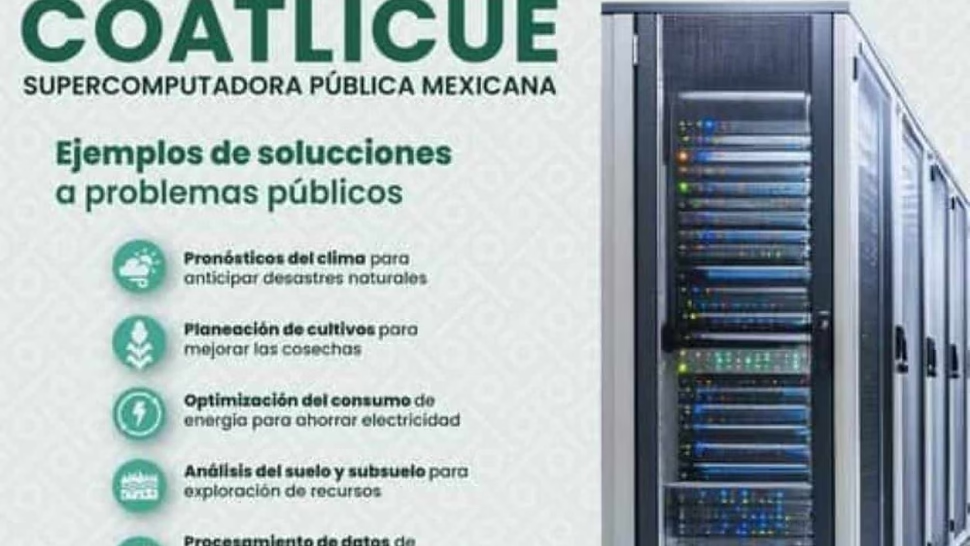
Supercomputadora Coatlicue tendrá sede en el IPN

El proyecto busca optimizar recursos y fortalecer la seguridad informática.

Instalación estratégica en Zacatenco

El viernes se instaló la supercomputadora Coatlicue en la Unidad Zacatenco del Instituto Politécnico Nacional (IPN). El evento fue encabezado por Rosaura Ruiz Gutiérrez, titular de la Secretaría de Ciencia, Humanidades, Tecnología e Innovación (Secihti), y por José Antonio Peña Merino, secretario de la Agencia de Transformación Digital y Telecomunicaciones (ATDT).

Rosaura Ruiz explicó que este proyecto forma parte de una iniciativa presentada por la presidenta Claudia Sheinbaum en noviembre de 2025. Su objetivo es contribuir a la seguridad de la información y optimizar los recursos públicos destinados al cómputo de alto rendimiento.

RelatedMexico boosts its future with supercomputer and record investment

Apoyo internacional y aplicaciones

Coatlicue cuenta con respaldo del Barcelona Supercomputing Center (BSC), institución pionera en supercomputación en España. Ruiz destacó que el desarrollo combina talento mexicano con experiencias internacionales para acelerar el avance científico y tecnológico del país.

Peña Merino añadió que el Centro Mexicano de Supercómputo en Barcelona trabaja en proyectos de meteorología y en la reducción de la evasión fiscal mediante detección de facturas apócrifas. Con esta instalación, el sistema se integrará a las redes de conocimiento de la Secihti para atender demandas públicas prioritarias.

Continue reading

Marina de México y EU acuerdan nuevas estrategias de seguridad marítima

México y EU refuerzan seguridad marítima con nuevos acuerdos operativos y tecnológicos.

Reunión de alto nivel entre mandos navales

El almirante Raymundo Pedro Morales Ángeles, titular de la Secretaría de Marina (Semar), se reunió con mandos de la Armada y la Guardia Costera de Estados Unidos del 3 al 5 de junio. El objetivo fue diseñar estrategias de seguridad marítima, fortalecer labores de búsqueda y rescate, y reafirmar el compromiso binacional contra la delincuencia organizada transnacional.

Los acuerdos se formalizaron con los almirantes James W. Kilby y Kevin E. Lunday, subjefe de operaciones navales y comandante de la Guardia Costera, respectivamente. En las mesas de trabajo se revisaron mecanismos de coordinación bajo principios de confianza mutua y respeto a la soberanía. El espacio marítimo se consolida como uno de los ejes más dinámicos de la agenda bilateral.

RelatedThe Navy faces investigations for internal corruption

Cooperación tecnológica y ambiental

Las autoridades estadounidenses reconocieron la capacidad operativa de la Armada de México, destacando el modelo de trinomio naval —buques, helicópteros y patrullas interceptoras— y la incorporación de sistemas no tripulados para vigilancia y seguimiento de objetivos.

El secretario Morales Ángeles subrayó la urgencia de fortalecer la Iniciativa de Seguridad y Protección Marítima para América del Norte (NAMSI). Este mecanismo trilateral, vigente desde 2008, permite intercambio de información y operaciones coincidentes para frenar actividades ilícitas, manteniendo el control soberano de cada país. En el ámbito ambiental, México ratificó su compromiso contra la pesca ilegal, con énfasis en el Golfo de California y el Golfo de México.

Ambas partes acordaron reactivar los ejercicios binacionales SAREX para mejorar la capacitación en emergencias. La Semar implementará el sistema SAROPS 4.5, desarrollado con la Guardia Costera estadounidense, que optimiza recursos y reduce tiempos de localización de personas o embarcaciones. El plan integral incluye protección portuaria, ciberseguridad e interoperabilidad académica.

Continue reading

Profepa rescata seis animales silvestres en Baja California Sur

Aves, reptiles y un venado fueron atendidos en diferentes municipios del estado.

Rescate de fauna silvestre

Tras reportes ciudadanos, la Procuraduría Federal de Protección al Ambiente (Profepa) atendió a seis animales silvestres en Baja California Sur. Los ejemplares fueron hallados lesionados, desorientados o fuera de su hábitat natural.

La autoridad ambiental, encabezada por Mariana Boy Tamborrell, informó que las acciones ocurrieron entre el 7 de mayo y el 2 de junio. Las especies rescatadas incluyen polluelos de águila pescadora, un búho cornudo y un venado bura.

RelatedProfepa rescata 345 animales silvestres en tianguis de Guadalajara

En la comunidad de Puerto Adolfo López Mateos, en Comondú, tres polluelos de águila pescadora fueron atendidos. Dos tenían aparente incapacidad de volar y otro cayó de un nido. Todos recibieron atención médica.

Una serpiente de cascabel de diamante rojo fue hallada en una construcción en Los Cabos. Sin lesiones, fue liberada en un sitio alejado de asentamientos humanos.

Un búho cornudo, atacado por perros domésticos en Los Cabos, presentaba dificultad para volar. Recibió atención veterinaria especializada y después fue liberado en un lugar adecuado para su supervivencia.

Una hembra adulta de venado bura fue atropellada en una carretera cerca del Rancho La Fortuna, en Los Cabos. Sufrió laceraciones, golpes severos y una fractura expuesta en una extremidad. Falleció durante el traslado para recibir atención especializada.

En todos los casos, Profepa realizó valoración, resguardo temporal y liberación o canalización a atención especializada según las condiciones de cada animal.

Continue reading