Sheinbaum renders his first Government Report with a symbolic gesture

A symbolic gesture from the presidential office frames the historic moment prior to the balance of his first year in office.

An act loaded with political symbolism

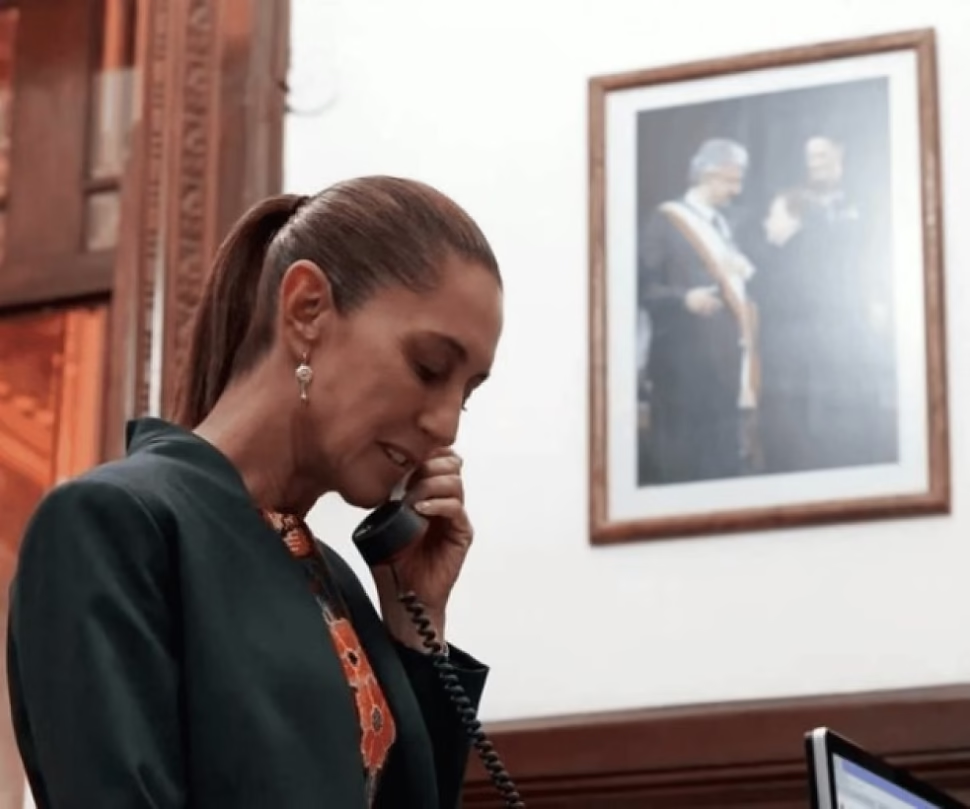
In the hours before the presentation of her first Government Report, the President of Mexico, Claudia Sheinbaum Pardo, shared a significant image from her office in the National Palace. The photograph, disseminated through her official accounts on social networks, shows the president working with a deliberately chosen background: a portrait of former president Andrés Manuel López Obrador at a crucial historical moment.

The message that accompanied the publication was concise and direct: “Working from the National Palace“. However, the choice of the background visual element transforms this routine communication into a profound political statement, establishing a clear line of ideological and programmatic continuity between his administration and that of the movement that precedes it.

RelatedSheinbaum reaffirms the direction of the transformation in the Zócalo

The historical loading of the selected image

The painting visible behind the presidential desk is not a coincidental image. This is a photograph that the Head of State herself had previously shared in July 2023, during the commemoration of the anniversary of the electoral victory of the so-called Fourth Transformation. The snapshot captures the moment when Andrés Manuel López Obrador receives a symbolic presidential sash from the hands of Rosario Ibarra de Piedra, emblematic social activist and founder of the Eureka Committee, an organization dedicated to the search for missing people.

This act that occurred in 2006 represented the proclamation of López Obrador as legitimate president by his followers, after a highly controversial and disputed presidential election. By choosing this specific image for his office on a day as significant as that of his first report, Sheinbaum sends a powerful message about the symbolic foundations and political genealogy of his government.

As the president explained in previous publications when referring to this date: “July 1st commemorates the triumph of the Fourth Transformation at the polls with the presidential election. A historic date. It is a triumph in the struggle of more than 20 years that we have accompanied, out of conviction because we share a vision of the country, of well-being for all.”

Agenda prior to the Government Report

Breaking with her usual routine of work tours to different states during the weekends, President Sheinbaum remained in the Valley of Mexico for final preparations for her first presidential report. His agenda included a substantial meeting with representatives of the Eureka Committee of relatives of politically disappeared persons during the period known as the dirty war in Mexico.

This meeting, held on Saturday at the National Palace, reinforces the symbolic commitment represented by the photograph in his office. “We work every day for the truth,” the president declared after the meeting, explicitly connecting her administration with the historical struggle for human rights and historical memory that Rosario Ibarra de Piedra and the movement she founded represents.

The invitation extended to his followers to follow the transmission of his First Government Report closes the circle of this carefully orchestrated communication strategy, which interweaves symbolic elements of the recent past with the formal presentation of the achievements and directions of his current administration.

This approach narratively reinforces the idea of continuity of the political project of the Fourth Transformation, while situating Sheinbaum’s own presidency within a broader historical narrative of social struggle and national transformation that spans decades.

Was this analysis of political symbolism interesting to you? Share this content on your social networks to generate conversation and explore other notes related to current national politics on our portal.
CNDH exige proteger a comunicadores y garantizar libertad de expresión

CNDH pide condiciones seguras para periodistas y combate a la impunidad.

CNDH: libertad de expresión y derecho a la información

La Comisión Nacional de los Derechos Humanos (CNDH) urgió a fortalecer la libertad de expresión y garantizar el derecho de las audiencias. Ambos pilares son clave para atender las necesidades informativas de la sociedad mexicana.

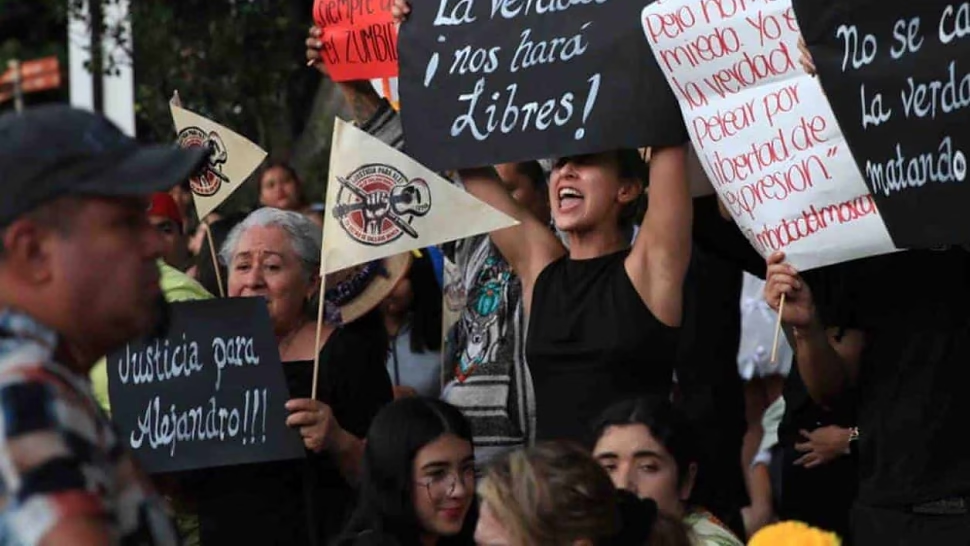
En el marco del Día de la Libertad de Expresión —conmemorado cada 7 de junio— el organismo renovó su compromiso con la protección de periodistas, comunicadores y creadores de contenido. Prometió acciones de prevención, monitoreo y medidas de resguardo.

RelatedSheinbaum expands federal protection for journalists in judicial proceedings

La CNDH recordó que esta fecha se instauró en 1951. Señaló que el ejercicio periodístico ha enfrentado censura, presiones, amenazas y agresiones que dañan tanto a los medios como al derecho ciudadano a estar informado.

Propuestas para proteger a periodistas

El reto actual, según la Comisión, es construir una relación equilibrada entre medios, autoridades y audiencias, basada en la verdad, la objetividad y el respeto a los derechos humanos.

Finalmente, la CNDH exhortó a gobiernos y medios a generar entornos seguros para el trabajo periodístico. Aseguró que continuará con acciones para prevenir agresiones y combatir la impunidad contra comunicadores.

Continue reading

Boris se vuelve tormenta tropical y amenaza el Pacífico mexicano

Tormenta tropical Boris avanza con vientos de 85 km/h y afecta al menos seis estados del Pacífico mexicano.

Tormenta tropical Boris: impacto y medidas preventivas

La depresión tropical Dos-E se convirtió en la tormenta tropical “Boris” durante la madrugada de este lunes, informó el Servicio Meteorológico Nacional (SMN). A las 3:00 horas, su centro se ubicó a unos 135 kilómetros al sureste de Acapulco y a 80 km al suroeste de Punta Maldonado, Guerrero.

El sistema presenta vientos máximos sostenidos de 65 km/h y rachas de hasta 85 km/h. Su circulación provocará lluvias torrenciales de 150 a 250 mm en el oeste y la costa de Guerrero. También se esperan precipitaciones intensas en Michoacán y el suroeste de Oaxaca, así como lluvias muy fuertes en Jalisco y Colima.

RelatedTropical Storm Raymond hits Mexican Pacific coasts

Los vientos alcanzarán rachas de 70 a 90 km/h en las costas de Guerrero y el oeste de Oaxaca. En el resto de las entidades mencionadas, las ráfagas serán de 50 a 70 km/h. El oleaje será significativo: de 4 a 5 metros de altura en Guerrero y occidente de Oaxaca, y de 3 a 4 metros en Jalisco, Colima y Michoacán.

Ante este escenario, las autoridades advierten sobre el riesgo de deslaves, desbordamientos e inundaciones. Se mantiene activa la zona de prevención por vientos de tormenta tropical desde Lagunas de Chacahua, Oaxaca, hasta Técpan de Galeana, Guerrero.

El SMN señala que Boris interactuará con una vaguada en niveles medios y altos de la atmósfera, lo que mantendrá un temporal de lluvias en gran parte del país. Se prevén acumulados intensos a torrenciales en Jalisco, Colima, Michoacán, Guerrero, Oaxaca, Chiapas, Veracruz, Puebla, San Luis Potosí y Tamaulipas. En el noreste, centro, sur y sureste, incluyendo el Valle de México, las lluvias serán fuertes a muy fuertes.

La onda tropical número 5, combinada con humedad, generará lluvias fuertes en la Península de Yucatán. Pese a las precipitaciones, el ambiente caluroso persistirá en Sonora, Chihuahua, Durango, Sinaloa, Nayarit y otras entidades.

Protección Civil recomienda extremar precauciones, evitar cruzar ríos o vialidades anegadas, y mantenerse informado a través de fuentes oficiales.

Continue reading

CNTE rechaza eliminación de Usicamm como solución de fondo

El magisterio mantiene plantón y exige reforma integral, no solo cambios administrativos.

La Coordinadora Nacional de Trabajadores de la Educación (CNTE) considera insuficiente la propuesta gubernamental de desaparecer la Unidad del Sistema para la Carrera de las Maestras y los Maestros (Usicamm). Por ello, anunciaron que mantendrán y reforzarán el plantón instalado desde el 1 de junio.

Demandas que persisten

La secretaria general de la sección XIV de la CNTE, Elvira Veleces Morales, afirmó:

La eliminación de la Usicamm no representa una solución de fondo, ya que los docentes requieren una reforma integral que modifique las condiciones de ingreso, promoción y derechos laborales.

El magisterio exige también la derogación de la Ley General del ISSSTE de 2007, mejoras salariales base, la reinstalación de maestros despedidos y un sistema de jubilación digno.

RelatedSNTE demands the end of the USICAMM to guarantee labor justice

Sobre el aumento salarial del 9%, la CNTE señaló que resulta insuficiente frente a la inflación. Aseguraron que el beneficio real es menor de lo esperado y criticaron las propuestas sobre pensiones y cuentas individuales.

La organización acusó al gobierno de falta de voluntad política para alcanzar acuerdos y negó que sus movilizaciones busquen afectar el Mundial de Futbol. La CNTE informó que realizará una Asamblea Nacional para definir nuevas acciones y la continuidad de su plan de protesta.

Continue reading