Sheinbaum questions the controversial Wife Law in the governorships

The president puts the controversial state measure on the table, questioning its legal necessity compared to the national parity scheme.

Sheinbaum pilloris the so-called “Wife Law”

It seems that in the Congress of San Luis Potosí (and wanting to replicate it in Nuevo León) they came up with the magic formula for gender parity: the now famous “Wife Law”. Basically, it is a direct pass for gubernatorial candidates to be led by women in the next election. Sounds progressive, right? Until you read the fine print and realize that, in practice, many see it as a shortcut to nominate… yes, you guessed it: the spouses of current governors. A plot twist that not even the best political soap opera scriptwriter can do.

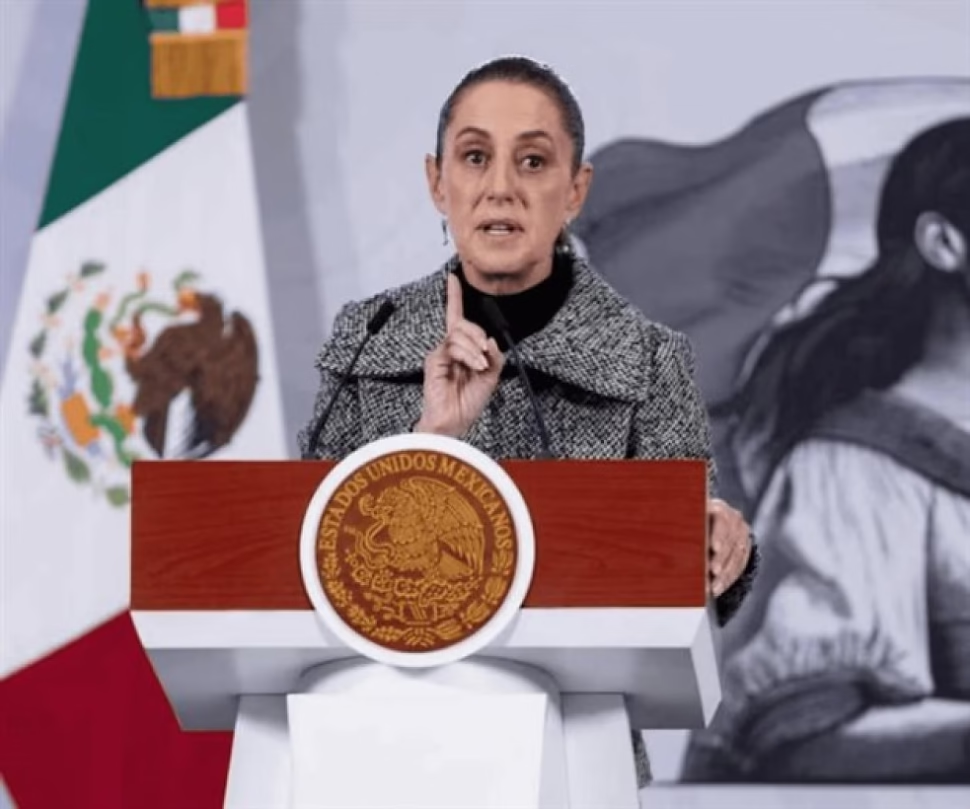
And then, President Claudia Sheinbaum entered the scene, in her now traditional morning conference, to give it a thorough review and a much-needed touch of legal analysis. With the sarcastic elegance of someone who knows that the topic is a minefield, he asked the million-dollar question: is this really necessary?

RelatedSheinbaum rejects the Wife Law and defends the parity of the INE

The INE vs. state legislative creativity

The federal president, with the calm of someone who has the data, reminded everyone that the National Electoral Institute (INE) already has a parity scheme for gubernatorial candidacies. In other words, there are already rules of the game. By 2027, of the 17 governorships in dispute, nine will be for women and eight for men. Simple math: female majority assured. “It has helped a lot to recognize that women can govern,” she stated, making it clear that the national system, although imperfect, is already promoting historic change and breaking old stereotypes.

But then state initiatives arrive, with their desire to innovate (or secure votes). Sheinbaum became philosophical: “Do we have to analyze whether this thing about being once a woman and once a man really helps women? It’s not clear to me that this is necessarily the case.” Translation: mandating rigid alternation by law can be a double-edged sword. Sometimes, the discourse of equity is just a facade to hide other less noble political interests. A textbook legislative *side-eye*.

The legal debate and Morena’s bombshell

In order not to remain purely opinionated, the president passed the ball to former minister Arturo Zaldívar, asking him to analyze whether these laws are viable beyond partisan tantrums. And the issue is burning. Luisa María Alcalde, the national leader of Morena, has already announced that her party is preparing an unconstitutionality action against the Potosí reform. Their argument: forcing only women to compete could trample on constitutional principles. The irony is delicious: the party in national power, challenging a law that promotes (in theory) female participation, but that smacks of a dynastic trap.

In the end, Sheinbaum sent a clear message to the state congresses: take a close look, guys. It is not about making laws for momentary *clout* or to appear on the trending topic. It’s about whether they truly empower women or are just recycling old power structures under a new name. Because, let’s be honest, going from “husband rule” to “wife rule” without changing anything else is not exactly the feminist revolution we were hoping for.

Are you left wanting more analysis about real parity in politics? Share this article and explore more content about the real challenges of equity in our country.
US alert for security in Mexico vs England at the 2026 World Cup

United States Embassy issues warning to its citizens for Sunday's game.

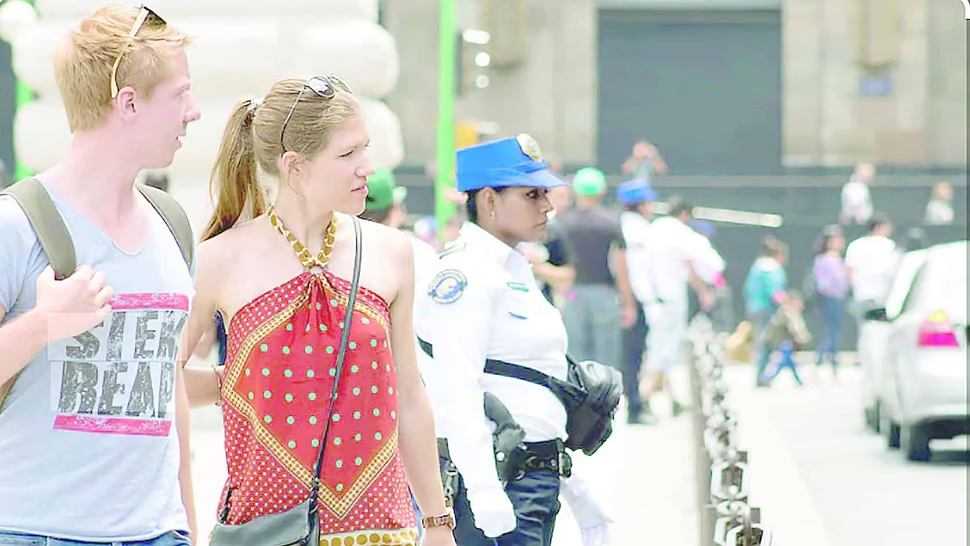
The United States Embassy in Mexico issued a security alert aimed at its citizens in the country, on the occasion of the match between Mexico and England on Sunday, July 5 at the Mexico City Stadium, within the round of 16 of the 2026 World Cup.

The diplomatic representation, headed by Ambassador Ronald Johnson, warned that during the tournament there have been large gatherings in stadiums, Fan Fests and public spaces, which has caused incidents at recent celebrations in the capital.

Embassy recommendations

In its message, the embassy recommended extreme precautions at mass events. He pointed out that gatherings to watch games and celebrations have caused injuries and even deaths, so he asked to be attentive to the environment and avoid risky situations.

The alert also included warnings about possible mobilizations and demonstrations during the event. He indicated that participating in political activities could lead to immigration arrests or sanctions under Mexican law.

Continue reading

In June, Mexico reaches the lowest number of homicides since 2007

June closed with a daily average of 40 homicides, the lowest record in 19 years.

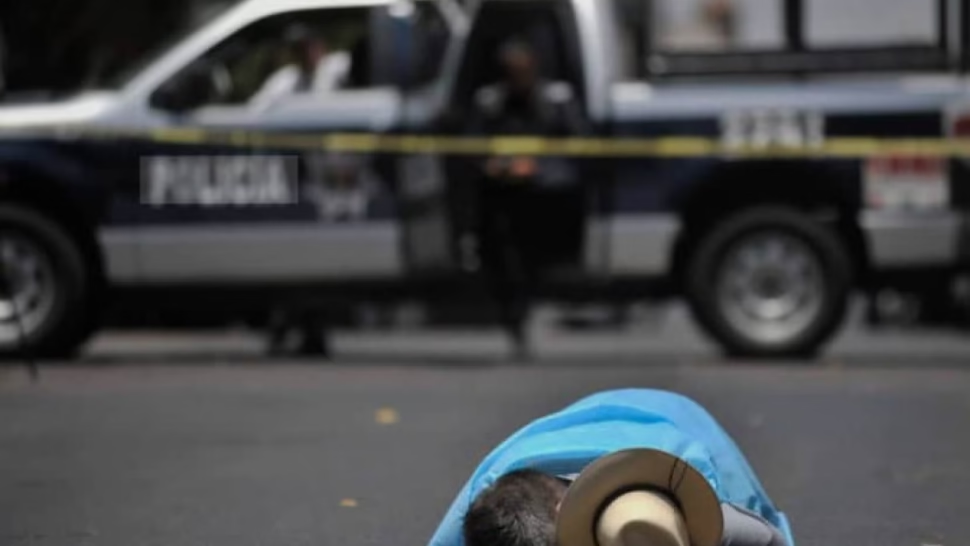
During June, Mexico recorded an average of 40 intentional homicides per day, the lowest monthly figure since 2007, according to preliminary data from the federal government. Although at the beginning and end of the month there were days with more than 50 cases, the general trend was downward compared to the same period in 2025.

The impact of the World Cup

The decline coincided with the start of the 2026 Soccer World Cup. On the opening day in Mexico, only 30 homicides were recorded. Throughout the month, the numbers fluctuated, but remained below the historical average.

Entities with the highest incidence

Guanajuato topped the list of homicides with 124 victims. In contrast, the World Cup host states reported reductions: Nuevo León added 30, Jalisco 51 and Mexico City 59, all below the June 2025 figures.

Strategy and challenges

Federal authorities attribute the reduction to President Claudia Sheinbaum’s security strategy, which includes coordinated actions against organized crime and a greater police presence. However, civil organizations point out that problems persist in the registration of other crimes, such as disappearances and femicides.

Continue reading

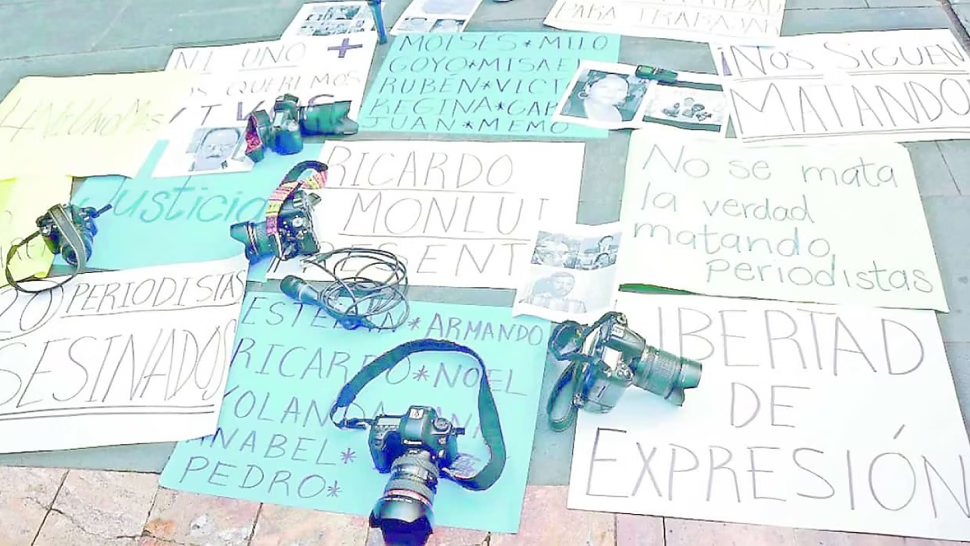
Mexico: 178 journalists murdered in 26 years, most in Veracruz

178 journalists deprived of their lives since 2000. Veracruz tops the list.

Violence against the press in Mexico

Since 2000, 178 journalists and communicators have been deprived of their lives in Mexico, according to data from the organization Article 19. The most recent case is that of Roxana Berenice Guzmán Ramírez, who was found dead more than a month after her disappearance in Veracruz.

Veracruz is the most violent entity for the press with 34 fatalities, followed by Guerrero with 19. Chihuahua, Oaxaca and Tamaulipas register 15 each. Of the total, 165 were men and 13 women.

The most lethal six-year term was that of Felipe Calderón (2006-2012) with 48 homicides. They are followed by the governments of Enrique Peña Nieto and Andrés Manuel López Obrador, with 47 each. In contrast, seven states did not report fatalities in the same period: Aguascalientes, Campeche, Colima, Hidalgo, Querétaro, Tlaxcala and Yucatán.

Article 19 has called on authorities to guarantee justice and strengthen protection mechanisms. Impunity continues to be a key factor that aggravates violence against the press in Mexico.

Continue reading