The position of Mexico on the Peruvian board
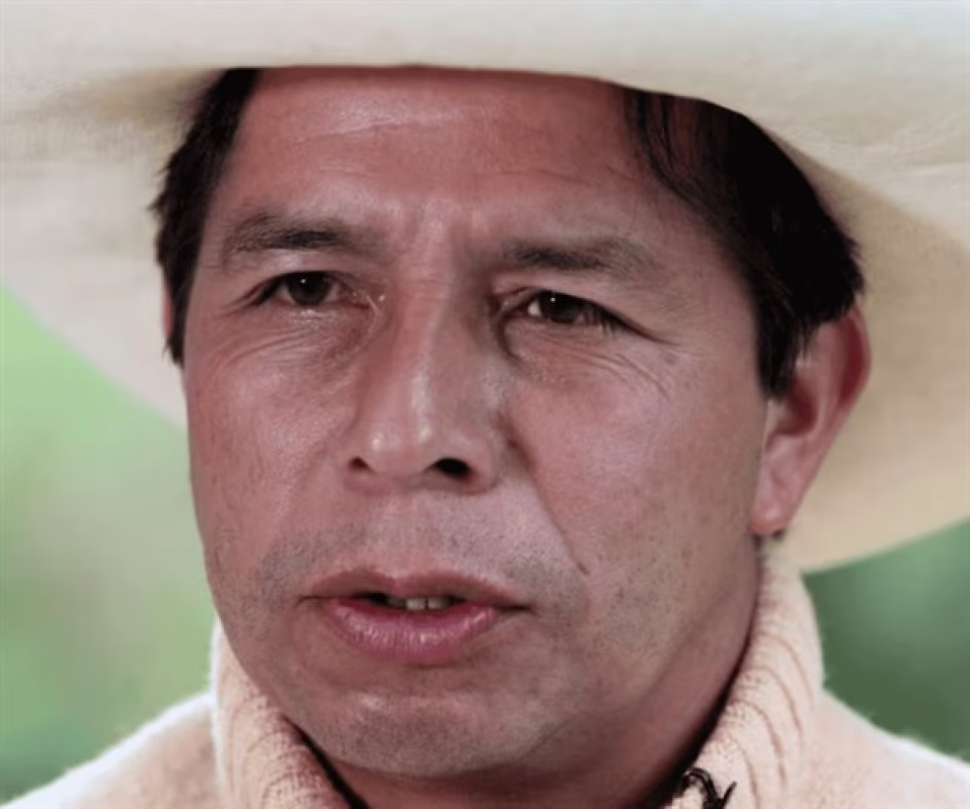
Claudia Sheinbaum did not bite her tongue. In the middle of a conference from Irapuato, the president launched a statement that will resonate in Lima: “I hope Pedro Castillo can be released from detention.” It wasn’t a passing comment. It was the center of his message about Peru.
For Sheinbaum, the case of the dismissed former president is clear: political reasons. He said it bluntly. “He is an indigenous president and there has always been a lot of discrimination,” he said, defending that his arrest “has no reason to exist.”
But this is not just speech. There are concrete actions at stake. Betssy Chávez, Castillo’s former prime minister, remains sheltered in the Mexican embassy in Lima. And with the arrival of José María Balcázar as interim president, Mexico is making a move.
“With the new president we are going to resume whether this safe passage can be given”
Translation: Mexican diplomacy reactivates efforts that were frozen. Sheinbaum announced that they will follow up on the case while evaluating the terrain with Balcázar.
The message between the lines is powerful. Mexico maintains its critical stance towards what it considers political persecution in Peru, but seeks channels with the new temporary government. A delicate balance where each word weighs like lead.
While Castillo remains behind bars and Chávez in the embassy, Sheinbaum positions Mexico as an uncomfortable but necessary actor in this crisis. The Peruvian political theater now has a very vocal spectator from the National Palace.