The subsidy that does not stop
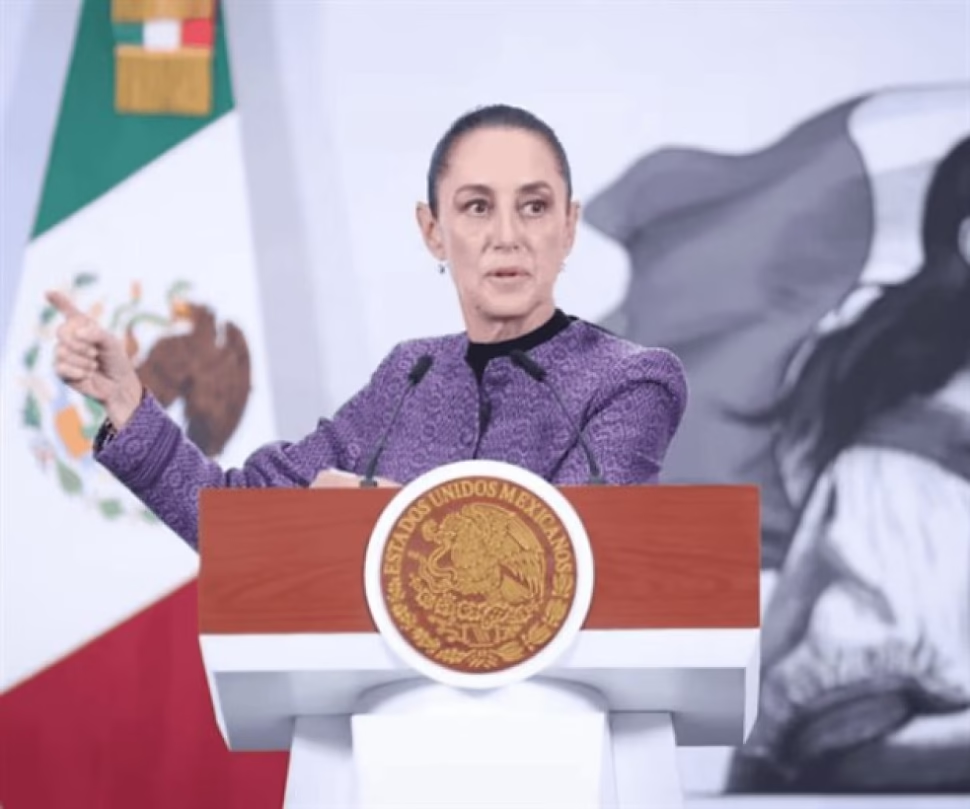
In the midst of a complex international panorama, Claudia Sheinbaum came out to defend the fuel subsidy tooth and nail. His argument: we must “continue taking care of the families’ finances.” The question that hangs in the air is for how much longer.
The president recalled that the federal budget was put together with a barrel of oil estimated at more than 60 dollars. Now that crude oil has fallen, logic would indicate a respite for the public coffers. But not. The official discourse maintains the same course: continue injecting money to contain prices.
“We reduced the IEPS tax so that it remains at 24 pesos and we have to continue doing it”
There is the key phrase. We have to. An imperative that sounds more like a political obligation than a sensible economic calculation. The curious thing is the moment chosen to reinforce this message: just when external factors would give room to rethink the strategy.
Diesel, the next battle
Sheinbaum dropped that they are now going after the price of diesel. Their logic: if the barrel fell, gas stations have “better conditions” to reduce their price. A wink of complicity with a sector that has not always been an ally of the government.
The most revealing part came near the end. When someone reminded him that there is a red gasoline (with higher octane and higher price), his response was a simple:
“Well, they can charge magna”
Practical advice, yes. But also a tacit admission: the subsidy scheme has clear limits. It is not enough for all types of fuel, only the popular one. A policy segmented by pocket capacity.
Meanwhile, Mexican families continue to see an increasing portion of public spending going to plug international price holes. The uncomfortable question no one asks out loud is what will happen when that barrel rises again. Because recent history suggests that lowering subsidies is much more difficult than creating them.