Electoral reform moves towards its formal presentation
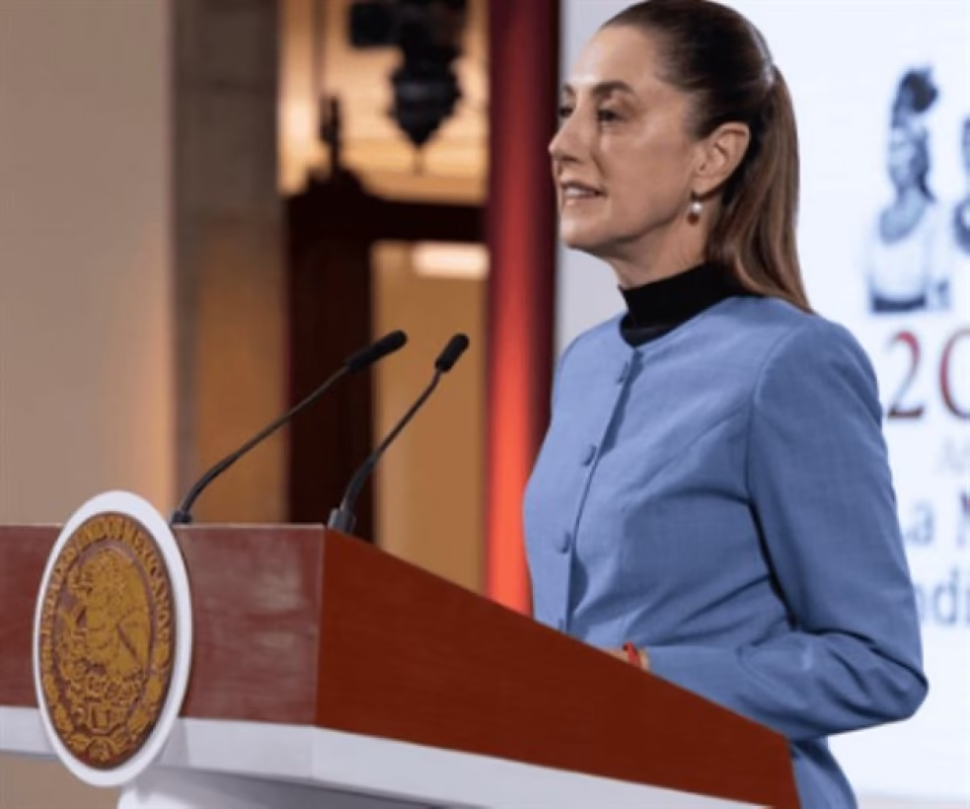
The presidency of the Republic is preparing to present an initiative for electoral reform during the third week of January, as announced by President Claudia Sheinbaum in a meeting with the media. This announcement marks a milestone in the process of reviewing the legal framework that governs elections and political organization in Mexico, a major issue in the government’s transformation agenda.
A consultation and technical review process
The president explained that next week she will hold a working meeting with the Presidential Commission for Electoral Reform, a technical body headed by expert Pablo Gómez. The objective of this meeting will be to carry out a exhaustive review of the reports and conclusions derived from the consultation forums held in various parts of the country. “We are going to review the forums, and what the reform commission that I appointed is proposing. I believe that by the second or third week of January we would be in a position to present a formal proposal,” said Sheinbaum, underlining the deliberative and well-founded nature of the process.
This specialized commission was established in August 2025 with the explicit mandate to prepare a comprehensive proposal to modify the electoral system. Its creation responded to the need to channel the discussions of academics, representatives of institutions and civil society into a technical and viable document. The work of this group has focused on diagnosing the areas of opportunity and critical points of the current model.
Central axes of the proposal under discussion
Among the structural changes that have been publicly aired and that are part of the analysis, President Sheinbaum has previously mentioned two of great impact: the reduction of public financing to political institutes and a modification to the integration of the federal Legislative Branch. The latter refers specifically to a possible decrease in the number of legislators who come to office through proportional representation (known as plurinominales).
The possible rationalization of resources towards the parties seeks to generate a debate on the efficiency in the use of public funds and promote greater links between political forces and citizens through alternative fundraising mechanisms. On the other hand, the review of the composition of Congress points to a substantive debate on representativeness, the cost of democracy and agility in legislative processes. These modifications, if materialized, would imply a significant reengineering of the balance and operation of the Mexican political system, with possible effects on the dynamics of powers and the future electoral contest.
The analytical approach suggests that this reform is not an isolated exercise, but part of a broader vision of institutional reconfiguration. Its formal presentation will begin a complex political negotiation process in the Congress of the Union, where it will require the construction of consensus and qualified majorities for its approval. The way in which these technical and highly sensitive issues are addressed will define the tone of the relationship between the powers of the State in the coming period.
Do you think these changes will strengthen the democratic system? Share this analysis on the future of political institutions on your social networks and explore more content about the reform agenda in Mexico on our site.