US diplomat rejects violent actions in protests against immigration raids
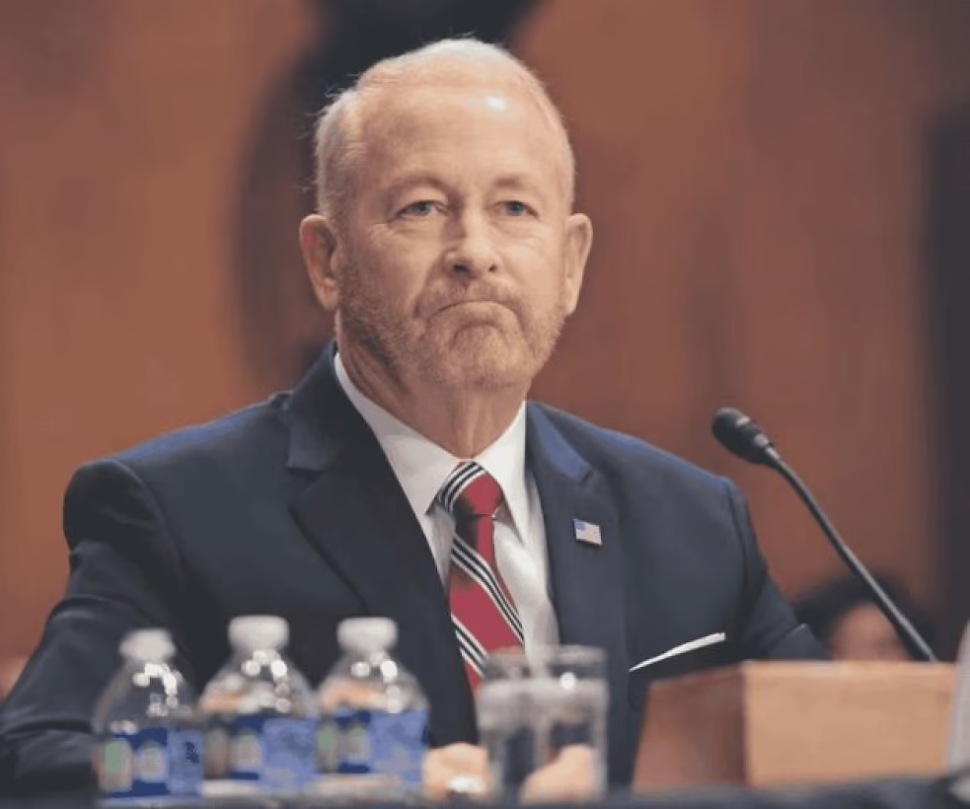
The United States ambassador to Mexico, Ronald Johnson, expressed his rejection of the violent demonstrations registered in Los Angeles in recent days. These protests arose in response to the massive immigration raids ordered by President Donald Trump. Through his social networks, the diplomat assured that “the violent protesters in LA do not represent the Mexican people”, emphasizing that the Mexican community is dignified and hard-working.
Johnson emphasized that the US government’s actions seek to protect “all communities” and strengthen the rule of law. In addition, he reaffirmed the alliance between Mexico and the United States, declaring: “Mexico is our partner and our nations are deeply united.”
Trump blames the radical left and announces drastic measures
For his part, federal president Donald Trump attributed the riots to “the radical left”, accusing them of instigating the violent acts. In a post on Truth Social, he announced a ban on wearing masks at protests and thanked the National Guard for their intervention. “These radical left protests, by instigators and often paid troublemakers, will not be tolerated,” he stated.
In another message, Trump lamented the situation in Los Angeles, describing it as a city “invaded and occupied by undocumented immigrants and criminals.” He also denounced that violent groups attacked federal agents to hinder deportation operations.
Reinforcement of security measures and deportations
The American president ordered the Secretary of Homeland Security, Kristi Noem; Secretary of Defense, Pete Hegseth; and the Attorney General, Pam Bondi, to take decisive action to “free Los Angeles from the immigration invasion”. Among the measures announced include the expulsion of undocumented immigrants and the restoration of public order.
This confrontation between protesters and authorities reflects the polarization around US immigration policies, an issue that continues to generate controversy both nationally and internationally.
Are you interested in learning more about diplomatic relations between Mexico and the United States? Share this analysis on your social networks and explore other related articles in our international politics section.