Rescue operation under adverse conditions
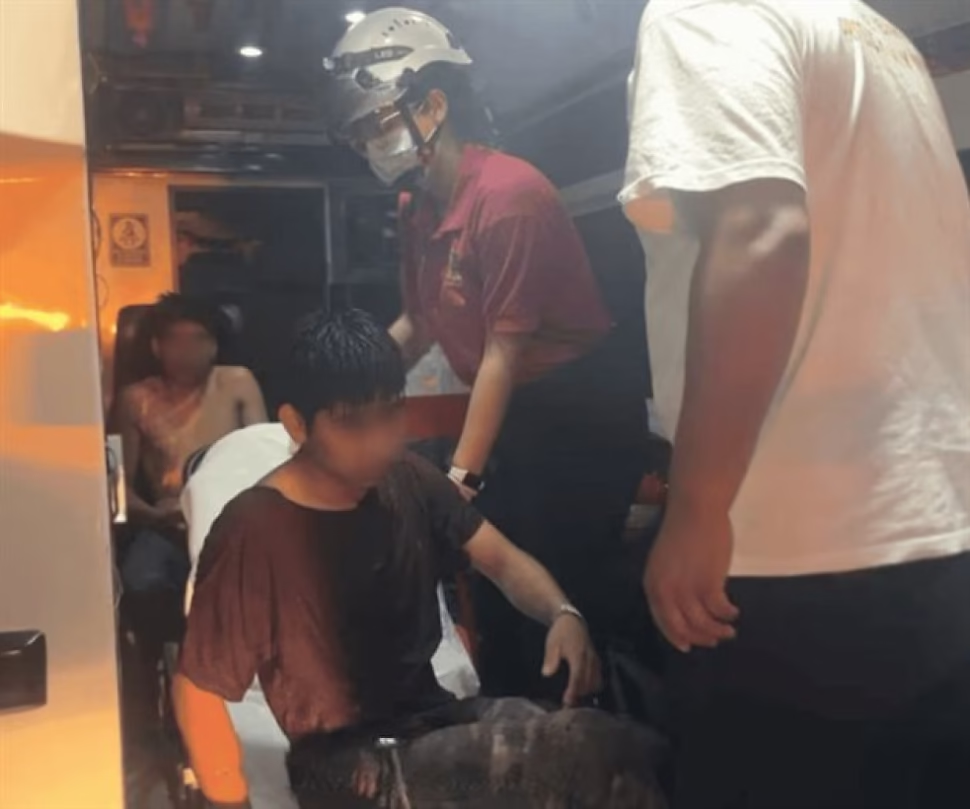
The official version says that everything went according to protocol. Two young people, their boat sunk off the coast of Pajapan, Veracruz. More than three hours adrift. Civil Protection elements asked the Navy for support.
And here comes the first data that makes noise: adverse conditions due to low visibility. It was not a day at the beach.
Specialized personnel from the Coatzacoalcos Naval Search, Rescue and Maritime Surveillance Station set sail aboard a Defender-type vessel.
They reach the area and encounter another obstacle. The shallow depth prevents the naval unit from approaching. Solution?
Two rescue swimmers jumped into the water to establish physical contact with the castaways.
That is, the final rescue was hand-to-hand, human. Not with cranes or machinery. They were taken out of the water when they already showed obvious signs of fatigue. They were delivered to health services.
What the statement does not say
- What were the young people doing in that smaller boat?
- Why did it sink? Mechanical failure, weather, overload?
- What exact state of health were they in after three hours in the water?
Quick action is appreciated, without a doubt. But memory is long: each successful rescue should entail an investigation to prevent the next. And that almost never happens.
The Navy did its job this time. The awkward question is how many similar emergencies don’t end with swimmers arriving on time.