


Analysis of the incident with a fuel transport unit
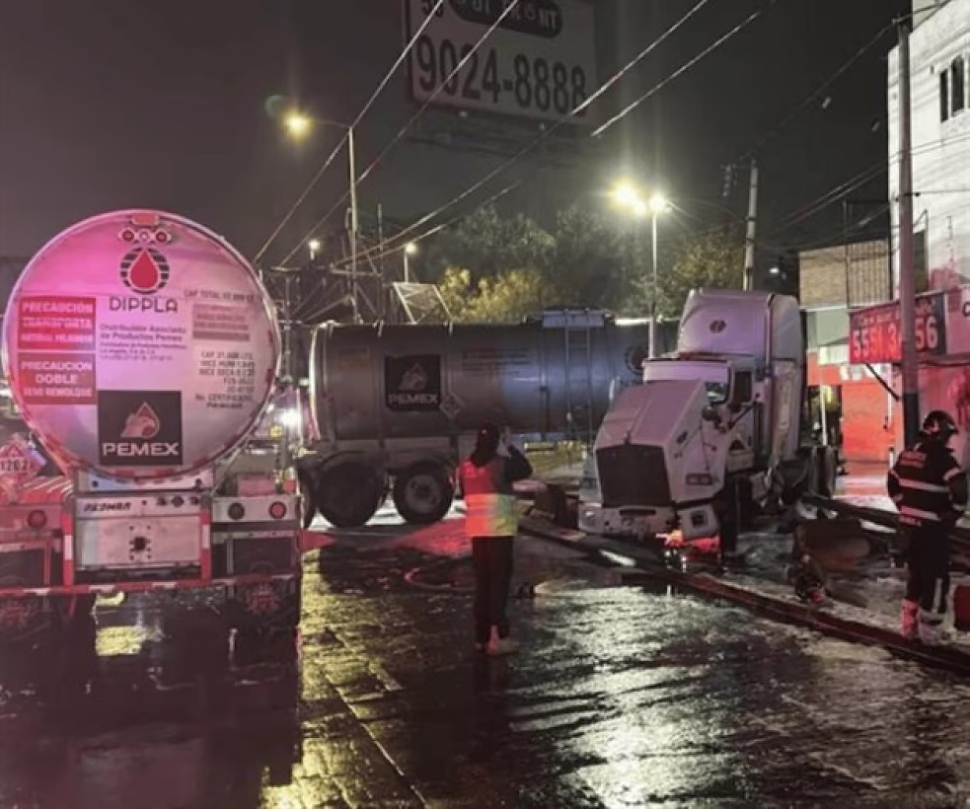
In the early hours of Thursday, a significant traffic event was recorded in the Gustavo A. Madero mayor’s office, Mexico City. A double trailer pipe, which displayed the logo of Petróleos Mexicanos (Pemex) and belonged to the contracting firm Productos Petrolófilos Los Ángeles, hit the retaining wall on Avenida 551, specifically at its confluence with the Avenida Río Consulado Interior Circuit, in the San Juan de Aragón I Section neighborhood. The preliminary investigation by the competent authorities determined that the accident left no people injured, a crucial factor that mitigated the immediate consequences of the event.
The analysis of the scene allowed us to establish the dynamics of the impact. The cargo unit, of considerable size and weight, collided with the metal fences and concrete segments that serve as a central divider on said communication route. The kinetic energy released in the crash was sufficient to compromise the integrity of the tractor-trailer’s carburetion tank, resulting in its contents spilling. It is essential to specify that the capacity of this specific component is estimated at approximately 200 liters of fuel. A fortunate circumstance of great relevance to the management of the emergency was that the main tanks of the trailers, designed for significantly larger volumes, were empty at the time of the accident. This fact decisively ruled out an imminent risk of a large fire or explosion, allowing response teams to operate with an acceptable safety margin.
Coordinated response of emergency bodies
The protocolization of the response to this type of incident was activated immediately. Specialized elements from the Secretary of Citizen Security (SSC) went to the scene to establish a security perimeter and control traffic. In parallel, highly trained personnel from the Heroic Fire Department of Mexico City were deployed to evaluate residual risks and manage the spilled fuel. As a standard preventive measure, medical teams from the Rescue and Medical Emergency Squadron (ERUM) and Gustavo A. Madero Civil Protection were also present, who carried out an exhaustive verification to rule out the presence of any injuries, confirming the initial report of zero victims.
The statement of the vehicle operator, a man of approximately 38 years of age, constitutes the main input for the investigation of the causes. According to his testimony before the authorities, the incident occurred when he lost control of the heavy vehicle while trying to negotiate a curve on the route. This loss of directional control was the direct causal factor that led to the impact against the containment road infrastructure. This type of testimony is essential to cross-reference information with the physical evidence at the scene, such as braking marks and the final position of the unit, in order to reconstruct the sequence of events as accurately as possible.
The work after the event focused on mitigation and normalization. An inter-institutional collaboration between Traffic Elements, Civil Protection and Firefighters was carried out to carry out cleaning and verification tasks, ensuring that the hydrocarbon spill did not represent a subsequent danger to road users or the immediate environment. To remove the damaged vehicle, which was obstructing several traffic lanes, it was necessary to request the support of a large-capacity crane. This logistics operation generated significant impacts on roads in one of the main arteries of the area, with consequences on mobility that lasted for several hours, a common side effect in incidents of this nature that involve large tonnage units.
This incident highlights the risks inherent in land transport of fuels in densely populated urban environments. It underscores the critical importance of vehicle maintenance protocols, ongoing operator training, and the robustness of rapid response systems. The effective coordination between the different relief bodies on this occasion prevented a major tragedy, demonstrating the value of preparation and protocolized action. However, it also invites reflection on the preventive measures that can be implemented to reduce the probability of occurrence of similar events, such as the review of road designs, the implementation of advanced control systems in heavy-duty vehicles and the strict supervision of companies concessionaires for the transportation of hazardous materials.
Do you consider greater regulation for fuel transportation in urban areas to be crucial? Share this analysis on your social networks to expand the conversation and explore more content on industrial and logistics safety in our specialized section.


