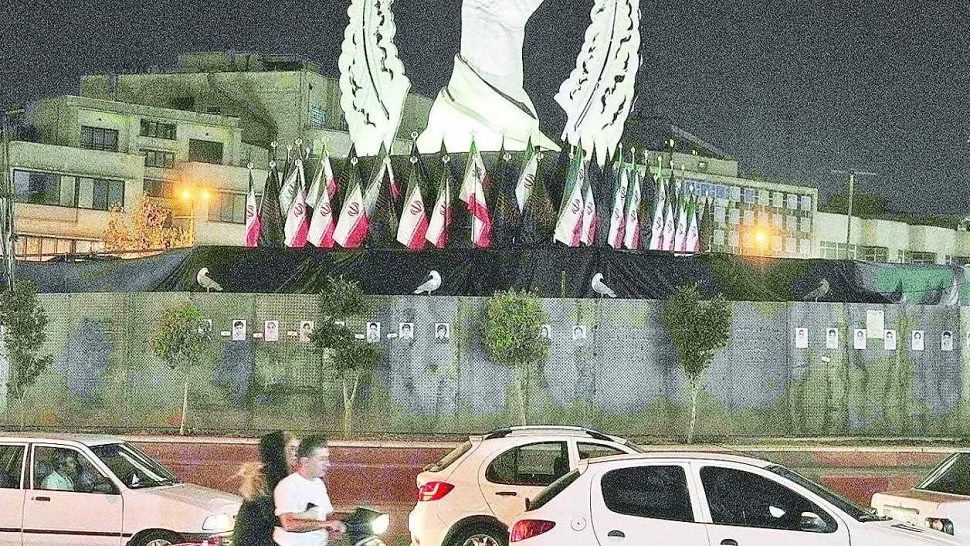
The United States launched a new air offensive against Iran early this Monday, the ninth consecutive night of bombing. Washington confirmed the death of another American soldier in Iraq, while Tehran responded by attacking Bahrain and Kuwait, key US allies in the region.
Objectives and implications
The US Central Command reported that the attacks targeted command centers, air defense, coastal surveillance, missile and drone bases, as well as Iranian communication networks. Official Iranian media reported at least one death near Tabriz, an area where there are allegedly underground bases of the Revolutionary Guard. Attacks were also recorded in other strategic provinces.
The escalation reached the Strait of Hormuz: a merchant ship caught fire after being hit by a projectile near the coast of Oman, forcing the crew to evacuate it. The Revolutionary Guard claimed to have attacked oil tankers in the area. Bahrain activated anti-missile sirens and Kuwait confirmed that its air defenses intercepted Iranian projectiles.
Oil impact and diplomacy
The price of Brent oil exceeded $90 per barrel due to the interruption of maritime traffic in the Strait of Hormuz, through which about a fifth of the world’s crude oil transited before the conflict. Washington maintains a naval blockade on Iranian ports to stop its exports.
Secretary of State Marco Rubio reiterated that the US remains open to negotiating, although he acknowledged that there are still no conditions for an agreement. Iranian authorities confirmed proposals through mediators, while former Foreign Minister Mohammad Javad Zarif insisted that only diplomacy will prevent further escalation. Since the start of the war on February 28, 17 US service members have died; According to Tehran, the recent bombings left at least 50 dead and 517 injured in Iranian territory.