A respite for the countryside: Pemex accelerates production
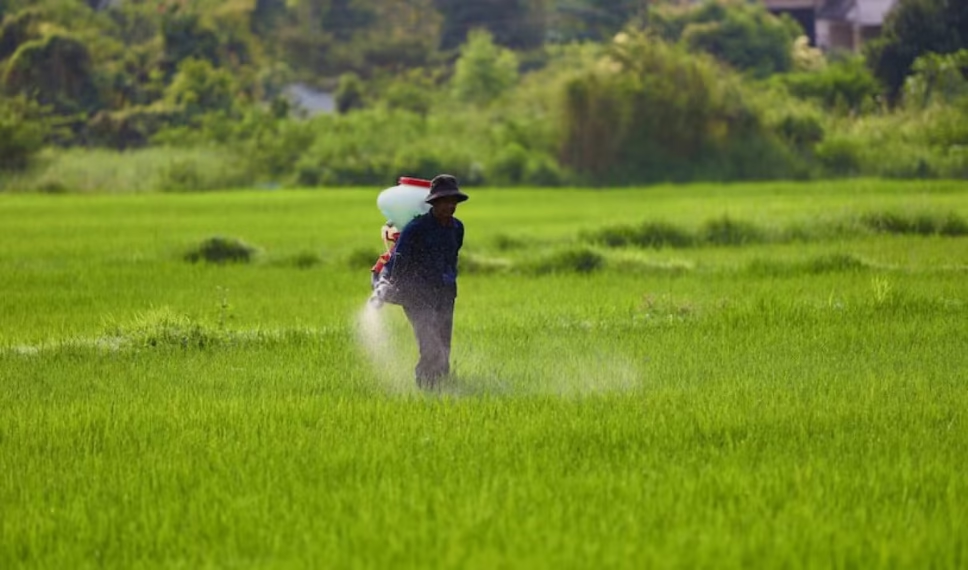
The figures are clear and speak for themselves. Petróleos Mexicanos (Pemex) closed 2025 with a 21% jump in fertilizer manufacturing, going from 807 thousand to 975 thousand tons. It’s not just a number on a report. It is oxygen for crops and a firm step towards that elusive goal called food self-sufficiency.
What exactly occurred? The company breaks down the field’s menu: 165 thousand tons were nitrogen fertilizers, 590 thousand tons were phosphate fertilizers and another 220 thousand tons of urea. But our eyes are already set on what is to come.
By 2026, the goal is to reach 558 thousand tons of ammonia per year, a key input for the production of nitrogen.
The petrochemical bet: millions on the table
Behind these numbers is a much bigger strategic play. Pemex is moving heavy chips on the petrochemical board, with investments totaling billions. 8 billion pesos are contemplated for the Escolín Petrochemical Complex, in Poza Rica, and another 2 billion for the Cosoleacaque complex, south of Veracruz.
The company does not mince words: it points out that this industry is strategic for the development of the country. That is why it has worked to recover and modernize key complexes such as Cangrejera, Morelos, Pajaritos and Cosoleacaque.
And the script for the next acts is already written. For 2026, projects are planned in the ethane-ethylene and aromatic chains, with a joint investment of 11 billion pesos. The ultimate goal is to produce hundreds of thousands of more tons of derivatives, closing the circle to strengthen the entire production chain and, ultimately, support those who plant the land.
It is a play in several acts. First, reactivate the productive machine. Then, inject capital where it is needed most. The final curtain should be a stronger and less dependent field. The public—the farmers—hopes that this time the ending will be happy.