The tightrope in the Gulf
The truce between Washington and Tehran is more fragile than ever. The entry into force of the US naval blockade in the Strait of Hormuz has once again set off alarm bells. And the words have not been long in coming.
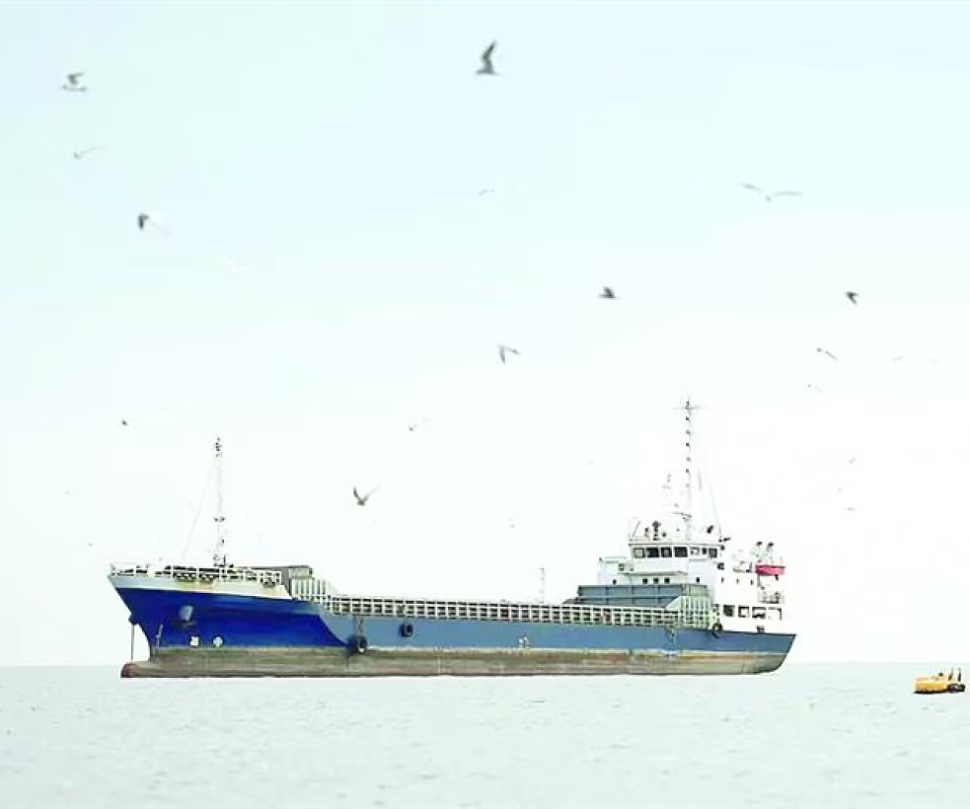
From the White House, Donald Trump issued a direct warning: he will “immediately eliminate” Iranian ships that defy the restrictions. Although he clarified that his army will not hinder neutral vessels. A harsh message, but with a door ajar.
Tehran’s response was equally forceful.
Ebrahim Zolfaqari, spokesman for the Iranian Armed Forces, called the blockade an act of “piracy.” And he went further: he launched threats of retaliation against ports of countries allied with the United States in the region. The Iranian government insists that its strategy is a response to the pressure it is under.
“The closure of the strait responds to their pressure strategy in the midst of the conflict with Washington and Israel,” they stated from Tehran.
They would only allow passage to vessels without ties to what they consider “the enemy.” A posture that draws very clear lines in the water.
Diplomacy under pressure
While the cannons point, diplomacy tries to move. Pakistan has resumed efforts to reactivate the negotiations, currently frozen. But the road is full of obstacles; The talks are at a total stalemate.
External support does not help calm things down either. Israeli Prime Minister Benjamin Netanyahu has fully supported Washington’s position. And he warned that the truce “can change course in an instant.” A phrase that well summarizes the volatility of the moment.
Experts are already analyzing possible military scenarios. An eventual US counterblockade would require a massive naval deployment: aircraft carriers, destroyers and frigates operating on both sides of the strait. The risk of a direct escalation would be very high.
And all this has a name: oil.
The tension is already felt in global markets. Actors such as Qatar and France have called for moderation and the urgent reopening of sea lanes. They warn about the global economic impact, especially on the price of crude oil.
With dialogue stalled and cross-threats escalating, the region remains in a dangerous balance. A delicate game where any wrong move can cost you dearly.