Educational evaluation in Latin America: the role of Nuevo León
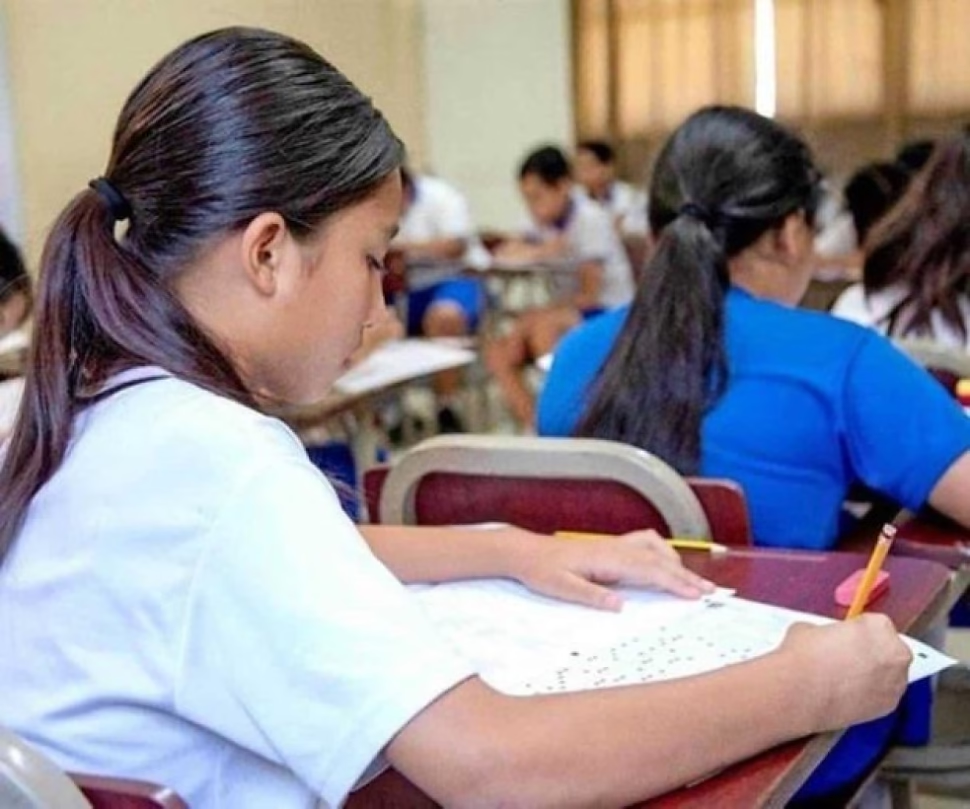
Between today and Friday, 13 thousand primary school students in Nuevo León will participate in the Regional Comparative and Explanatory Study (ERCE), an initiative coordinated by the Latin American Laboratory for Evaluation of the Quality of Education (LLECE), dependent on UNESCO. This test, applied in 19 countries in the region, will analyze key skills such as reading, writing, mathematics and, in an innovative way, socio-emotional skills. Unlike previous evaluations, Mexico does not participate at the national level, but Nuevo León will do so independently as part of its state educational policy.
Methodology and scope of the study
The ERCE uses standardized instruments to measure academic performance in third and sixth grade, including natural sciences in the last level. In addition, it incorporates contextual questionnaires that examine factors associated with learning, such as the school environment and socio-affective capabilities. The results, available in 2026, will allow regional comparisons and identify post-pandemic patterns. According to the latest report (2019), Latin American students showed progress in empathy, acceptance of diversity and emotional regulation, although with a significant gender gap: girls outperformed boys in these indicators, especially in Mexico, Brazil, Ecuador and Uruguay.
The 2019 analysis, detailed in the document “Contributions for teaching socio-emotional skills”, revealed that the differences reached up to 12 percentage points on scales of school self-regulation. Questions such as “How do you react when someone is angry with you?” or “Would you accept classmates from other regions?” demonstrated that these competencies are critical to building inclusive educational environments. By 2025, the study will include variables on the impact of Covid-19 on cognitive and emotional development.
Implications for public policies
Nuevo León’s decision to join the ERCE reflects a commitment to evidence-based educational improvement. The data obtained will guide strategies to reduce inequalities and strengthen socio-emotional support programs, particularly in post-pandemic contexts where challenges such as school dropouts and lags in fundamental learning have been exacerbated.
Why does it matter? This study not only measures academic knowledge, but provides insights into how external factors—from gender to health crises—shape education. The findings will help design personalized interventions and prioritize resources in critical areas.
Share this analysis and discover more about how educational evaluation transforms realities in our thematic specials.
Are you interested in education in Latin America?Follow our coverage and share this article on your social networks to expand the debate.