A Cry for Help in the Immense of the Sea
In the deep, turbulent waters of the Gulf of Mexico, a silent storm is brewing, one that threatens to capsize the very foundations of the national oil industry. For the first time, with desperation touching their voices, the Mexican Chamber of the Maritime Transport Industry (Cameintram) has picked up the phone to narrate a tragedy in the making. It is not a simple claim; It is an ultimatum launched from the abyss, an SOS that echoes in the corridors of Petróleos Mexicanos while the coffers of the shipping companies are inexorably emptied.
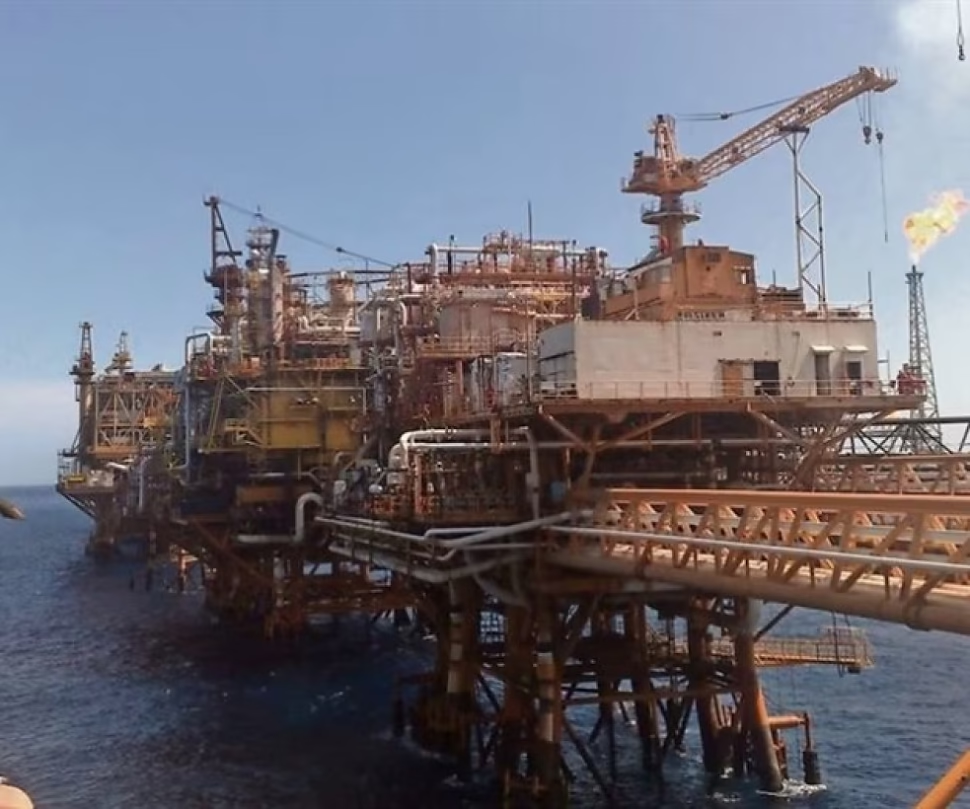
Imagine the scene for a moment: gigantic drilling platforms, ocean-defying steel titans, and a fleet of specialized vessels, all on the brink of abandonment. The staff, those specialized people who keep the most complex machinery alive, see their salaries hanging by a thread. The sophisticated maintenance required by these marine beasts has become an unattainable luxury. The reason is as simple as it is catastrophic: an unprecedented liquidity crisis, a financial drain perpetrated by the defaults accumulated during 2024 and 2025 by the parastatal. The point of no return, they warn, could be reached at any time.
The Rescue Strategy: A Paper Lifeguard
In an act that many call too late and too slow, the authorities have outlined a rescue plan. This is the payment strategy channeled through Banobras, a beacon of hope that, however, shines with a dim and distant light. From Cameintram they relate how those agonizing meetings have begun, where Pemex and other federal agencies convene by segments the companies’ finance teams. The objective: to familiarize them with the new implemented scheme. But patience is a resource that runs out as quickly as the fuel in your tanks. “We require speed,” they exclaimed, a word that encapsulates all their anguish.
The shipping union, made up of the main companies that sail the Gulf, looks with contained hope to this relief fund. They know that 90% of their operations are aimed at logistics, production, maintenance and marine work. They are the blood vessels of the oil company, responsible for keeping the crude oil flowing. A strike here would not be a simple strike; It would be a massive heart attack for the nation. Therefore, your request is not a suggestion, it is a plea: accelerate implementation to release delayed payments for services provided in 2024. It is a race against the clock, where the prize is the very survival of the Merchant Navy at the service of Pemex.
The magnitude of the disaster is Dantesque. At the end of June, Pemex‘s debt with its suppliers reached the astronomical figure of 430 billion pesos. A number that, more than a statistic, is a slab of concrete on the backs of thousands of companies. The fund presented at the beginning of September 2025 between the oil company, the Ministry of Economy and the presidency, with Banobras as executor, stands as the last lifeline. But in the real world, far from desks and meetings, ships need spare parts, workers need to eat, and platforms need to not become rusty ruins.
This drama is not just a matter of numbers on an accounting balance sheet. It is an epic of resistance on the high seas, where operational security and exploration are at stake. Every day that passes without the promised cash arriving is one more step towards the precipice. The House’s warning is clear: the consequences on production will be inevitable, and the responsibility will fall on those who did not know or could not act in time. The fate of the Mexican oil industry, that backbone of the economy, is decided now, in this moment of uncertainty and maximum tension.
Do you think this crisis can be resolved before the damage is irreversible? Share this crucial information on your social networks to keep your community informed and explore more in-depth analyzes on Mexico’s energy future on our site.