The Flour Giant in the Eye of the Hurricane
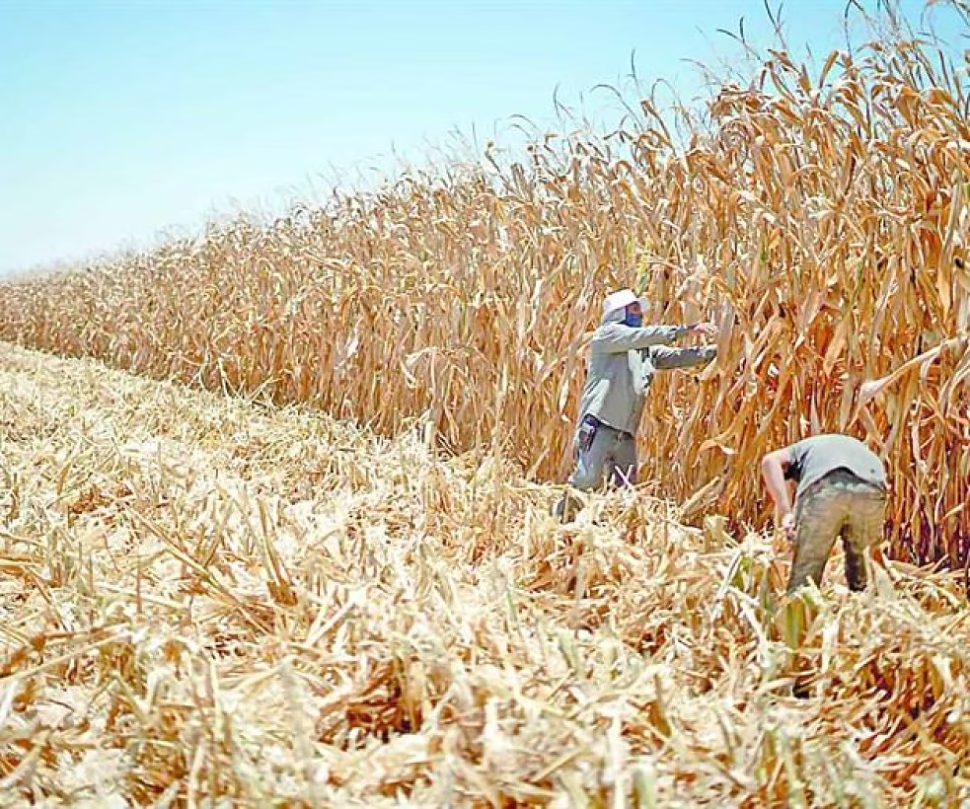
It seems that Grupo Minsa, one of those Mexican colossi that move mountains of flour for tortillas, has decided to take its hands off the dough. While peasants block roads, probably with the same desperation with which one looks for a parking place downtown on a Saturday afternoon, the company, led by the ever-present Altagracia Gómez, came out with a statement that, in essence, says: “Me? But I barely buy a little bit!” Their star argument is that they only acquire 1% of the total corn consumption in the country. An amount so insignificant, according to them, that it is as if they were trying to influence the price of the dollar by buying a couple of tickets at the airport.
To sweeten the ears of producers, the corporation claims to pay a competitive price and, oh limitless generosity, offer a premium for Mexican corn that exceeds international prices by about one thousand pesos per ton. An increase of 24% that sounds wonderful, until one remembers that the international price is usually the floor, not the ceiling. But who is one to question these gifts from Olympus of flour?
Importation: That Necessary Evil that Almost Doesn’t Exist (According to Them)
Minsa is quick to clarify that it only resorts to import in cases of regional shortage, a situation as rare and exotic in Mexico as a day without traffic. With a precision worthy of a Swiss watchmaker, they detail that in the last six years they acquired nearly four million tons of national white corn. And imports, those evil foreign temptations, were just 69,815 tons, which represents less than 0.1% of the national harvest. A figure so low that it’s almost worth mentioning, right? It’s like a chain smoker saying he only smokes one cigarette a year… on New Year’s.
Then comes the crown jewel in this comedy of prices: the company clarifies, with the patience of a kindergarten teacher, that the cost of its flour represents only 35% of the final price of the tortilla. The rest, they explain to us, are “other elements beyond their control.” A magnanimous gesture to transparent its structure in the face of social pressure, which surely has nothing to do with preventing its facilities from being burned. It’s a shame that they don’t detail what those mysterious “elements” are; perhaps they include the cost of Mexican patience, which must be through the roof.
And What Does This Giant Really Live On?
For those who thought that Minsa only sold to the lady at the tortilla shop on the corner, here is a revelation: 51% of its income comes from dough and tortilla manufacturers. Another 34% is provided by the producers of toast and snacks, those snacks that accompany us on football afternoons. The rest is distributed between groceries, self-service stores and exports. And here comes the most curious fact: sales to government entities have decreased from 7.8% in 2020 to 4.2% in 2025. A drop that, without a doubt, is pure coincidence and has no relation to changes in public administration or social programs. Of course not.
In this fascinating world of agribusiness, where figures dance and percentages whisper promises, Minsa paints an idyllic picture of a company that barely touches the market, pays fair prices and is a victim of major economic forces that are beyond its control. A narrative as neat as it is suspicious, which leaves the million-dollar question in the air: if they are so irrelevant in the price scheme, why don’t the farmers protest against the laws of supply and demand directly?
Did this ironic vision of the corn conflict make you smile? Don’t stay curious, share this analysis on your social networks and explore more content related to the national economy and its peculiarities.