
Mexico verifies conditions of compatriots detained in Israel

Mexican diplomacy acts to guarantee the well-being and prompt return of its citizens, providing essential consular assistance.

Diplomatic Action for the Protection of Nationals Abroad

The Secretary of Foreign Relations (SRE) of Mexico has issued an official statement detailing the efforts made on behalf of people of Mexican nationality belonging to the Sumud Global Flotilla who are in the custody of the Israeli authorities. According to the institutional report, the Mexican ambassador to Israel has held a new meeting with the compatriots detained in the Ktziot prison, located in the Negev desert. This direct contact is part of the consular assistance and protection strategy that the Mexican government systematically deploys towards its citizens in situations of vulnerability abroad.

The main objective of this diplomatic intervention was the exhaustive verification of the detention conditions in which the Mexicans are found. The on-site evaluation of your situation is a standard procedure within the framework of international law and consular conventions, aimed at ensuring respect for your fundamental human rights and your physical integrity. The Mexican Foreign Ministry has emphasized that monitoring the circumstances of the detainees is a priority and continuous activity.

RelatedMexico manages the release of compatriots detained in Israel

Humanitarian Assistance and Communication Channels

A critical component of this management was the provision of medications and essential supplies that detainees require for their health conditions. The SRE has been explicit in pointing out that this support has been channeled through “formal and informal diplomatic channels”, a distinction that reflects the use of all available resources and avenues of dialogue to overcome logistical or bureaucratic obstacles. This action underscores the commitment of Mexican diplomacy not to limit itself to conventional protocols when the health and well-being of its nationals are at stake.

In parallel to the actions directed towards detained citizens, the Chancellery has maintained a transparent and constant line of communication with their families in Mexico. The SRE team held an informative meeting with the family members, with the central purpose of providing them with updated details on the concrete progress in the process of their upcoming repatriation. This engagement with families not only fulfills an informative function, but also serves as a mechanism for containment and building trust in government management during a crisis.

The Sumud Global Flotilla incident is framed in a complex and sensitive geopolitical context. These types of missions, which often seek to break blockades or bring humanitarian aid to conflict zones, frequently result in clashes with the security forces of the States involved. The detention of international participants is a recurring event, making consular protection a primary function for diplomatic missions. Mexico’s response in this particular case sets an operational precedent for how to handle high-tension situations involving civilians.

The official statement of the SRE concludes with a reaffirmation of its guiding principles: “The SRE reaffirms its priority and commitment to ensuring and defending the human rights of its compatriots, as well as guaranteeing their safe return to Mexico.” This phrase is not a mere formality; constitutes the essence of the institution’s mandate and reflects a consistent State policy. Safe repatriation represents the final phase of a diplomatic process that combines negotiation, verification of conditions and humanitarian support, all executed in strict accordance with international law and with an unwavering focus on the safety of citizens.

The analysis of this event highlights the intricate network of actions that modern diplomacy must undertake. From crisis management on the ground to communicating with families and the public, every step is meticulously planned. The ambassador’s intervention is not an isolated act, but rather the most visible component of a complete consular apparatus that works to resolve a delicate situation, ensuring that the rights of Mexicans, regardless of where they are in the world, are respected and protected.

Do you find this work to protect Mexicans abroad valuable?Share this analysis on your social networks to inform more people about the importance of diplomatic action and explore other content related to international relations on our site.
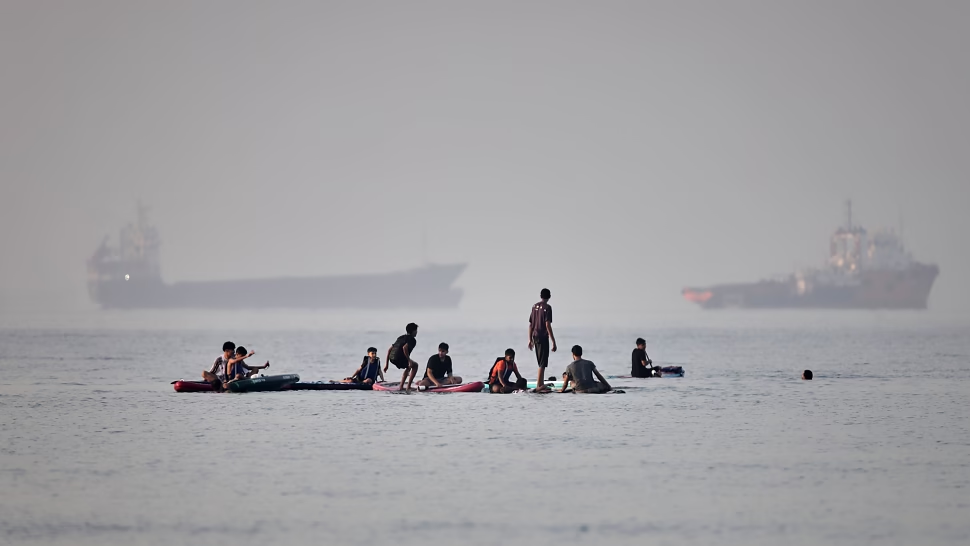
Irán ataca con misiles a Baréin y Kuwait; son interceptados

Irán lanzó misiles balísticos y drones hacia Baréin y Kuwait; fueron interceptados. El gobierno bareiní pide cesar las hostilidades.

Intercambio de ataques entre Irán y Estados Unidos

Irán disparó misiles balísticos y drones hacia Baréin y Kuwait el sábado. Ambos proyectiles fueron interceptados, según informó el gobierno de Baréin. La autoridades hicieron un llamado a Teherán para que detenga los ataques contra sus vecinos.

El régimen iraní señaló que atacó activos militares de Estados Unidos en esos dos países. La acción ocurrió después de que Washington lanzara misiles contra instalaciones de vigilancia en la isla de Qeshm y cerca de Sirik. Teherán afirma que esos sitios se usaban para proteger fronteras y garantizar la navegación en aguas internacionales. Calificó el bombardeo estadounidense como una violación del alto el fuego.

RelatedIran attacks US bases in the Gulf after Israeli offensive

Este nuevo intercambio se produce en medio de una creciente presión de la administración Trump sobre Irán. El objetivo es alcanzar un acuerdo que ponga fin al conflicto. La guerra ha tensionado la economía global y amenaza con generar una crisis alimentaria en los países más vulnerables.

El ministro del Interior de Pakistán, Mohsin Naqvi, llegó a Irán el sábado como parte de los esfuerzos de mediación. Mientras tanto, Estados Unidos busca intensificar la presión económica sobre el régimen iraní.

Continue reading

León XIV llama a los españoles a evitar la polarización política

El papa instó a líderes a dejar las narrativas divisivas y mirar hacia la complejidad.

El papa León XIV pidió a los españoles dejar de avivar el fuego de la polarización. Su visita a Madrid, la primera de un pontífice en 15 años, ocurre en medio de turbulencias políticas para el gobierno de Pedro Sánchez y una crisis de credibilidad en la Iglesia católica.

Llamado a la unidad

Ante unas 500.000 personas, muchas jóvenes, reunidas en la Plaza de Lima, el pontífice estadounidense de ascendencia española pronunció un discurso contundente. Apeló directamente a los líderes políticos a invertir en educar a los jóvenes para valorar la diversidad y la complejidad.

“Hoy, la tentación de ganar popularidad avivando el fuego de las polarizaciones parece crecer, en lugar de disminuir; la dignidad humana no deja de ser violada”, declaró.

León XIV recordó el pasado musulmán de 800 años de España, cuando Toledo y Córdoba fueron centros de diálogo. Pidió que el país sirva de modelo para Europa.

“Invito a todos, por amor a la verdad, a abandonar las narrativas divisivas y polarizantes de vuestra realidad social y de su historia, para pasar de las simplificaciones estériles a la apreciación fecunda de la complejidad”, indicó.

La visita busca dirigir la atención papal hacia las raíces cristianas de Europa, tras el enfoque del papa Francisco en comunidades más lejanas. León parece decidido a llevar un mensaje de paz, unidad y dignidad humana a un continente polarizado por la migración, la guerra en Ucrania y la inteligencia artificial.

RelatedCelebrities say goodbye to Pope Francis with emotional messages

En el aeropuerto, fue recibido por los reyes Felipe VI y Letizia, y por el presidente Sánchez. En el trayecto, comentó que le alentaban los informes sobre un despertar espiritual entre los jóvenes en un país secularizado.

Los españoles están cada vez más divididos por temas como inmigración, feminismo y corrupción política, mientras persisten movimientos independentistas.

Continue reading

La exclusión de mujeres en ascensos navales genera incertidumbre

La intervención del secretario de Defensa deja sin ascensos a mujeres en la Marina.

La exclusión de mujeres en ascensos navales genera incertidumbre

El secretario de Defensa, Pete Hegseth, retiró a nueve oficiales de la lista de próximos ascensos en la Marina, entre ellos a todas las mujeres que aspiraban al rango de almirante de una estrella. La medida, inusual por su intervención directa, dejó a la fuerza sin ninguna mujer en ese grado este año.

Según un funcionario de defensa que habló bajo anonimato, la Marina había preseleccionado a 31 capitanes para ascender a almirante. Hegseth excluyó a nueve, incluidas tres mujeres y dos hombres afroamericanos. Como resultado, ninguna mujer alcanzará el cargo de almirante de una estrella en 2024, pese a que representan cerca de una cuarta parte del total de oficiales y un tercio de los rangos intermedios, según datos militares de 2024.

RelatedHegseth calls a secret meeting with senior military commanders

Ocho oficiales femeninas consultadas por The Associated Press, bajo anonimato por temor a represalias, expresaron su preocupación. Las de menor rango consideran que sus carreras ahora tienen un límite político y que su valor dentro de la institución se ha visto disminuido. Algunas se preguntan si la intención era precisamente esa.

El hecho ha generado dudas sobre el futuro de la próxima generación de mujeres en la Marina. Las oficiales temen que la politización de los ascensos se convierta en una barrera permanente.

Continue reading