Failure of nuclear disarmament conference
The Mexican government expressed its rejection of the use of nuclear weapons and regretted that no agreements were reached at the Review Conference of the Non-Proliferation Treaty (NPT), held in New York from April 27 to May 22.
The Ministry of Foreign Affairs sought to build bridges between the positions of the participating countries. In a context of growing global risk, he called for redoubling efforts to achieve consensus.
“Mexico advocated for the recognition of the catastrophic humanitarian consequences of the use of nuclear weapons, the value of the treaties on the Prohibition of Nuclear Weapons and the Comprehensive Nuclear Test Ban, as well as the contributions of nuclear weapons-free zones, in particular the one created by the Treaty of Tlatelolco in Latin America and the Caribbean,” indicated the Foreign Ministry.
The agency added that the lack of consensus in the NPT review cycles, which lasts 16 years, does not suspend the legal obligations of the Treaty or previous commitments on disarmament and peaceful uses of nuclear energy.
After four weeks of negotiations, the signatory countries did not reach an agreement on a text that would reaffirm arsenal control. The president of the meeting, the Vietnamese Do Hung Viet, said:
“Despite all our efforts, I understand that the conference is not in a position to reach agreement on its substantive work.”
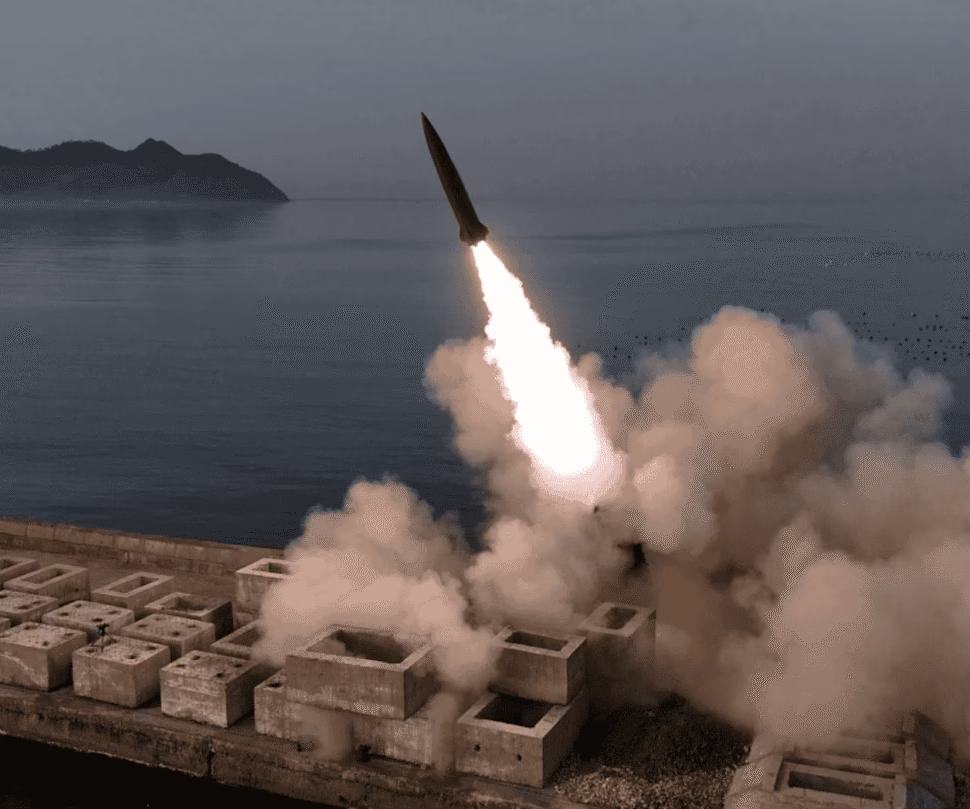
He ruled out putting the final document to a vote due to persistent disagreements over proliferation risks in countries such as Iran and North Korea.
Activists from the International Campaign to Abolish Nuclear Weapons have warned that while most nations work in good faith, a small group of nuclear weapons states and their allies are blocking disarmament and expanding their arsenals. According to international data, the nine States with this technology had an estimated 12,241 nuclear warheads at the beginning of 2025; The United States and Russia concentrate 90% of that power.