Return of Mexican Activists After Interception of Humanitarian Flotilla
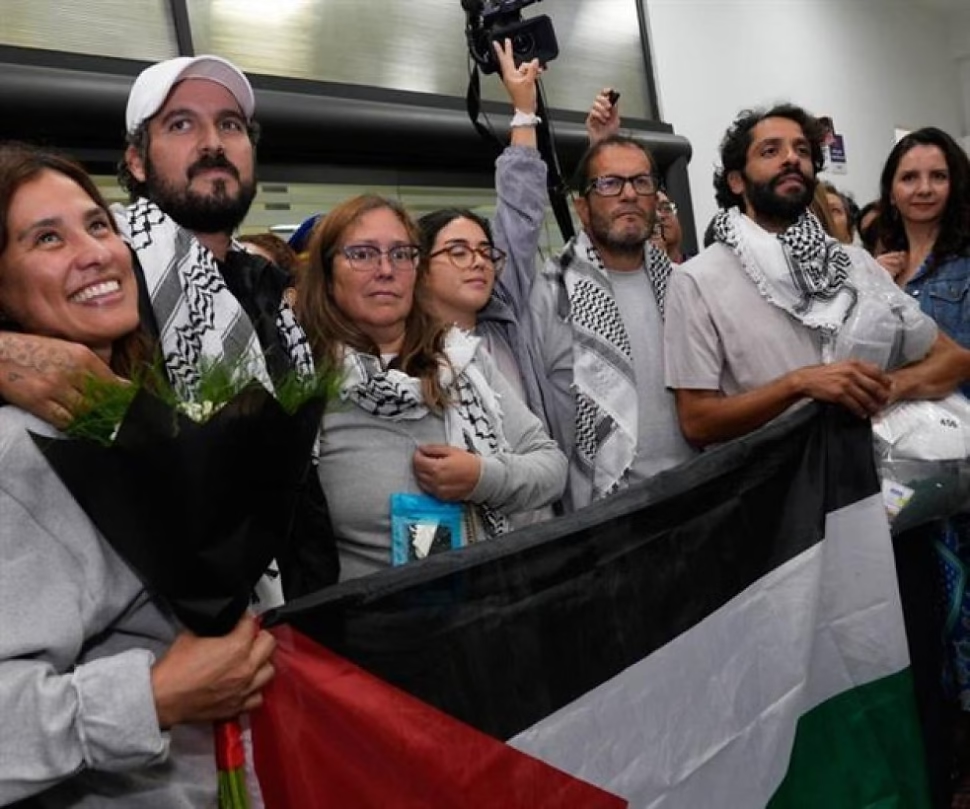
A crowd gathered at the Mexico City International Airport to receive with cheers and displays of solidarity the six compatriots who were part of the Sumud Global Flotilla. This international contingent was trying to break the Israeli maritime blockade to bring humanitarian assistance to the Gaza Strip. The arrival of human rights defenders marked the epilogue of a complex diplomatic and humanitarian situation that kept the international community in suspense.
The reception was characterized by an atmosphere charged with emotion and political demands. Between slogans such as “Palestine will win” and banners demanding the freedom of the Palestinian territory, the protesters covered the activists with flags and bouquets of flowers. This scenario demonstrated the significant social support that the Palestinian cause has generated within sectors of Mexican society, transforming the air terminal into a space for political expression.
Details of the Humanitarian Mission and the Israeli Intervention
The Sumud Global Flotilla, made up of 44 vessels with participants of multiple nationalities, had as its main objective to deliver medical and food supplies to the civilian population of Gaza. The intervention of the Israel Defense Forces took place in international waters, arguing the need to maintain maritime security and prevent the entry of materials that could be used for hostile purposes. This episode reactivated the debate on the legality of the blockade and international humanitarian law.
The Mexican group was made up of Sol González Eguía, Ernesto Ledesma Arronte -director of the digital media Rompeviento TV-, Arlín Medrano Guzmán, Carlos Pérez Osorio, Diego Vázquez Galindo and Laura Alejandra Velez Ruiz Gaitán. Their release came after Israel deported another 171 people to Greece and Slovakia, including renowned climate activist Greta Thunberg, whose case attracted additional global media coverage of the incident.
During the reception, Arlín Medrano Guzmán expressed a heartfelt message addressed to the Palestinian people: “We apologize for not having arrived on time”, expressing the collective frustration of the group for not having been able to fulfill its objective of personally delivering humanitarian aid in Gaza. This declaration reflects the emotional and political commitment that characterizes international solidarity movements.
Position of the Mexican Government and Accusations of Abuse
The reception protocol included the presence of Chancellor Juan Ramón de la Fuente at the airport’s Military Air Base, who personally coordinated the logistics of the operation. As reported by the Ministry of Foreign Affairs through an official statement, the activists were subjected to an exhaustive medical examination immediately after their arrival, as a preventive measure after their experience in detention.
President Claudia Sheinbaum had previously expressed her solidarity with the activists and her government diplomatically managed their immediate release. In public statements, the Mexican president categorically rejected the interception of the vessels and reiterated Mexico’s official position: “We are here for humanitarian aid to Palestine, particularly to the Gaza Strip.” This position is aligned with Mexico’s historical position in defense of international humanitarian law.
Sheinbaum has consistently called military operations in Gaza a “genocide” and has defended the joint petition that Mexico and Chile submitted to the International Criminal Court last year. This initiative seeks to investigate “the probable commission of crimes within its jurisdiction” in the occupied Palestinian territories, establishing a significant precedent in the field of international criminal law.
For his part, Ernesto Ledesma Arronte made serious complaints about his treatment during detention, claiming to have suffered “psychological torture and physical torture” by Israeli forces. According to his testimony, the agents “twisted my arms and shoulders and pushed us back”, allegations that directly contradict the official version of the Israeli government.
Israeli authorities have formally rejected all allegations of mistreatment brought forward by activists deported to Türkiye, Spain and Italy over the weekend. In its defense, the Israeli government assures that the rights of all detainees were respected throughout the custody process, and that the interception measures were carried out in accordance with established security protocols.
This episode has revived the global debate on the legality of the Israeli blockade on Gaza and the legitimate mechanisms to provide humanitarian aid in armed conflicts. The participation of Mexican citizens in international solidarity missions marks a significant evolution in global activism and poses new challenges for Mexican diplomacy in scenarios of international conflict.
Was this analysis of Mexican participation in international humanitarian missions interesting to you? Share this content on your social networks to amplify the conversation about human rights and humanitarian aid, and explore more articles related to foreign policy and global activism on our website.