The Chancellor Puts ‘Customer Service’ Mode in the Consulates
It seems that the era of canapés and glamorous receptions at Mexican consulates has come to an end, people. In a move that would have made old-school diplomats cry, Juan Ramón de la Fuente, our chief foreign minister, decided to change the script and review the advances of the new model of consular care aimed at the Mexican community in the United States and Canada. And all this, be careful, while the neighbor to the north is in a rather hostile mood with its anti-immigrant raids. Nothing like a crisis to accelerate a renewal, right?
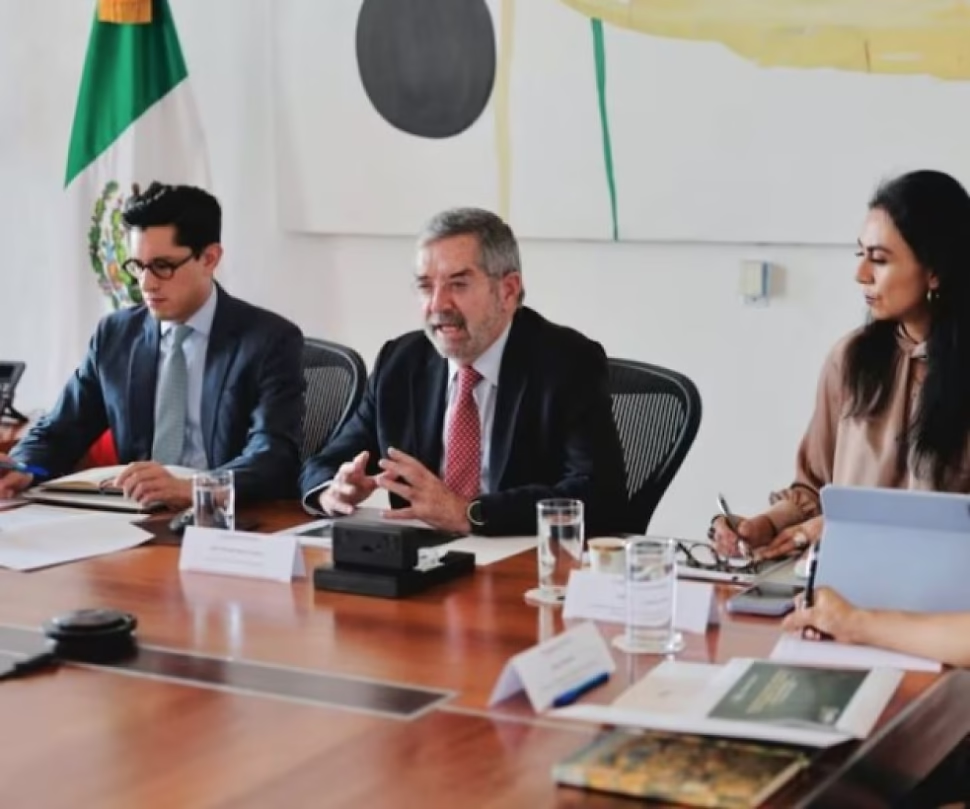
The order, clearly, came from above. After President Claudia Sheinbaum Pardo dropped that gem about how many consuls believed their work was the “paraphernalia of diplomacy” (ouch, she burned it live), it was obvious that someone had to step up. So De la Fuente, as the ultra-connected project manager, sat in front of the camera for a virtual meeting with the entire Mexican team abroad. Basically, the most important diplomatic Zoom of the year.
Goodbye to Paraphernalia, Hello to Royal Protection
The central message of this ‘all hands on deck’ meeting was clear: the era of formal greetings and pretty photos is over. Now it’s time to put on jobs. The chancellor thoroughly reviewed the implementation of this new care model, which sounds fancy but actually translates into one thing: truly protecting our people. They talked about consular protection programs, which are like a shield against the most aggressive immigration policies that are being experienced.
And no, this was not one of those meetings where everyone agrees and then nothing happens. The heavy hitters of the SRE participated: the Head of Unit for North America, Roberto Velasco; the general director of Consular Protection, Vanessa Calva, and the director of Strategy, Valeria Nápoles. In other words, the dream team of practical diplomacy. Sheinbaum’s instruction to permanently ensure the rights of Mexicans abroad is not just a nice slogan; It is the new absolute mandate.
This chip change is monumental. It means saying goodbye to the romantic (and slightly outdated) idea of the cocktail-only diplomat and hello to the multitasking official who has to know everything from filling out an asylum form to dealing with an impending raid. It is going from armchair diplomacy to trench diplomacy, with all the crudeness that this entails in the current geopolitical context.
The timing, of course, is not coincidental. With the escalation of raids and anti-immigrant rhetoric, consulates have become the first and sometimes only line of defense for thousands of compatriots. They are the shelter, the legal advice center and the link with families. This new model seeks to be more agile, closer and, above all, more useful. Less protocol and more action. Less tie and more mud boots.
It’s a necessary refocusing, a bit like when a famous app launches a massive update to fix all the bugs we’ve been reporting for years. Finally they realized that the user – in this case, the migrant – is the most important thing. The “paraphernalia” is left for the museums; The future is concrete and effective protection. A Copernican turn in the chancellery, led by a team that seems to understand that times of crisis demand bold responses, not pretty speeches.
The conclusion? Mexican consulates are reinventing themselves, going from being representation houses to becoming centers of community support and legal defense in hostile terrain. An evolution forced by circumstances, but one that was urgently necessary.
Do you think it’s a crucial advance or do you think it falls short? Share this note on your social networks and tell us what you think. Explore more content on foreign policy and migrant rights on our site.