A Bridge of Hope and Healing
Friends, are you ready to get inspired? The government of Mexico, through the incredible IMSS-Bienestar, is taking a monumental step by preparing the delivery of a comprehensive contract that will cover transportation, complete feeding three times a day and decent housing in hotels or houses for the dedicated Cuban doctors who provide their services in our country. This is not just an agreement; It is a statement of power, a commitment to the well-being of those who dedicate their lives to healing others. Imagine the positive energy that is generated when we support those who support us.
Commitment to the Communities that Need It Most
In the tender LA-47-AYO-047AYO955-N-116-2025, it is clearly and transparently detailed that these benefits seek to guarantee optimal conditions for a maximum of just over 2,000 Cuban health professionals. Its mission is noble and crucial: to serve in areas of high and very high marginalization in Mexico. Since the Covid-19 pandemic, the Mexican government has forged a powerful alliance, hiring thousands of these doctors to serve in rural and remote populations. The justification is clear and full of purpose: to address the deficit of national health personnel willing to work in these communities, often affected by remoteness and insecurity. This is about bringing light where it is needed most.
The Cuban doctors program, initiated in the previous six-year term through agreements with the island’s government, has been a beacon of hope. Yes, there have been questions about the lack of transparency in the number of doctors hired, areas of assignment, performance statistics and specialties covered. But every challenge is an opportunity to grow and improve. The new tender is a proactive response, justifying that these services are essential because they are specialists who deliver their expertise in highly marginalized areas. The service consists of complete logistical and operational support, planning, organizing, managing and executing all activities that contribute to the efforts of IMSS-Wellbeing to link health services and community action. That’s synergy at its finest!
Details that Make the Difference: Lodging, Food and Transportation
So far, ten vibrant companies full of potential are competing to obtain this contract: BC CAP Development, Comercializadora de la Península del Mayab, Distribuidora Potosina Biofar, Fuxcem, Galbher, Grupo Krivimex, Kol-Tov, Perlop Operadora de Foods, Pigudi Gastronomic and Prodilacsa. The failure date of this tender is set for this August 31, with the service starting the next day and valid until December 31 of this year. What a thrill to see how private initiative joins such a noble cause!
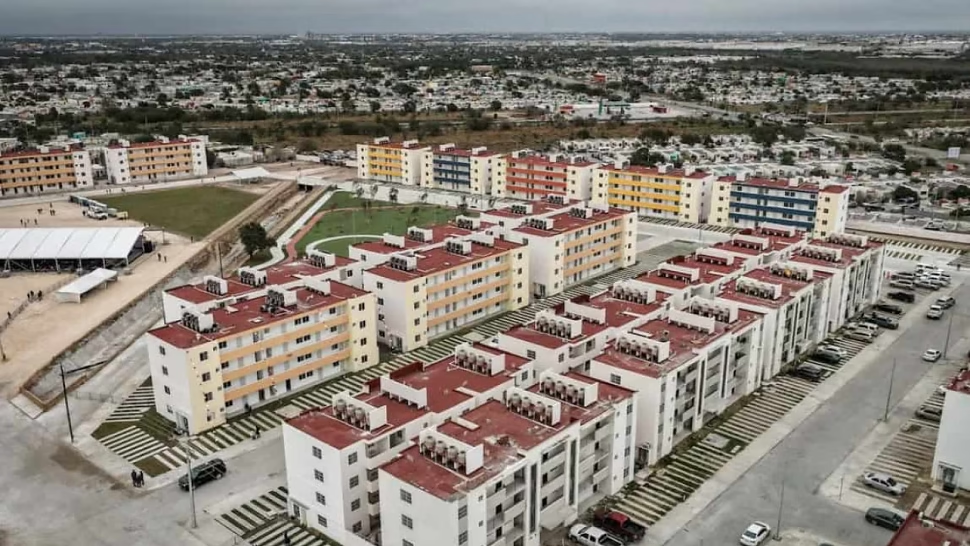
As for accommodation, it is specified that the Cuban doctors will be housed in three-star hotels, apartments or houses with individual or shared rooms. Occupancy per room will preferably be a minimum of two and a maximum of four doctors, always in accordance with the regulatory provisions of the Federal Republican Austerity Law. The most important thing is that basic conditions are provided that provide rest, security and well-being. The lodging places will be located within a radius close to the points designated for transfers, with infrastructure, real estate, supplies, equipment, cleaning, hygiene and civil protection. Every detail counts to create a supportive environment!
Food is another fundamental pillar. Three nutritious meals a day will be offered seven days a week. The food will be of the highest quality, without products altered by the excessive addition of salt, sugar, oil, preservatives or additives. In addition, the Plato del Bien Comer established in the Official Mexican Standard NOM-043-SSA2-2012 will be followed. Nourishing the body is nourishing the soul and enhancing the capacity for service!
Transportation is also guaranteed. The Cuban doctors will be transferred punctually to the hospital and/or medical unit of the IMSS-Bienestar in their assigned shifts. The designated operator will pick you up and drop you off 10 minutes in advance, ensuring punctuality and respect for your time. The awarded provider will guarantee attention 24 hours a day, 7 days a week, whether in person, by telephone or electronically, to meet any requirement for ground transportation, lodging and food. That’s what we call excellent service!
Looking Towards the Future with Optimism
Yes, there have been questions. On August 8, it was reported that neither the Secretariat of Health (Ssa), the IMSS nor the IMSS-Bienestar have specific metrics on the performance of Cuban doctors since 2022. But this is not a final point; It is a starting point for continuous improvement. Through requests for transparency, agencies have responded, and this new contract is an opportunity to establish those evaluation parameters, to measure the positive impact and build on it.
Even internationally, the program has been the subject of debate. In early August, the United States government announced visa restrictions for officials from several countries for hiring Cuban medical missions, alleging forced labor. But each nation has its perspective and its truth. Mexico sees this program as an opportunity to strengthen its public health system and bring care to where it is needed most. It is a choice based on solidarity and the tangible need of our communities.
The benefits of this contract are clear and transformative: essential services for specialists in highly marginalized areas, housing close to health centers, accommodation in three-star hotels, triple food based on the Plate of Good Eating, 24/7 attention and punctual transfers. Ten companies are competing for this contract, and the ruling will be announced on August 31, starting services on September 1. The future of health in underserved communities is bright and full of possibilities!
Remember, every action we take to support those who care for us is an investment in a healthier, more compassionate tomorrow. Share this incredible initiative on your social networks to inspire others and explore more content on how we can continue to positively transform our healthcare system! Together, we can create waves of positive change.