A celebration with more criticism than cake
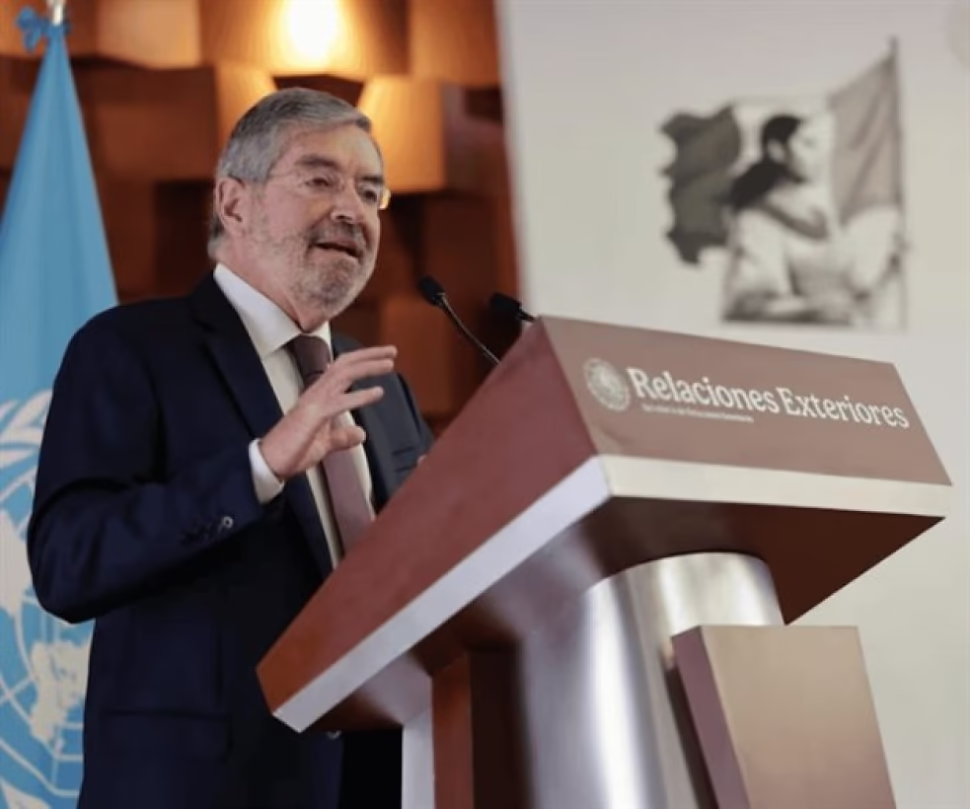
In a turn of events that no one saw coming – or perhaps everyone, because it is more predictable than an alarm clock –, Chancellor Juan Ramón de la Fuente came to blow out the candles for the 80th anniversary of the UN and, instead of a sweetened speech, he gave a harangue that sounded more like an intervention in an auto mechanics workshop: “this needs urgent repair.” What a lovely way to congratulate someone on their birthday, right? He reiterated, with the tenacity of someone who insists that Wi-Fi does not work, that the United Nations Organization unavoidably and urgently requires reform. Because, of course, eighty years of life are the perfect time to tell an institution that it must completely reinvent itself.
During the moving event, titled with the modesty characteristic of a global organization, “Building our future together: Mexico at the UN and the UN in Mexico”, De la Fuente had the delicacy to recognize the UN as “absolutely indispensable.” A compliment that, in context, sounded like when you tell your old car “you are indispensable” just before taking it to the scrapyard. Immediately afterwards, in an exercise of geopolitical multitasking, he issued a message to the international community: it is time for the Palestinian State to be a full member. Because what better way to heal an institution than by adding more debate to an already overloaded table?
Solidarity, criticism and other concepts that sound good in a PowerPoint
And what is Mexico’s position, you may ask? Well, it turns out that it is a multilateralist country. A revelation as shocking as discovering that water is wet. The chancellor, in an outburst of profound obviousness, pointed out that we need a renewed, more robust international system with clear rules. Take it now! Who had thought before that clear rules and renewal could be beneficial? Faced with this pearl of wisdom, one can almost hear diplomats from other countries nodding as they think about the shopping list. “Unilateral impositions are not compatible with a multilateral system,” he declared. A statement that will undoubtedly make the powers that do whatever they want stop in their tracks and scratch their heads.
But the culmination of the evening was the brilliant strategy proposed: restructuring is only possible with “intense political work from the bases. We, the people.” An idea so romantic and utopian that it almost makes you cry, imagining the people of the world united, redesigning the Security Council over coffee and coffee. Meanwhile, in real life, vetoes continue to be handed out like trading cards.
To close with a touch of solemnity – or to soften the blow of reality – the chancellor asked for a warm applause in memory of ambassador emeritus Jorge Eduardo Navarrete, a man who, without a doubt, knew well the intricate dance of diplomacy at the UN. A genuinely moving moment in the midst of a speech that was otherwise a reminder that even on the most glorious anniversaries, someone always has to bring up the fact that the house needs a complete renovation.
Do you think the UN can be reformed from within or is it pure diplomatic fantasy? Share this gem of geopolitical realism on your social networks and explore more analysis on the theater of international relations on our website. The world is too absurd to keep to yourself.