The sky lights up in May
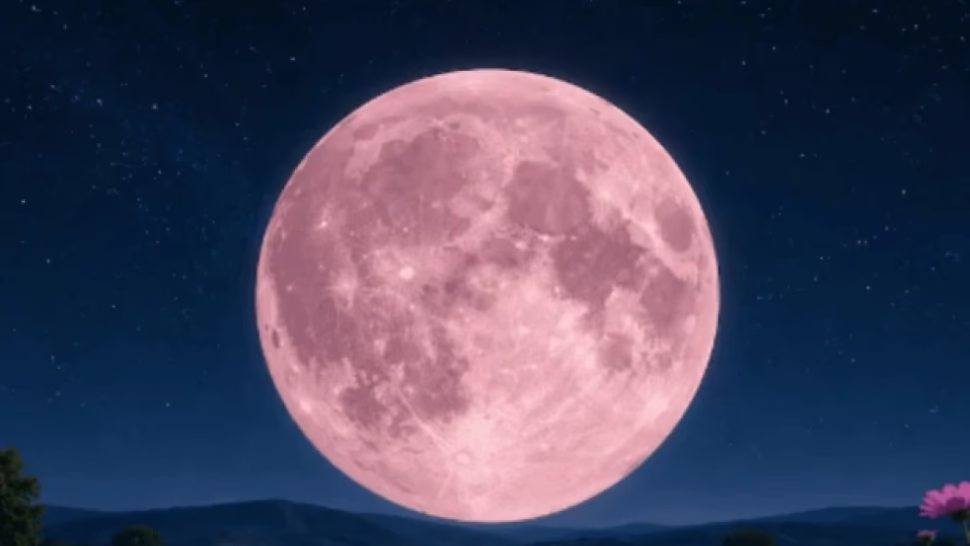
May brings an astronomical classic: the Eta Aquarid meteor shower. Peak between May 4 and 7, with up to 50 flashes per hour in ideal conditions. But be careful: the Moon will be at 83% illumination, so the faintest meteors will be lost.
These shooting stars are remnants of Halley’s Comet. Dust particles enter the atmosphere at 65 km/s and disintegrate, leaving bright trails. Pure physics turned into a spectacle.
Where and when to look?
The radiant is in Aquarius, near the star Eta Aquarii. It appears around 4:00 a.m., so get up early. Best time: hours before dawn, looking east.
“The southern hemisphere is the most favorable for observing them; in the north you will only see around 10 meteors per hour,” warns NASA.
In Mexico, only some northern areas will be able to enjoy them. If you are in the south, you are lucky.
Tips so you don’t miss a single one
- Look for a dark place, away from urban lights.
- Avoid tall buildings and trees.
- Stay away from the moonlight.
- Adapt your vision to the darkness for 20-30 minutes.
- Bring a chair or sleeping bag, and be patient.
Photos? Yes, but with strategy
NASA says it clearly: photographing meteors requires patience. Practical tips:
- Use a tripod to avoid vibrations.
- Wide angle lens to cover more sky.
- Manual focus and timer.
- Lower the screen brightness.
The active period goes from April 19 to May 28, but Wednesday, May 6 is the key date. So now you know: early wake-up call, coffee in hand and looking east.