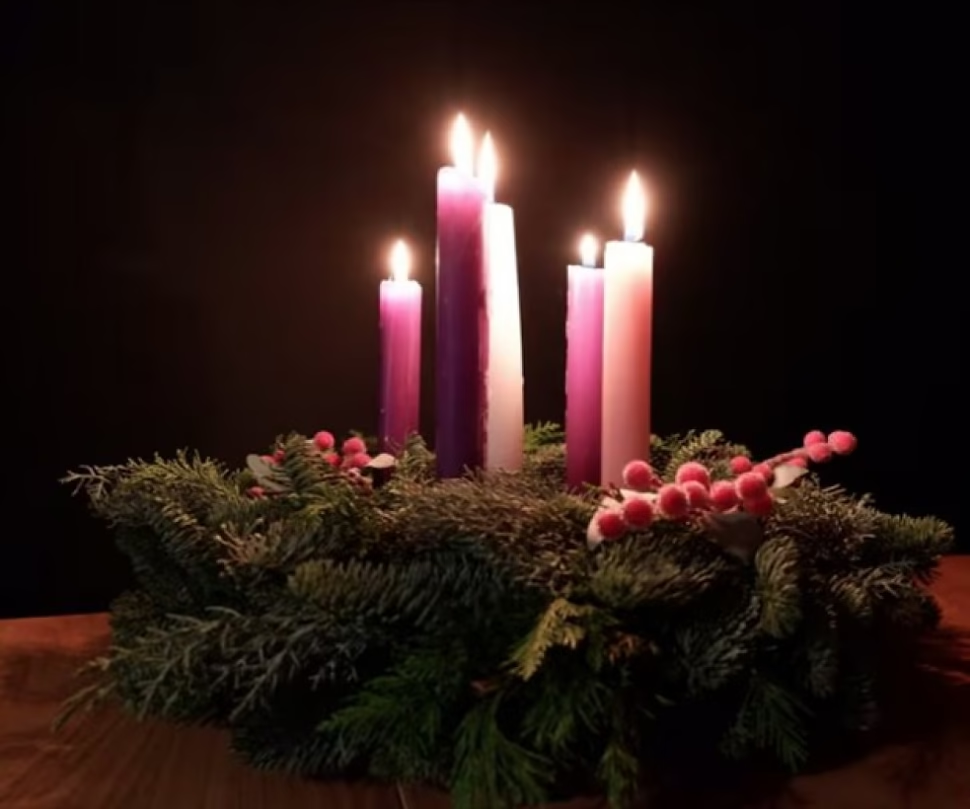
The Advent Wreath: A Beacon of Tradition in the Digital Age
With the arrival of December, the landscape transforms. The first winter lights begin to turn the streets gold, as homes prepare for the festive season. In this context, a discreet but deeply significant symbol recovers its leading place on tables and windows: the Advent Wreath. For the year 2025, this element transcends its decorative function to consolidate itself as a gesture of intentional pause within the accelerated pace of the end of the year. It represents an invitation to light, week after week, not only candles, but also hope, deep reflection and a renewed sense of community. In a society dominated by technology and constant change, the Advent Wreath stands as a symbolic anchor, reminding us of the intrinsic value of traditions to bring families together and foster human connection during this special time.
Nature and Symbolism of the Advent Wreath
Within many Christian communities, the Advent Wreath is a traditional emblem that marks the days leading up to the celebration of Christmas. Its basic structure consists of a hoop made from branches of evergreen trees, typically fir or pine, which symbolize eternal life and hope in the divine promise. This green circle is adorned with four candles, each representing one of the four weeks of the Advent period. The central ritual involves the progressive lighting of these candles, one for each Sunday, symbolizing the gradual path towards the full luminosity that the Nativity represents. According to liturgy specialists, each flame means the light that is “dispelling the darkness” and “reducing the darkness” in the world until the arrival of Jesus. Each of these luminaries represents, in turn, fundamental values: hope, peace, joy and love. It is common that, in many homes and temples, a fifth white candle, known as a candle, is incorporated in the center of the wreath. This central candle is lit specifically on Christmas Day, solemnly marking the arrival of the Christ Child. Beyond its deep religious meaning, today this element also functions as a decorative and family component that permeates the Christmas atmosphere, inviting introspection and living the wait for the festive dates in a more conscious and deliberate way.
Power-on Protocol and Chromatic Meaning
One of the most recurring queries revolves around the correct sequence for lighting candles. According to liturgical information, although there is no strict rule that requires the use of specific colors, the most widespread and deep-rooted custom establishes that three of the candles must be purple and one pink or mauve. “These colors allude to the liturgical season of Advent, a period in which priests dress in purple ornaments, a color that symbolizes penitence and humility in the face of the arrival of Jesus,” it is explained from portals specialized in the matter. The first candle to be lit, corresponding to the first Sunday of Advent, is a purple one. The purple candles are those that are lit successively on the first, second and fourth Sunday of this liturgical season. For its part, the pink candle is reserved for the third Sunday of Advent, also called “Gaudete Sunday” or “Sunday of Joy“. This day represents a moment of anticipated joy halfway through the path of preparation, slightly toning down the penitential nature of purple to highlight the proximity of the jubilant celebration. This order and chromatic symbolism turn the Advent Wreath into a true living calendar, which not only marks the passage of time, but also guides the spiritual preparation of believers through a visual and ritualized narrative.
Has this explanation of the Advent Wreath been useful to you? Share this article on your social networks so that others can discover the deep meaning of this beautiful tradition and explore more content related to Christmas celebrations on our website.