Los Chapitos knock on the door of the US: they negotiate surrender

Chapo's children are negotiating his surrender with the US, according to the Los Angeles Times.

The agreed surrender that no one expected

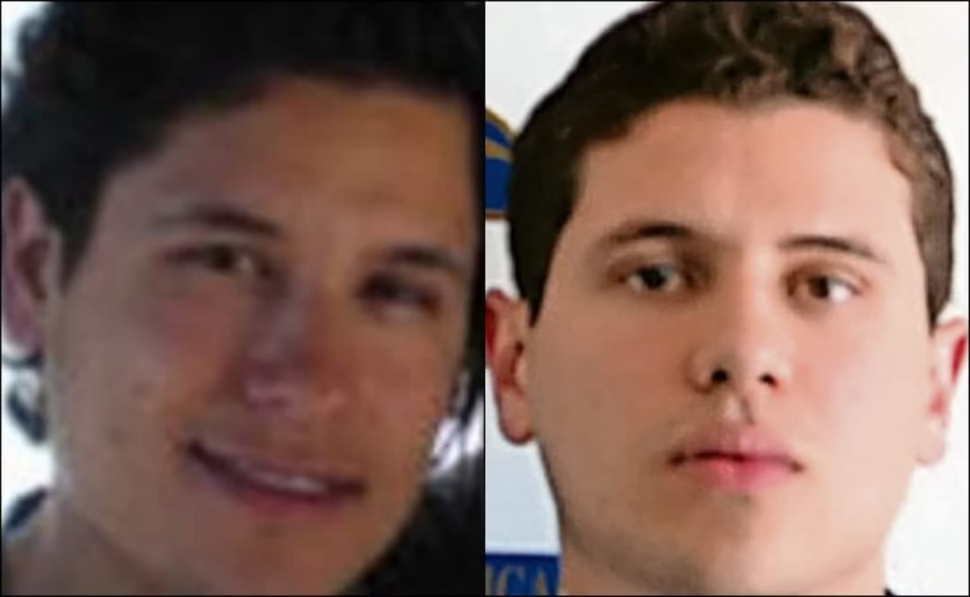
Chapo‘s children are playing their last cards. As reported by Los Angeles Times, Iván Archivaldo Guzmán Salazar and his brother Jesús—the leaders of the Los Chapitos faction of the Sinaloa Cartel—have already established contact with the United States government to explore a controlled delivery. Yes, you read correctly: the most wanted fugitives from Mexican drug trafficking would be negotiating their own end.

“According to two sources informed on the subject, but not authorized to speak publicly, the fugitive children of former drug trafficker Joaquín Guzmán Loera began contacts about a year ago,” details journalist Keegan Hamilton in the report.

The Chicago factor: the key to everything

But this is not a blank check. The Guzmán Salazar brothers are waiting to see how the court cases of their half-brothers detained in Chicago: Joaquín and Ovidio Guzmán are resolved. They want to read the script before going on stage. They want to know if the American justice system offers them a less tragic ending than their father’s.

RelatedThe United States offers 10 million for Iván Archivaldo Guzmán

What’s behind it? Pure strategy. If their half-siblings’ cases move toward reduced sentences or cooperation, they jump on the bandwagon. If not, perhaps they prefer to remain underground. It is political-drug trafficking theater at its finest: every calculated move, every contact a chess move.

Meanwhile, the Mexican government watches silently. But let’s not fool ourselves: this is not just any surrender. It’s a high-stakes negotiation where the biggest prize is not just freedom, but survival.
Sheinbaum announces more than 4 thousand million pesos for p’urhépecha communities

The federal government allocates more than 4 billion pesos in health, education and roads for Cherán and the region.

Historic investment from the community assembly

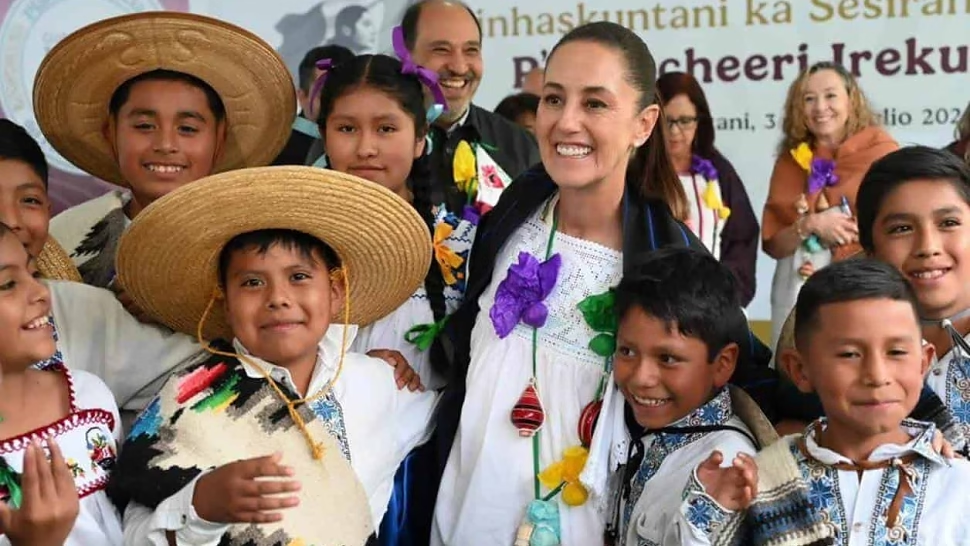
President Claudia Sheinbaum visited Cherán, Michoacán, to present the balance of the Justice Plan of the P’urhépecha People. One year and two months after its start, the federal government reports an investment of more than 4 billion pesos.

Sheinbaum stressed that decisions are not made from desks, but in community assemblies. The inhabitants themselves define the priorities.

“This scheme is not defined from bureaucratic offices, but through direct community assemblies,” stated the president.

The new commitments include:

  • Modernization of the Cherán Hospital with a hemodialysis room.
  • Rehabilitation of the local Sports Unit.
  • Opening of the Medicine and Nursing degrees.
  • Strengthening of community businesses.
  • Meeting in CDMX with an indigenous commission to create a C2 video surveillance center.

Details of resources and their impact

Adelfo Regino Montes, director of INPI, explained that the budget has been distributed as follows:

  • Building of 27 artisanal roads (485 million pesos).
  • School cafeterias for indigenous children.
  • 21 Indigenous Language Community Houses.

A National Guard barracks was also installed, 27 thousand efficient wood stoves were delivered and credits were granted for artisans.

Sheinbaum recalled that, thanks to constitutional reforms, indigenous communities are subjects of public law. The Contribution Fund for the Social Infrastructure of Indigenous and Afro-Mexican Peoples amounted to 13,500 million pesos this year.

Governor Alfredo Ramírez Bedolla and the Greater Council of Cherán agreed on the importance of institutional respect to maintain self-determination and the autonomous model of indigenous government.

Continue reading

Gilda Lozoya accuses political motivation in her arrest

Emilio Lozoya's sister describes his arrest as a political act to pressure her brother.

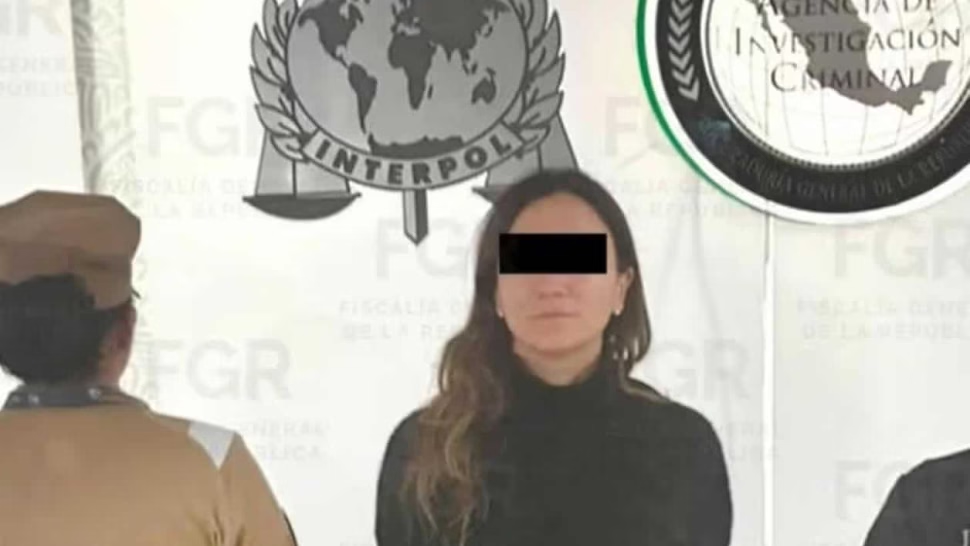
Gilda Susana Lozoya Austin, sister of former Pemex director Emilio Lozoya, was detained at the Mexico City International Airport upon returning from Europe. During the initial hearing, he called his arrest a political matter.

Before the control judge Nora Ileana García Peralta, at the Federal Criminal Justice Center of the North Prison, the woman stated:

“I believe that this is a political case, where my mother, my sister-in-law and I, that is, the women in my family, have been used to pressure my brother.”

Statements at the hearing

Dressed in a blouse and jacket, Lozoya Austin explained that she left the country for a week to attend to a family matter. “And I returned because my family is here and I am here with the desire to cooperate,” he said. He added that when he left the country he had not been notified of the arrest warrant, and reiterated: “I am here to cooperate.”

At the end of the hearing, the place to which she would be transferred for safekeeping was not reported while her legal situation is resolved.

Continue reading

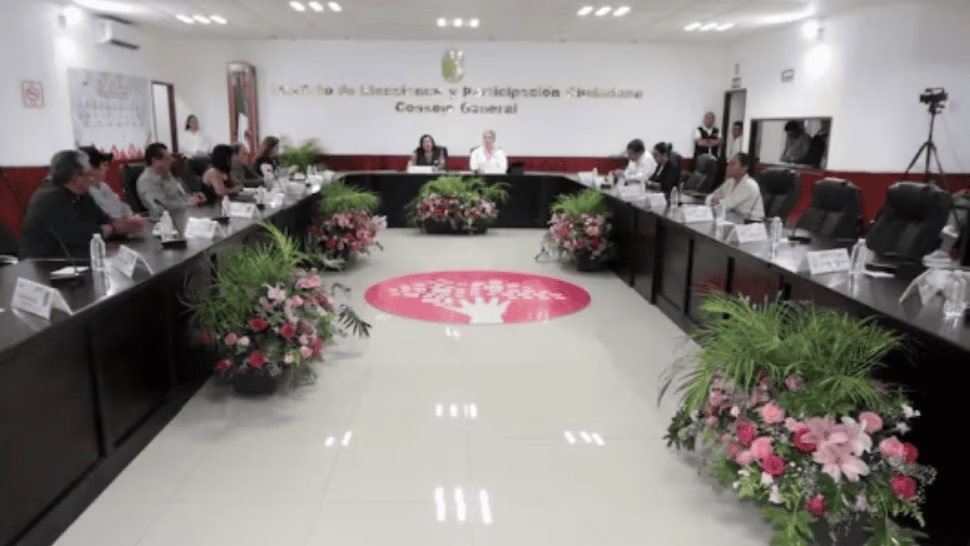
Three digital media in Chiapas are sanctioned for political gender violence

The IEPC applied fines and public apologies for sexist attacks against female deputies on Facebook.

The IEPC sanctions

The Institute of Elections and Citizen Participation (IEPC) of Chiapas sanctioned those responsible for three Facebook pages for political violence against women. Those affected were two deputies of the 69th Legislature.

The pages “Portal Revolución”, “Ruleta Política” and “Expediente Chiapas” modified and disseminated images out of context. The objective, according to the IEPC, was to construct a sexist narrative that discredited the career of the legislators, attributing their political advancement to an alleged personal relationship.

The electoral authority stressed that these actions exceed freedom of expression. They do not constitute valid criticism, but rather digital, psychological and symbolic aggression.

“The offenders modified, disseminated and presented images and messages out of context… attributing a personal relationship with another person and building from it a narrative aimed at publicly disqualifying them,” the IEPC said.

The body explained that freedom of expression protects criticism of public exercise, but not when the message focuses on private life with a gender focus.

The measures imposed

Sanctions include: a public written apology that must remain on each page for 30 days; individual fines of 200 UMAs (between 22,628 and 23,462 pesos); and registration in the National and State Registry of Persons Sanctioned for Political Violence against Women for one year and four months. In addition, those responsible must take a specialized workshop on gender.

The IEPC highlighted that this type of violence affects not only the direct victims, but also discourages the participation of other women in public life, by reinforcing surveillance over their private lives and sexualizing their relationships.

Continue reading