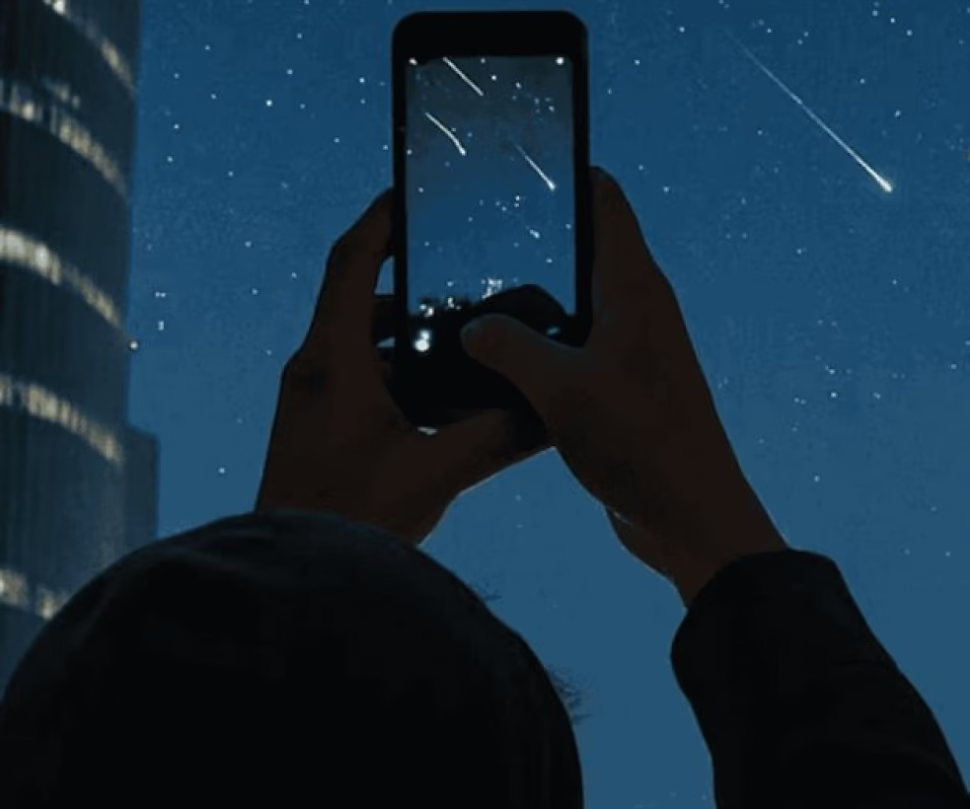
The cosmos winks at us (literally) with the Leonids
Oh, joy. This month, the sky, in an act of cosmic generosity that surely has nothing to do with the predictable orbit of our planet, dresses up to offer us the Leonid meteor shower. Because what better plan than to gather your family, friends or that couple who still puts up with your feelings about space, to embark on an epic adventure of… looking up? They will discover new places, they say. Or maybe they just discover that the field soil is colder than they thought. Excitement in abundance!
Get ready for an experience that combines the immensity of the universe with the uncomfortable neck position that you will have to maintain for hours. It’s the perfect event for all those who believe that an “astronomical spectacle” is a socially acceptable excuse to stay up late, surrounded by mosquitoes and with a thermos of cheap coffee. The starry night in the background is a nice plus, all things considered.
The big moment: When to look at the sky without looking like a stranger?
According to the wise men at the Star Walk portal (who surely have much better telescopes than ours), the Leonids, in their infinite condescension, have been active since November 6 and plan to retire on the 30th. But don’t worry, average citizen with normal sleeping schedules, the peak of maximum activity will be on November 17, around 6:00 p.m. GMT.
Here comes the fun part: that’s 12:00 p.m. in central Mexico. Yes, you read that right: the climax of a nighttime event will occur… at noon. Ironic right? As if the universe was playing a practical joke on us. But fear not, the technological solution is here: you will be able to watch it live through different digital platforms. That is, the experience of observing the remains of a comet burning in the atmosphere, from the cold screen of your device. Modern poetry in its purest form. Of course, for cold and neck pain purists, the phenomenon will continue to be visible with greater intensity during the early hours of November 17 to 18. In case you prefer the “authentic” version with hypothermia included.
Where does this photogenic stardust come from?
For those who wonder who is responsible for this luminous disorder, National Geographic enlightens us (pun intended). This whole circus originates because the Earth, on its annual walk around the Sun, has the indelicacy to pass right by the debris left by Comet 55P/Tempel-Tuttle, a man discovered in 1865 who, apparently, was quite careless with his things.
Its name, Leonidas, is not after a lion of flesh and blood, but after the constellation of Leo, from which these meteors seem to radiate. A fascinating fact that will impress everyone at the meeting, just before someone remembers that they have to get up early the next day. And for the most ambitious, know that the last time this comet decided to thoroughly clean its cosmic storage room was in 1999, giving us a historic meteor storm with a ridiculously spectacular 3,000 meteors per hour. Astronomers, with breathtaking patience, predict that such a display of natural fireworks could be repeated between 2032 and 2033. So now you know, mark your futuristic calendars.
So now you know: the universe, in its infinite boredom, throws a handful of stardust at us for our entertainment. Don’t miss it. Or yes. Overall, the comet will pass again. Like almost everything in this life, except that cup of coffee that is going to get cold while you look at the sky.
Did you like this sarcastic walk through the cosmos? Share this gem of astronomical satire on your social networks and make your contacts also smile (or get annoyed) with the irony of the universe. And be sure to explore our site to discover more content that demystifies celestial events with a touch of humor.