


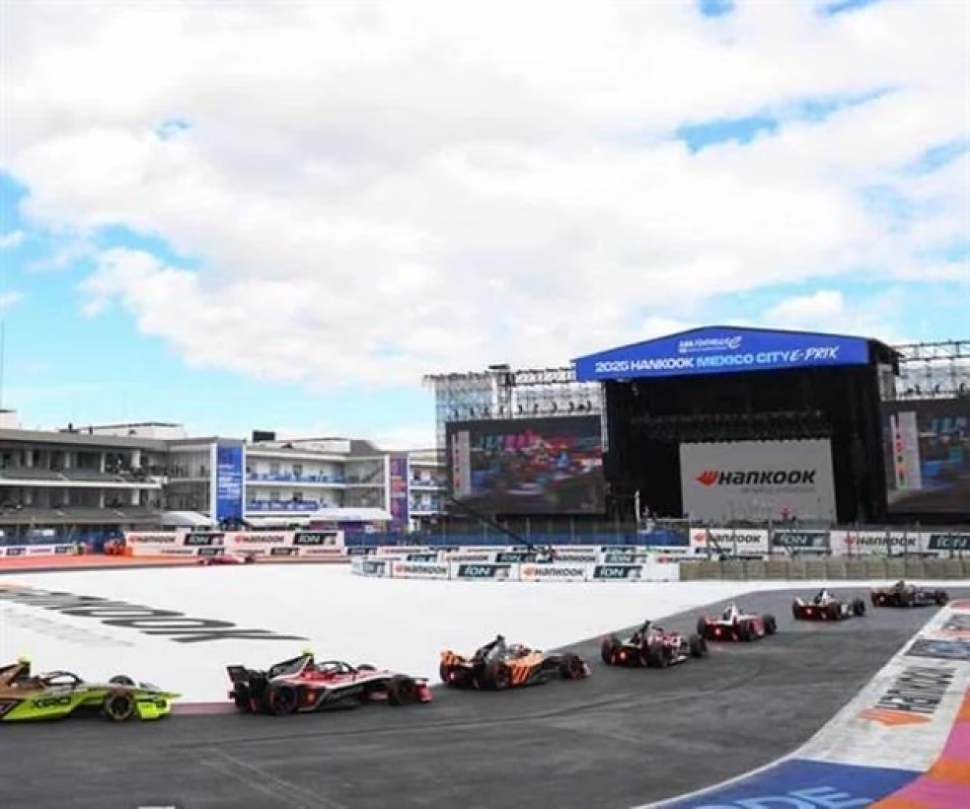
A Historic Milestone for Electric Motorsports
The ABB FIA Formula E World Championship calendar begins its second episode of the season with an event of singular relevance. The event at the Autódromo Hermanos Rodríguez in Mexico City transcends the mere development of a competition; It constitutes the celebration of the race number 150 in the chronology of the electrical contest. This data is not a simple figure, but a tangible indicator of the consolidation and evolution of a discipline that has redefined the paradigms of sustainable mobility and high-performance motor sport.
Context and Meaning of the Mexican E-Prix
The choice of the capital venue to commemorate this one hundred and fiftieth event is not fortuitous. Mexico has emerged as a fundamental place in the championship, characterized by a fervent public and a route that demands technical precision and energy efficiency. The arrival of the serial to this stage, within the framework of the 2026 season, symbolizes a virtuous circle: it returns to a traditional bastion while projecting the viability of alternative propulsion technologies into the future. The analysis of participation and global audience data in previous editions corroborates the exponential growth of the category, positioning this E-Prix as a critical node in its commercial and sporting expansion.
From a technical perspective, the race represents a real-world laboratory for power pack optimization, battery management and energy regeneration strategies. Each team fine-tunes their algorithms and settings to maximize performance at city altitude, a factor that directly impacts the aerodynamics and efficiency of the propulsion system. The conclusion drawn from the background is clear: victory on this circuit requires a perfect synergy between the skill of the driver, the innovation of the engineers and impeccable tactical execution from the wall.
Sports Implications and Future Projection
This milestone event occurs in an early phase of the championship, amplifying its importance in the fight for the world title. The points in dispute not only affect the immediate classification, but also establish a psychological dynamic and momentum for the rest of the campaign. A positive result here can catalyze a team or driver’s confidence, creating a ripple effect on their subsequent performance. The meticulous investigation of previous seasons reveals that the winners in the Mexican stage usually maintain an upward trend, consolidating themselves as serious contenders for the final title.
In addition, the celebration of the 150th race serves as a reflection on the trajectory of Formula E. From its genesis as a visionary concept to its current status as an FIA-sanctioned world championship, the category has demonstrated an unprecedented capacity for adaptation and growth. This E-Prix works, therefore, as a bridge between a history of innovation already written and a promising future of technological developments yet to be explored, where sustainability and elite competition converge without conflict.
The conclusion is inescapable: the 2026 Mexico City E-Prix is much more than a motorsport event. It is a testimony of technological resilience, a thermometer of the state of electric sports and a stage where the legends of tomorrow are forged. Its development will provide crucial data on the balance of performance between teams and the effectiveness of new technical regulations, vital information to understand the direction motorsport will take in the next decade.
Are you passionate about the evolution of motor sport and sustainable technology?Share this analysis on your social networks and join the conversation about the future of mobility. Explore more content related to Formula E and advances in electric propulsion engineering on our platform.


