The Implementation of the Biometric CURP in Mexico
The government of Mexico has made the CURP Biometric official as a new identity document, the issuance of which will begin in all states as of October 16. This date also marks the beginning of the official validity of the document, a significant step in the modernization of the citizen identification system. The new credential represents a critical evolution of the Unique Population Registry Code, designed to consolidate itself as the main instrument to access public procedures and services in the national territory.
The CURP Biometric is distinguished from its predecessor by integrating, in addition to the 18-character alphanumeric key, a set of unique and non-transferable biometric data of each individual. This identification information includes fingerprint capture, iris scanning of both eyes, an updated photograph, and the addition of an advanced electronic signature. The implementation of this technology has a fundamental double purpose: reinforce the security of citizens’ personal data against identity theft and optimize administrative procedures before government agencies, reducing the possibility of duplication and fraud.
Coexistence with the INE and the Future of Identification
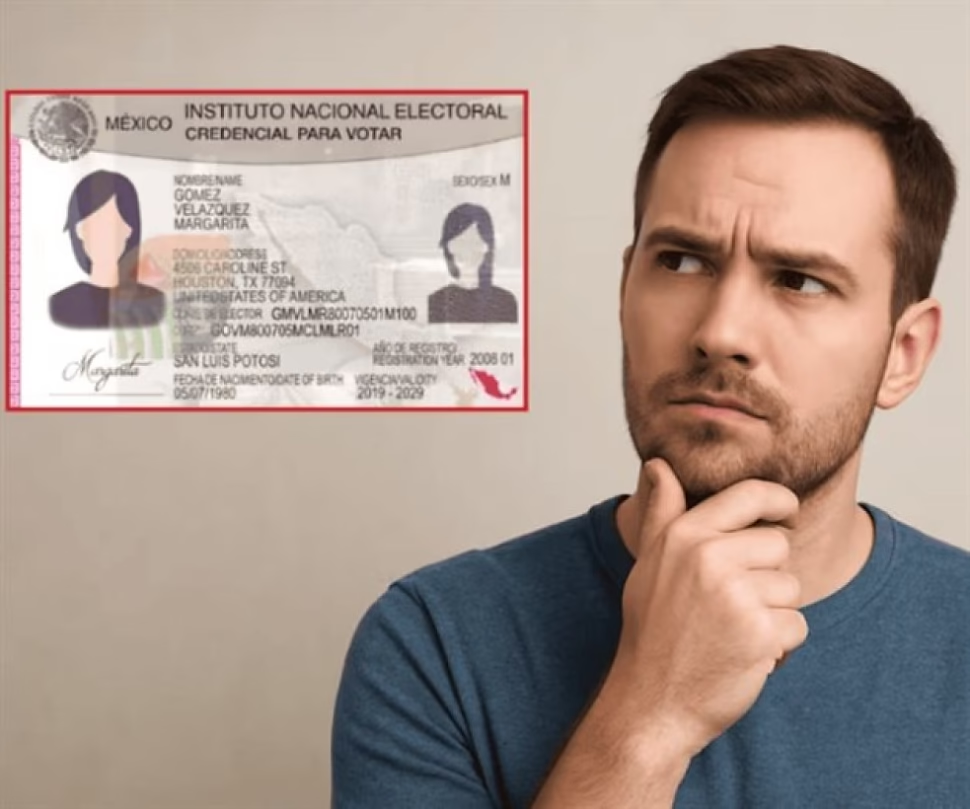
One of the most recurring concerns among the population is the fate of the voting credential from the National Electoral Institute (INE). In this regard, the head of the Ministry of the Interior, Rosa Icela Rodríguez, has been emphatic in her statements: “The CURP Biometric will not replace the voting credential issued by the INE. This will continue to be used on election days to identify citizens. The CURP will be the national document for procedures and services; in fact, it is already fulfilling that function.” This clarification is crucial to understand that both documents will coexist, each with a specific and well-defined scope of application.
While the INE credential will maintain its validity and importance in the electoral context, the CURP Biometrics aspires to position itself as the master key for interaction with the bureaucratic apparatus. The federal government has stressed that all institutions, both public and private, will be required to accept this new document as a fully valid form of official identification. This measure seeks to standardize and simplify identification requirements in sectors such as banking, health and education.
According to Arturo Arce Vargas, head of the National Population Registry (RENAPO), obtaining the credential will initially be voluntary. However, a clear time horizon has been established: it is projected that by February 2026 the issuance of this document will be mandatory for the entire population. This transition period allows RENAPO to adjust the logistics of mass issuance and for citizens to become familiar with the new process.
The introduction of CURP Biometrics also addresses a need for inclusion from an early age. As Secretary Rodríguez explained, “This new identity document will expand the possibilities of Mexicans to identify themselves, even from childhood.” Unlike the voting credential, which is issued upon reaching the age of majority, the CURP Biometric can be processed for minors, thus providing a formal and secure identification instrument for a segment of the population that traditionally lacked one.
From a technical perspective, the adoption of multivariable biometrics (fingerprints, iris and face) exponentially raises the level of security. The combination of these biometric factors, which are inherent to each person and extremely difficult to replicate, creates a robust barrier against identity theft. The incorporated electronic signature, for its part, will facilitate the completion of online procedures with full legal validity, promoting the digital transformation of government services.
In conclusion, the deployment of the CURP Biometric represents a profound modernization of the national identity system. It is not about the disappearance of the INE, but about the creation of a more secure, efficient and inclusive identification ecosystem. The INE credential will retain its fundamental role in Mexican democracy, while the CURP Biometrics will emerge as the pillar for citizens’ daily interaction with the State and private services, laying the foundations for more reliable identity management in the digital era.
Do you find this advance in identification useful? Share this news on your social networks to keep your community informed and explore more content on government modernization on our site.